Adhyaya 276
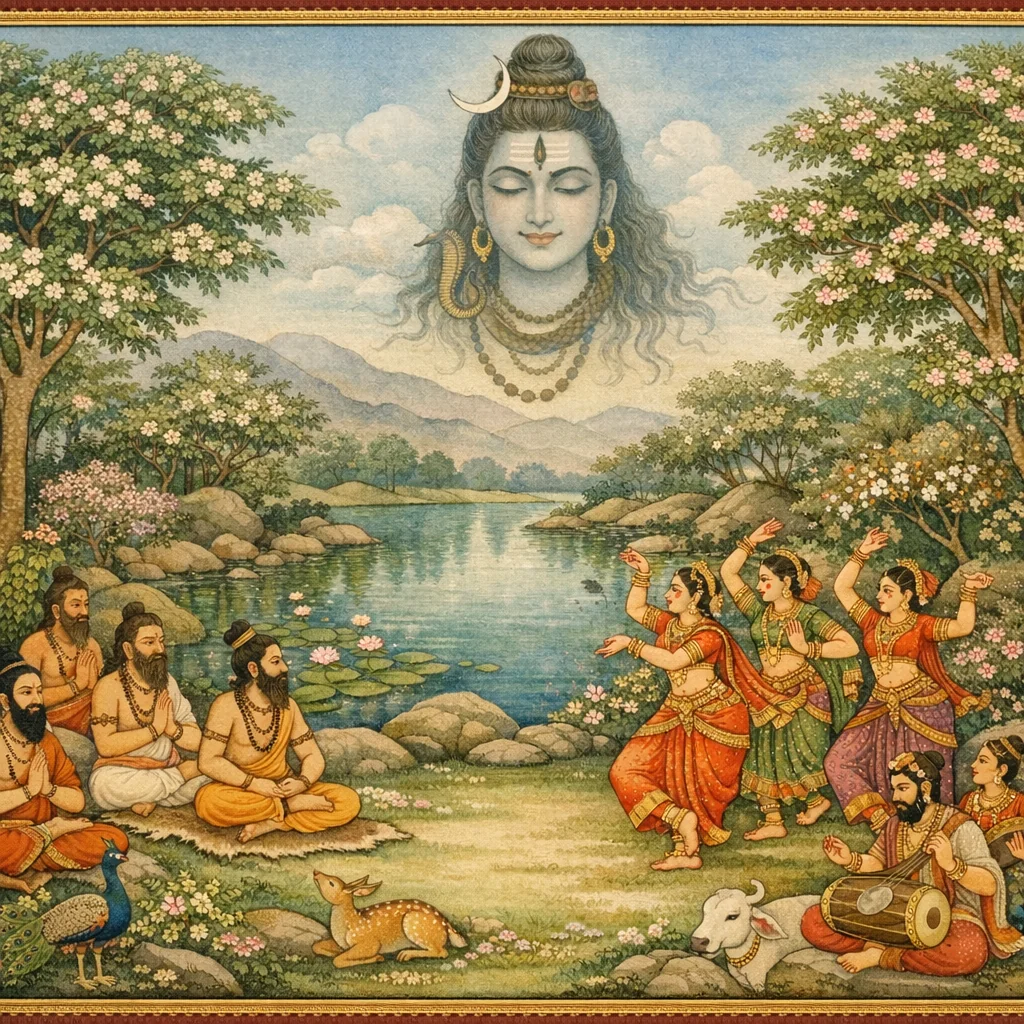
This adhyāya records Īśvara’s instruction to Devī, describing a pilgrimage toward Ṛṣi-tīrtha and a supremely esteemed kṣetra on the auspicious bank of the Devikā. It paints an ornate ecological-and-cosmic vision of the siddha-forest Mahāsiddhivana—flowering and fruiting trees, birdsong, animals, caves, and mountains—expanding into a vast assembly of beings: devas, asuras, siddhas, yakṣas, gandharvas, nāgas, and apsarases. Their praise, dance, music, flower-rain, meditation, and ecstatic gestures reveal the site as a sacred liturgical landscape. Īśvara then establishes a permanent divine station named “Umāpatīśvara,” declaring his continual presence through yugas, kalpas, and manvantaras, and his special attachment to Devikā’s blessed shore. The chapter prescribes śrāddha on the new-moon day (amāvāsyā) in the month of Puṣya; its phalāśruti proclaims the offering’s merit imperishable and says that mere darśana removes even the gravest sins, including “a thousand brahmahatyās.” It further recommends dānas of cows, land, gold, and garments, extolling the performer of ancestral rites there as uniquely meritorious. Finally, it explains that the river is called “Devikā” because the gods assembled there for bathing, and thus it is pāpa-nāśinī, the destroyer of sin.
Shlokas
Verse 1
ईश्वर उवाच । ततो गच्छेन्महादेवि ऋषितीर्थस्य सन्निधौ । कामिकं हि परं क्षेत्रं देविकानाम नामतः
Īśvara said: Then, O great Goddess, one should go near Ṛṣi-tīrtha. There is a supreme sacred field called Kāmika, known by the name Devikā.
Verse 2
महासिद्धिवनं तत्र ऋषिसिद्धसमावृतम् । नानाद्रुमलताकीर्णं पर्वतैरुपशोभितम्
There lies the great “Forest of Siddhis,” filled with sages and perfected beings, thick with many kinds of trees and creepers, and beautified by mountains all around.
Verse 3
चंपकैर्बकुलैर्दिव्यैरशोकैः स्तबकैः परैः । पुन्नागैः किंकिरातैश्च सुगन्धैर्नागकेसरैः
It is graced with divine campaka and bakula trees, with splendid aśoka and clusters of blossoms; with punnāga and kiṃkirāta, and with fragrant nāgakesara as well.
Verse 4
मल्लिकोत्पलपुष्पैश्च पाटलापारिजातकैः । चूतचंपकपित्थैश्च श्रीफलैः पनसैस्तथा
It is adorned with jasmine and lotus blossoms, with pāṭalā and pārijāta; with mango, campaka, and wood-apple trees, and also with coconuts and jackfruit.
Verse 5
खर्जूरैर्बदरैश्चान्यैर्मातुलिंगैः सदाडिमैः । जंबीरैश्चैव दिव्यैश्च नारंगैरुप शोभितम्
It is further beautified with date palms and jujube trees, with citron and ever-present pomegranates; with splendid jambīra and with oranges as well.
Verse 6
शिखिभिः कोकिलाभिश्च गीयमानं तु षट्पदैः । मृगैरृक्षैर्वराहैश्च सिंहैर्व्याघ्रैस्तथा परैः
It resounds with the cries of peacocks and cuckoos, as though bees themselves were singing. Deer, bears, boars, lions, tigers, and other creatures too dwell there.
Verse 7
श्वापदैर्विविधाकारैः कन्दरै र्गह्वरैस्तथा । सुरासुरगणैः सिद्धैर्यक्षगन्धर्वपन्नगैः
It holds beasts of many kinds, and caves and deep ravines as well; and it is frequented by hosts of gods and asuras, by siddhas, and by yakṣas, gandharvas, and nāgas.
Verse 8
अप्सरोरगनागैश्च बहुभिस्तु समाकुलम् । केचित्स्तुवंति ईशं तु केचिन्नृत्यंति चाग्रतः
The place was thronged with many celestial nymphs—apsaras—along with serpents and nāgas. Some praised the Lord, while others danced before Him.
Verse 9
पुष्पैर्वृष्टिं तु मुञ्चंति मुखवाद्यानि चापरे । हसंति चापरे हृष्टा गर्जंति च तथापरे
Some sent down a rain of flowers; others played instruments blown by the mouth. Some laughed in delight, and others roared aloud.
Verse 10
ऊर्द्ध्वबाहवस्तथा चान्ये अन्ये ध्यायंति तद्गताः । तस्मिन्स्थानं महादेवि देविकायास्तटे शुभे
Others stood with arms uplifted; still others, absorbed in Him, meditated. In that very place, O Great Goddess, upon the auspicious bank of the Devikā river…
Verse 11
उमापतीश्वरो नाम तत्राहं संस्थितः सदा । युगेयुगे सदा पूर्णे कल्पे मन्वन्तरे तथा
There I am ever established under the name Umāpatīśvara. In every yuga, in every complete kalpa, and in every manvantara as well, I remain there.
Verse 12
न त्यजामि सदा देवि देविकायास्तटं शुभम् । दुर्ल्लभं सर्वलोकेऽस्मिन्पवित्रं सुप्रियं हि मे
I never abandon, O Goddess, the auspicious bank of the Devikā. Rare in all the worlds, it is holy—and exceedingly dear to Me.
Verse 13
त्वया सह स्थितश्चाहं तस्मि न्स्थाने वरानने । उमया युक्तदेहत्वात्तेन ख्यातं उमापतिः
In that place, O fair-faced one, I remain together with you. Because My very body is united with Umā, I am renowned there by the name ‘Umāpati’.
Verse 14
पुष्यमासे त्वमावस्यां दद्याच्छ्राद्धं समाहितः । न पश्यामि क्षयं तस्य तस्मिन्दत्तस्य पार्वति
On the new-moon day in the month of Puṣya, one should, with focused mind, offer śrāddha. I do not see any diminution of the merit of what is offered there, O Pārvatī.
Verse 15
ब्रह्महत्यासहस्रं तु तस्य दर्शनतो व्रजेत् । गोभूहिरण्यवासांसि तत्र दद्याद्विचक्षणः
Even a thousand sins of brahmahatyā depart merely by his darśana. There, the wise person should give gifts—cows, land, gold, and garments.
Verse 16
स एकः परमः पुत्रो यो गत्वा तत्र सुन्दरि । ददेच्छ्राद्धं पितॄणां च तस्यांतो नैव विद्यते
O beautiful one, he alone is the supreme son who goes there and offers śrāddha to the Pitṛs; for that merit, no end whatsoever is found.
Verse 17
देवैः सर्वैः समाहूता स्नानार्थं सा सरिद्वरा । देविकेति समाख्याता तेन सा पापनाशिनी
Summoned by all the gods for the sake of sacred bathing, that most excellent river came to be known as “Devikā”; therefore she is the destroyer of sins.
Verse 276
इति श्रीस्कांदे महापुराण एकाशीतिसाहस्र्यां संहितायां सप्तमे प्रभासखण्डे प्रथमे प्रभासक्षेत्रमाहात्म्ये देविकायामुमापतिमाहात्म्यवर्णनंनाम षट्सप्तत्युत्तरद्विशततमोऽध्यायः
Thus ends, in the Śrī Skanda Mahāpurāṇa—within the Saṃhitā of eighty-one thousand verses—in the seventh, the Prabhāsa Khaṇḍa, in the first section called the Māhātmya of the sacred region of Prabhāsa, the chapter entitled “The Description of the Greatness of Umāpati at Devikā,” being Chapter 276.