Adhyaya 274
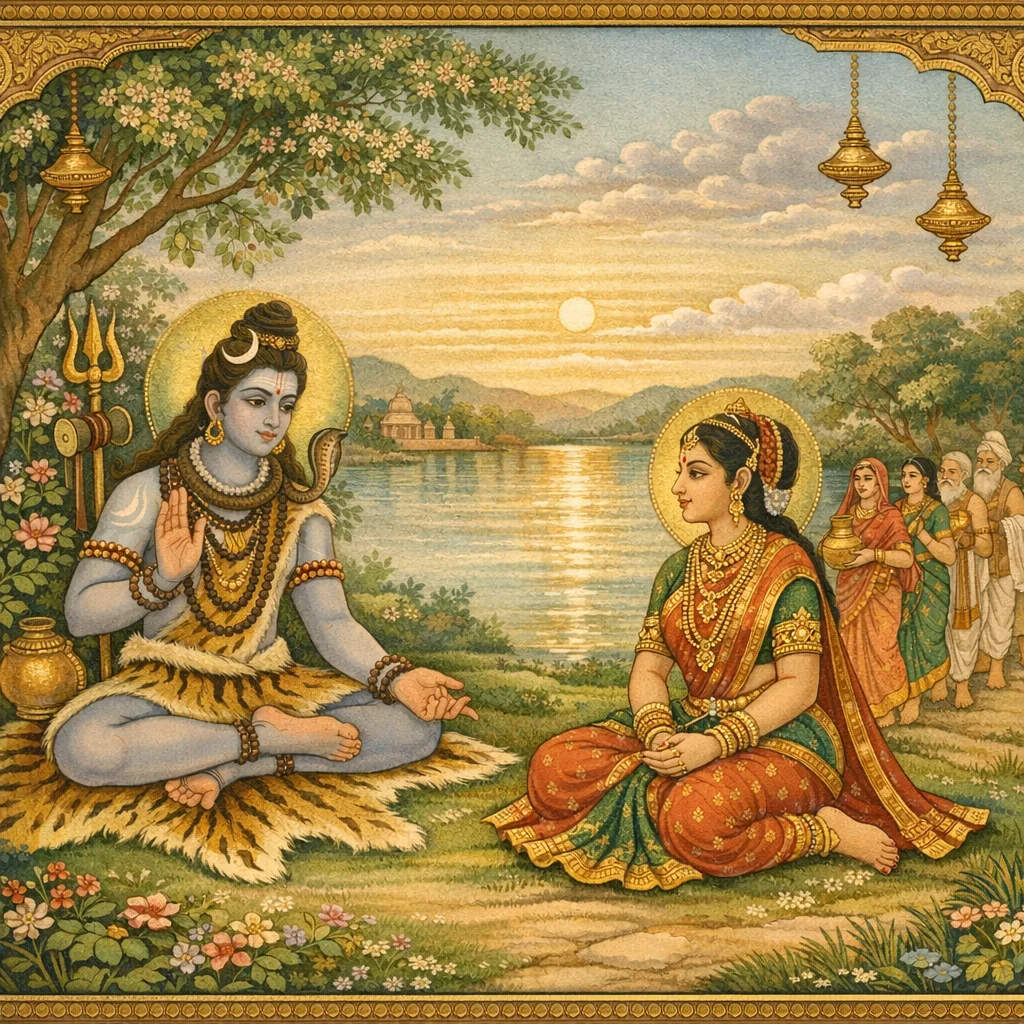
This adhyāya gives a brief tīrtha instruction within Prabhāsa-kṣetra. Īśvara speaks to Mahādevī, directing her—and thereby pilgrims—to proceed to Sūryaprācī, praised as radiant and exceedingly powerful. The site is framed as purificatory, “pacifying all sins,” and also as a place that grants the fruits of rightful desires within the Purāṇic ethic of disciplined pilgrimage. The central rite is bathing (snāna) at the tīrtha, with the promised result being release from the pañca-pātakas, the five major transgressions of dharma. The colophon identifies this as the Sūryaprācī-māhātmya in the Skanda Mahāpurāṇa, Prabhāsa-khaṇḍa.
Shlokas
Verse 1
ईश्वर उवाच । ततो गच्छेन्महादेवि सूर्यप्राचीं महाप्रभाम् । सर्वपापोपशमनीं सर्वकामफलप्रदाम्
Īśvara said: Then, O Great Goddess, one should go to Sūryaprācī, radiant with great splendor—she who pacifies all sins and grants the fruits of every rightful desire.
Verse 2
तत्र स्नात्वा महादेवि मुच्यते पञ्चपातकैः
O Great Goddess, by bathing there one is freed from the five great sins.
Verse 274
इति श्रीस्कांदे महापुराण एकाशीतिसाहस्र्यां संहितायां सप्तमे प्रभासखण्डे प्रथमे प्रभासक्षेत्रमाहात्म्ये सूर्यप्राचीमाहात्म्यवर्णनंनाम चतुःसप्त त्युत्तरद्विशततमोऽध्यायः
Thus ends Chapter 274, entitled “The Description of the Greatness of Sūryaprācī,” in the Śrī Skanda Mahāpurāṇa, in the Ekāśītisāhasrī Saṃhitā, within the seventh Prabhāsa-khaṇḍa, in the first division called Prabhāsa-kṣetra-māhātmya.