Adhyaya 271
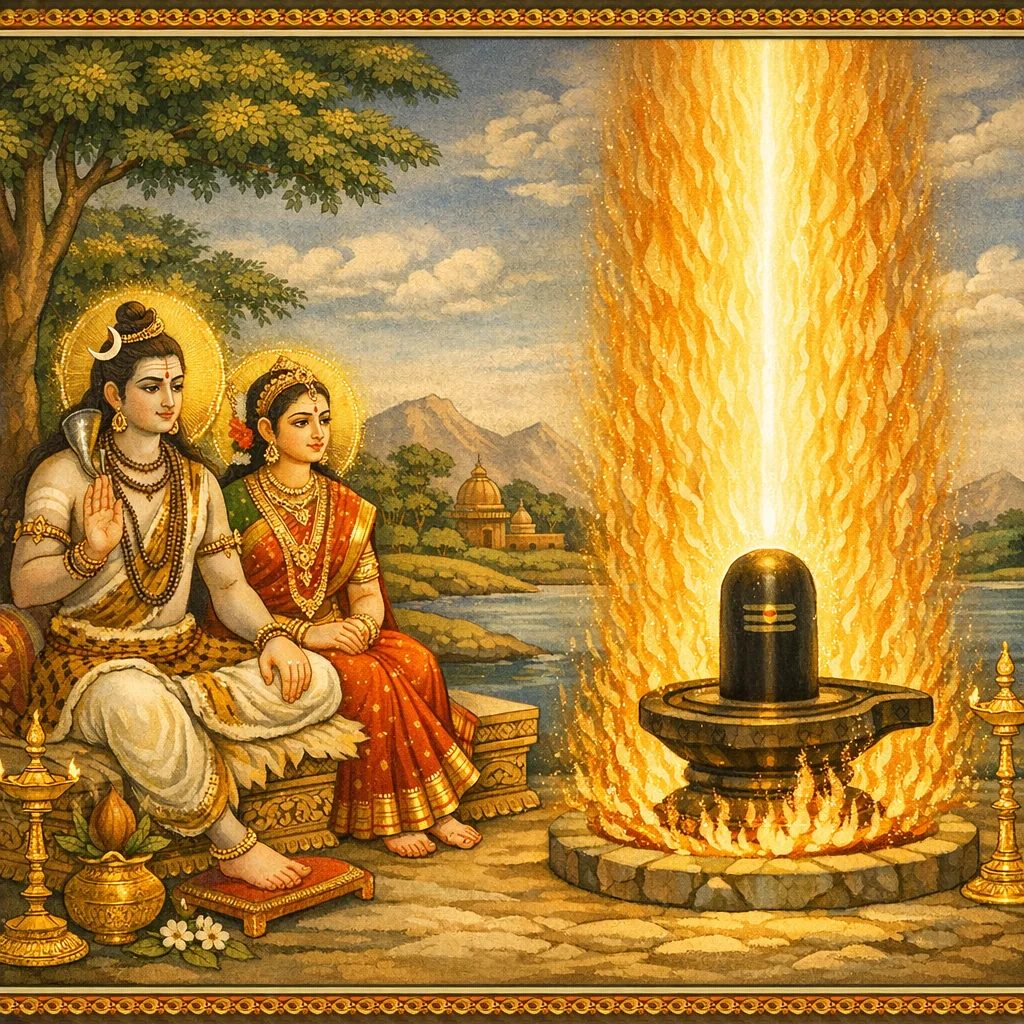
This chapter recounts the origin of a liṅga named Jvāleśvara, situated near the central sacred zone of Prabhāsa. Īśvara (Śiva) explains that it is remembered as “Jvāleśvara” because the Pāśupata weapon (śara/astra, divine force) associated with Tripurāri—Śiva as the destroyer of Tripura—was cast down at that very spot, appearing as a blazing, radiant power. Thus a mythic martial-theological event is anchored to a lasting object of worship, turning myth into sacred geography. The practical teaching is brief: mere darśana of this liṅga is said to purify and free a human devotee from all pāpaka (sins). The framing notes place it within the Skanda Mahāpurāṇa, in the Prabhāsa Khaṇḍa and the first Prabhāsakṣetramāhātmya unit, formally as the 271st adhyāya.
Shlokas
Verse 1
ईश्वर उवाच । तस्यैव संनिकृष्टे तु लिंगं ज्वालेश्वरं स्मृतम् । शरः पाशुपतो यत्र ज्वलन्वै त्रिपुरारिणा
Īśvara said: Close by that very place is the liṅga known as Jvāleśvara. For it was there that the blazing Pāśupata arrow, released by the enemy of Tripura, burned forth.
Verse 2
पातितो यत्प्रदेशे तु तेन ज्वालेश्वरः स्मृतः । तं दृष्ट्वा मानवो देवि मुच्यते सर्वपातकैः
Because it fell in that very region, it is remembered as Jvāleśvara. O Goddess, merely by seeing it a person is freed from all sins.
Verse 271
इति श्रीस्कांदे महापुराण एकाशातिसाहस्र्यां संहितायां सप्तमे प्रभासखंडे प्रथमे प्रभासक्षेत्रमाहात्म्ये ज्वालेश्वरमाहात्म्यवर्णनंनामैकसप्तत्युत्तरद्विशततमोऽध्यायः
Thus ends, in the revered Śrī Skanda Mahāpurāṇa—within the Saṃhitā of eighty-one thousand verses—within the seventh, the Prabhāsa Khaṇḍa, in the first division called the Prabhāsakṣetra Māhātmya, the chapter entitled “The Description of the Greatness of Jvāleśvara,” being Chapter 271.