Adhyaya 27
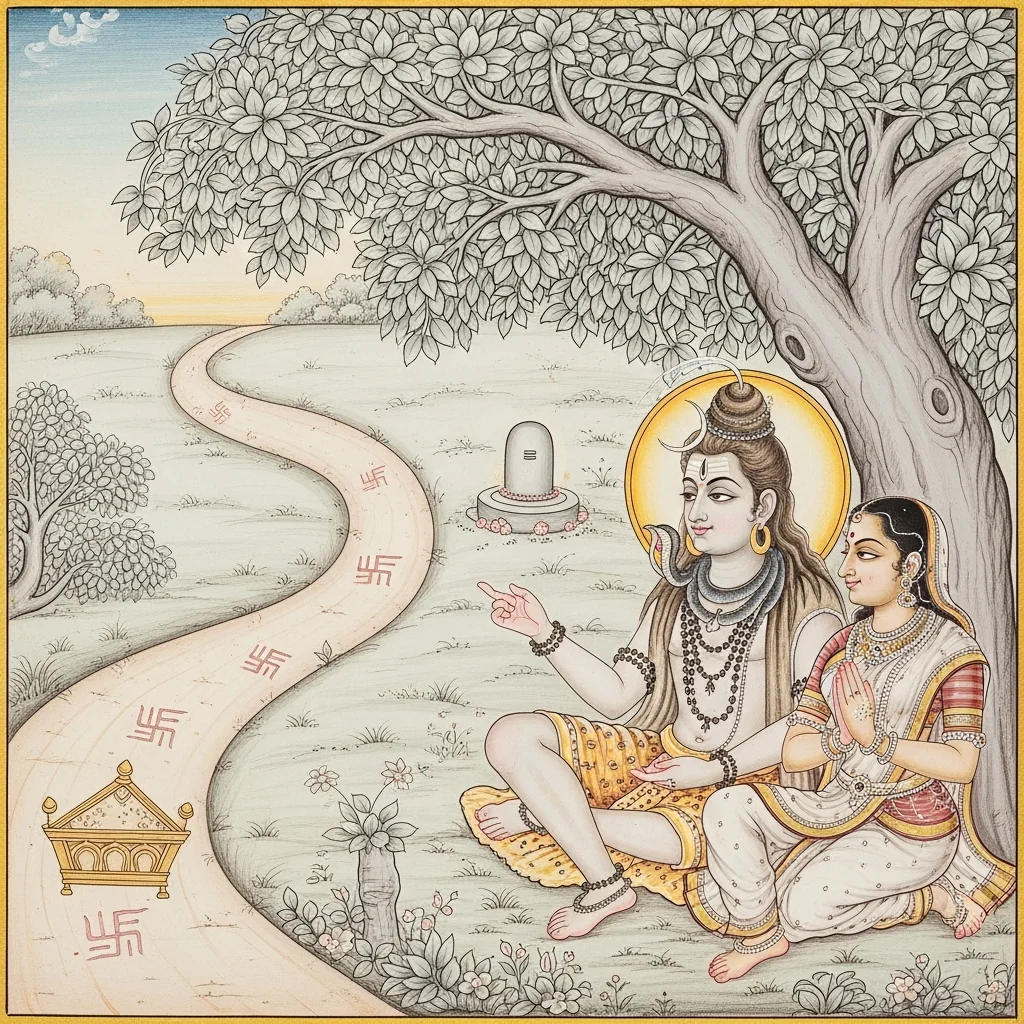
In this chapter, Īśvara speaks to Devī of a liṅga established by Gandharvasenā near Gaurī. He identifies it as Vimaleśvara and praises it as the destroyer of all diseases (sarva-roga-vināśana). The teaching also marks the shrine’s place within the sacred landscape by giving a measured distance—“three bows” (dhanuṣāṃ tritaye)—and a directional cue toward the eastern section (pūrvavibhāga), serving as guidance for pilgrims. Devotional observance is implied through worship (pūjayitvā), with the third lunar day, tṛtīyā tithi, set forth as the effective ritual time. The phalaśruti declares that a woman who undertakes this practice is freed from misfortune (daurbhāgya) and attains her desired aims, including continuity of lineage (son and grandson) and the establishment of social-religious standing (pratiṣṭhā). The chapter concludes by presenting this as a vrata narrative whose hearing destroys sins (pātaka-nāśana), and by situating it in the time-frame of the Tretā-yuga, affirming Purāṇic authority in a colophon-like close.
Shlokas
Verse 1
ईश्वर उवाच । अथ तत्रैव देवेशि लिंगं गन्धर्वसेनया । स्थापितं घनवाहस्य पुत्र्या गौरीसमीपतः
Īśvara said: Then, right there, O Devī, a liṅga was established by the Gandharva host—by the daughter of Ghanavāhana—near the shrine of Gaurī.
Verse 2
धनुषां त्रितये तत्र स्थितं पूर्वविभागतः । विमलेश्वरनामानं सर्वरोगविनाशनम्
There, at a distance of three dhanuṣ (bow-lengths), situated toward the eastern division, is the shrine named Vimaleśvara, the destroyer of all diseases.
Verse 3
पूजयित्वा तृतीयायां दौर्भाग्यैर्मुच्यतेऽङ्गना । सर्वान्कामानवाप्नोति पुत्रपौत्रप्रतिष्ठिता
By worshipping there on the third lunar day (Tṛtīyā), a woman is freed from misfortune; she attains all desired aims and becomes established through sons and grandsons.
Verse 4
इति व्रतं महादेवि त्रेतासंध्यांशके गते । गन्धर्वस्यैवमाख्यातं श्रुतं पातकनाशनम्
Thus, O Mahādevī, when the portion of the Tretā-yuga’s twilight had passed, this vow (vrata) was so proclaimed by the Gandharva; hearing it destroys sins.
Verse 27
इति श्रीस्कांदे महापुराण एकाशीतिसाहस्र्यां संहितायां सप्तमे प्रभासखण्डे प्रथमे प्रभासक्षेत्रमाहात्म्ये गन्धर्वसेनेश्वरमाहात्म्यवर्णनंनाम सप्तविंशोऽध्यायः
Thus ends the twenty-seventh chapter, called “The Description of the Greatness of Gandharvaseneśvara,” in the first division of the Prabhāsakṣetra Māhātmya, within the seventh book, the Prabhāsa Khaṇḍa, of the Śrī Skanda Mahāpurāṇa in the Ekāśītisāhasrī Saṃhitā.