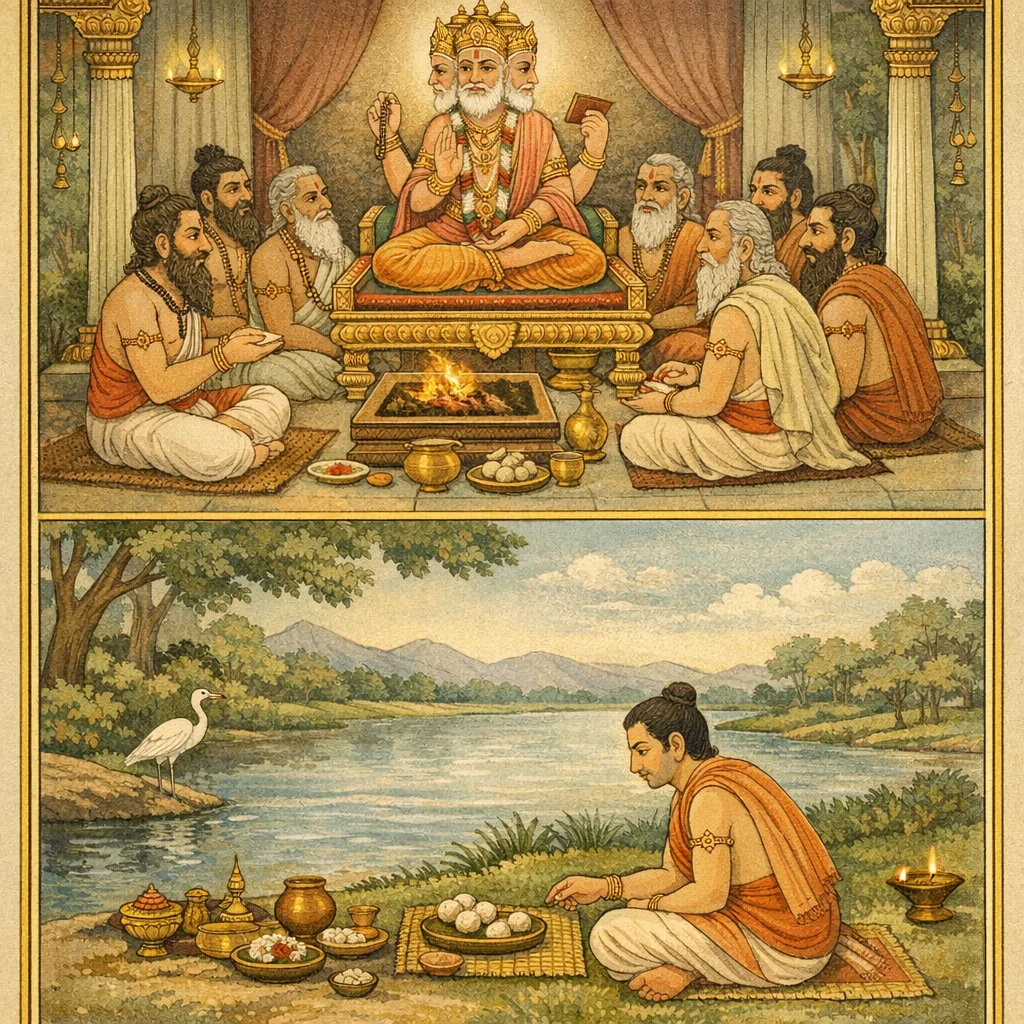
Adhyaya 268
In this adhyāya, Īśvara speaks to Devī and directs the pilgrim to an eminent tīrtha called Camasodbheda. The origin of the name is explained: Brahmā is said to have performed a prolonged satra (extended sacrificial session), and the devas along with great seers drank soma from camas, ritual cups—hence the place became known on earth as Camasodbheda. The chapter then prescribes the rite in order: bathe in the Sarasvatī connected with the site, and afterwards perform piṇḍadāna, the ancestral offering. The promised fruit (phalavāda) is praised as merit “equal to a crore of Gayā” (gayā-koṭi-guṇa), with special emphasis on the month of Vaiśākha as a supremely auspicious time. It concludes with a colophon placing the chapter within the Prabhāsa Khaṇḍa and the Prabhāsakṣetramāhātmya.
Shlokas
Verse 1
ईश्वर उवाच । ततो गच्छेन्महादेवि चमसोद्भेदमुत्तमम् । यत्र ब्रह्माऽकरोत्सत्रं वर्षाणामयुतं प्रिये
Īśvara said: “Then, O great Goddess, go to the excellent holy place called Camasodbheda—where Brahmā, O beloved, once performed a sacrificial session (satra) for ten thousand years.”
Verse 2
चमसैः पीतवन्तस्ते सोमं देवा महर्षयः । चमसोद्भेदनामेति तेन ख्यातं धरातले
There the gods and great seers drank the Soma with camasas (ritual ladles); hence it came to be known as “Camasodbheda,” and by that name it is famed upon the earth.
Verse 3
तत्र स्नात्वा सरस्वत्यां पिंडदानं ददाति यः । गयाकोटिगुणं पुण्यं वैशाख्यां प्राप्नुयान्नरः
Whoever bathes there in the Sarasvatī and offers piṇḍa-oblations for the ancestors attains, in the month of Vaiśākha, merit a crore times that of Gayā.
Verse 268
इति श्रीस्कांदे महापुराण एकाशीतिसाहस्र्यां संहितायां सप्तमे प्रभासखण्डे प्रथमे प्रभासक्षेत्रमाहात्म्ये चमसोद्भेदमाहात्म्य वर्णनंनामाष्टषष्ट्युत्तरद्विशततमोऽध्यायः
Thus ends the two-hundred-and-sixty-eighth chapter, entitled “The Description of the Greatness of Camasodbheda,” in the Prabhāsa Khaṇḍa, within the Prabhāsa-kṣetra Māhātmya of the Śrī Skanda Mahāpurāṇa (of eighty-one thousand verses).