Adhyaya 26
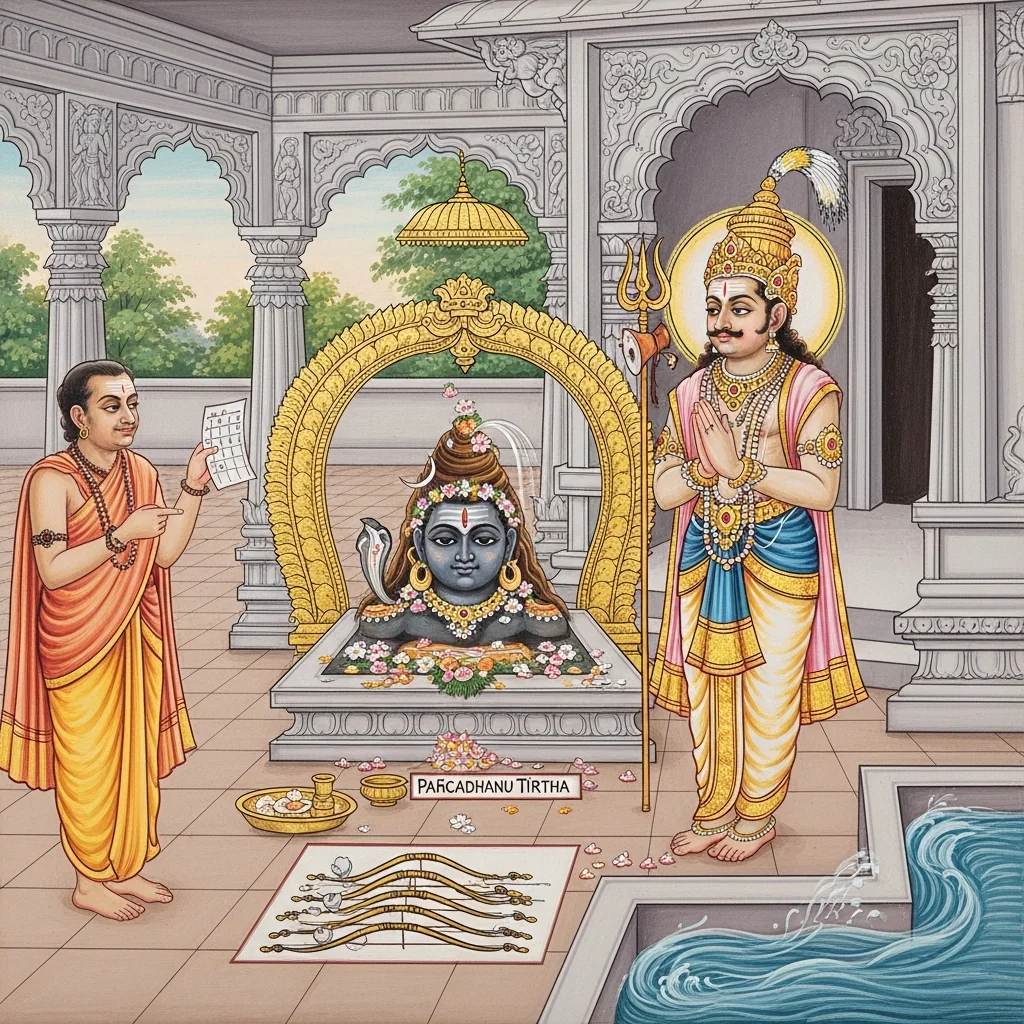
This chapter presents a local shrine-origin account in a Śaiva, instructional voice. Īśvara narrates how the Gandharva named Ghanavāhana, having received a boon, becomes “kṛtārtha” (fulfilled) and steadfast in devotion, and then establishes a liṅga. That liṅga is known as Gandharveśvara, explicitly praised as the giver of Gandharva-related fruits and benefits. Its sacred location is fixed by clear markers: north of Someśa and near Daṇḍapāṇi. The chapter also gives a practical worship instruction tied to ritual geography: in the Varuṇa-associated quarter (varuṇa-bhāga), at a spot described as lying amid a “pañcaka” of bows, worship on the fifth lunar day (pañcamī) is said to keep the worshipper free from suffering and distress. The closing colophon anchors the chapter within the 81,000-verse Skanda Mahāpurāṇa, in the seventh Prabhāsa Khaṇḍa and the Prabhāsa-kṣetra-māhātmya section, placing it as a small node in the wider pilgrimage landscape.
Shlokas
Verse 2
ईश्वर उवाच । अथ लब्धवरस्तत्र कृतार्थो भक्तिसंयुतः । स्थापयामास लिंगं स गन्धर्वो घनवाहनः । सोमेशादुत्तरे भागे दंडपाणिसमीपतः । गन्धर्वेश्वरनामानं गान्धर्वफलदायकम्
Īśvara said: Then, having obtained boons there, fulfilled and endowed with devotion, the Gandharva Ghanavāhana established a liṅga. It was set to the north of Someśvara, near Daṇḍapāṇi, named “Gandharveśvara,” bestowing fruits pertaining to the Gandharvas.
Verse 26
वरदावारुणे भागे धनुषां पञ्चके स्थितम् । पञ्चम्यां पूजयित्वा च न दुःखी जायते नरः । इति श्री स्कान्दे महापुराण एकाशीतिसाहस्र्यां संहितायां सप्तमे प्रभासखण्डे प्रथमे प्रभासक्षेत्रमाहात्म्ये गन्धर्वेश्वरमाहात्म्यवर्णनंनाम षड्विंशतितमो ऽध्यायः
In the Varuṇa quarter of Varadā, at a distance of five dhanuṣ (bow-lengths): by worshipping there on the fifth lunar day (Pañcamī), a person is not born into sorrow. Thus ends the twenty-sixth chapter, “The Description of the Greatness of Gandharveśvara,” in the Prabhāsa Khaṇḍa of the Śrī Skanda Mahāpurāṇa, within the Prabhāsakṣetra Māhātmya.