Adhyaya 259
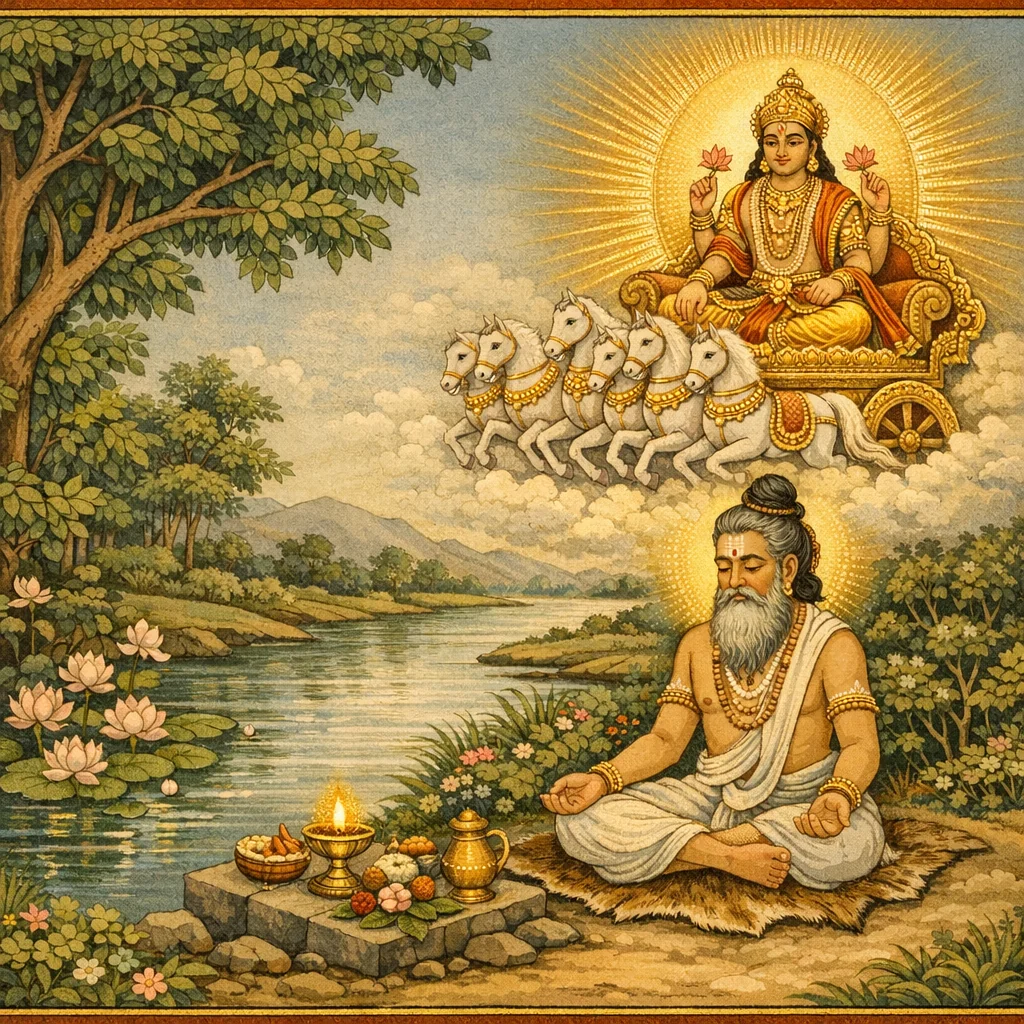
This chapter, cast as Īśvara’s instruction to Mahādevī, directs the pilgrim to Parnāditya, a solar divinity on the northern bank of the Prācī Sarasvatī. It then recounts a legend from Tretā-yuga: a brāhmaṇa named Parnāda comes to Prabhāsa-kṣetra and performs severe tapas, sustaining unbroken devotion day and night. Worshipping Sūrya with incense, garlands, unguents, and Veda-aligned hymns of praise, he pleases the Sun, who appears and offers a boon. The devotee asks first for the rare grace of direct darśana, and next that the Sun remain permanently established there. Sūrya agrees, promises him access to the solar realm, and withdraws. The chapter ends with pilgrimage guidance and phala: bathing on the sixth lunar day (ṣaṣṭhī) in Bhādrapada and beholding Parnāditya wards off suffering; the merit of such darśana equals the fruit of properly gifting a hundred cows at Prayāga. It also cautions that those afflicted with grave diseases who fail to recognize Parnāditya are portrayed as lacking discernment, underscoring the value of informed pilgrimage and devotional understanding.
Shlokas
Verse 1
ईश्वर उवाच । ततो गच्छेन्महादेवि पर्णादित्यं सुरेश्वरम् । प्राचीसरस्वतीकूले तटे चोत्तरतः स्थितम्
Īśvara said: “Then, O great goddess, one should go to Parṇāditya, lord among the gods, who stands upon the northern bank of the eastward-flowing Sarasvatī.”
Verse 2
पुरा त्रेतायुगे देवि पर्णादोनाम वै द्विजः । प्रभासं क्षेत्रमासाद्य तपस्तेपे सुदारुणम् । आराधयामास रविं भक्त्या परमया युतः
In ancient times, in the Tretā Yuga, O goddess, there was a brāhmaṇa named Parṇāda. Reaching the sacred kṣetra of Prabhāsa, he undertook most dreadful austerities and worshipped Ravi, the Sun, with supreme devotion.
Verse 3
तर्पयित्वा ततः सूर्यं धूपमाल्यविलेपनैः । वेदोक्तैः स्तवनैः सूक्तैर्दिवारात्रं समाहितः
Then, having duly satisfied Sūrya with offerings—incense, garlands, and unguents—he remained absorbed day and night, praising Him with Veda-sanctioned hymns and sacred sūktas.
Verse 4
एवं च ध्यायतस्तस्य कालेन महता ततः । तुतोष भगवान्सूर्यो वाक्यमेतदुवाच ह
As he continued thus in meditation for a very long time, the blessed Lord Sūrya was pleased and spoke these words.
Verse 5
परितुष्टोऽस्मि विप्रेन्द्र तपसानेन सुव्रत । वरं वरय भद्रं ते नित्यं यन्मनसेप्सितम्
“O best of brāhmaṇas, O noble in vow, I am wholly pleased by this austerity of yours. Choose a boon—may it be auspicious for you—whatever your heart ever longs for.”
Verse 6
ब्राह्मण उवाच । एष एव वरः कामो यत्तुष्टो भगवान्स्वयम् । दर्शनं तव देवेश स्वप्नेष्वपि च दुर्ल्लभम्
The brāhmaṇa said: “This alone is the boon I seek—that the Blessed Lord Himself be pleased. O Lord of the gods, your darśana is hard to attain, even in dreams.”
Verse 7
अवश्यं यदि दातव्यो वरो मम दिवाकर । अत्र संनिहतो देव सदा त्वं भव भास्कर
“If a boon must indeed be granted to me, O Divākara: O God, be ever present right here—abide here always, O Bhāskara.”
Verse 8
तव प्रसादात्ते यांतु तव लोकं दिवा कर । एवं भविष्यतीत्युक्त्वा ह्यन्तर्धानं गतो रविः
“By your grace, may they attain your world, O Divākara.” Saying, “So shall it be,” Ravi then vanished from sight.
Verse 9
पर्णादोऽपि स्थितस्तत्र तस्याराधनतत्परः । तत्र भाद्रपदे मासे षष्ठ्यां स्नानं समाचरेत् । पर्णादित्यं ततः पश्येन्न स दुःखमवाप्नुयात्
Parṇāda too remained there, intent upon worship of Him. There, in the month of Bhādrapada, one should perform the sacred bath on the sixth lunar day; then, beholding Parṇāditya, one does not fall into sorrow.
Verse 10
गोशतस्य प्रयागे तु सम्यग्दत्तस्य यत्फलम् । तत्फलं लभते मर्त्यः पर्णादित्यस्य दर्शनात्
Whatever merit arises from rightly gifting a hundred cows at Prayāga—that very merit a mortal gains merely by the darśana of Parṇāditya.
Verse 11
ये सेवंते महाकुष्ठं पांगुल्यं च विवर्चिकाः । पर्णादित्यं न जानंति नूनं ते मंदबुद्धयः
Those who ‘serve’ great leprosy, lameness, and diseases of the skin—surely they do not know Parṇāditya; indeed, they are of dull understanding.
Verse 259
इति श्रीस्कान्दे महपुराण एकाशीति साहस्र्यां संहितायां सप्तमे प्रभासखंडे प्रथमे प्रभासक्षेत्रमाहात्म्ये पर्णादित्यमाहात्म्यवर्णनंनामैकोनषष्ट्युत्तरद्विशततमोऽध्यायः
Thus, in the holy Skanda Mahāpurāṇa, in the eighty-one-thousand-verse Saṃhitā, in the seventh—Prabhāsa Khaṇḍa—within the first Prabhāsakṣetra Māhātmya, ends the two-hundred-and-fifty-ninth chapter, called “The Description of the Greatness of Parṇāditya.”