Adhyaya 258
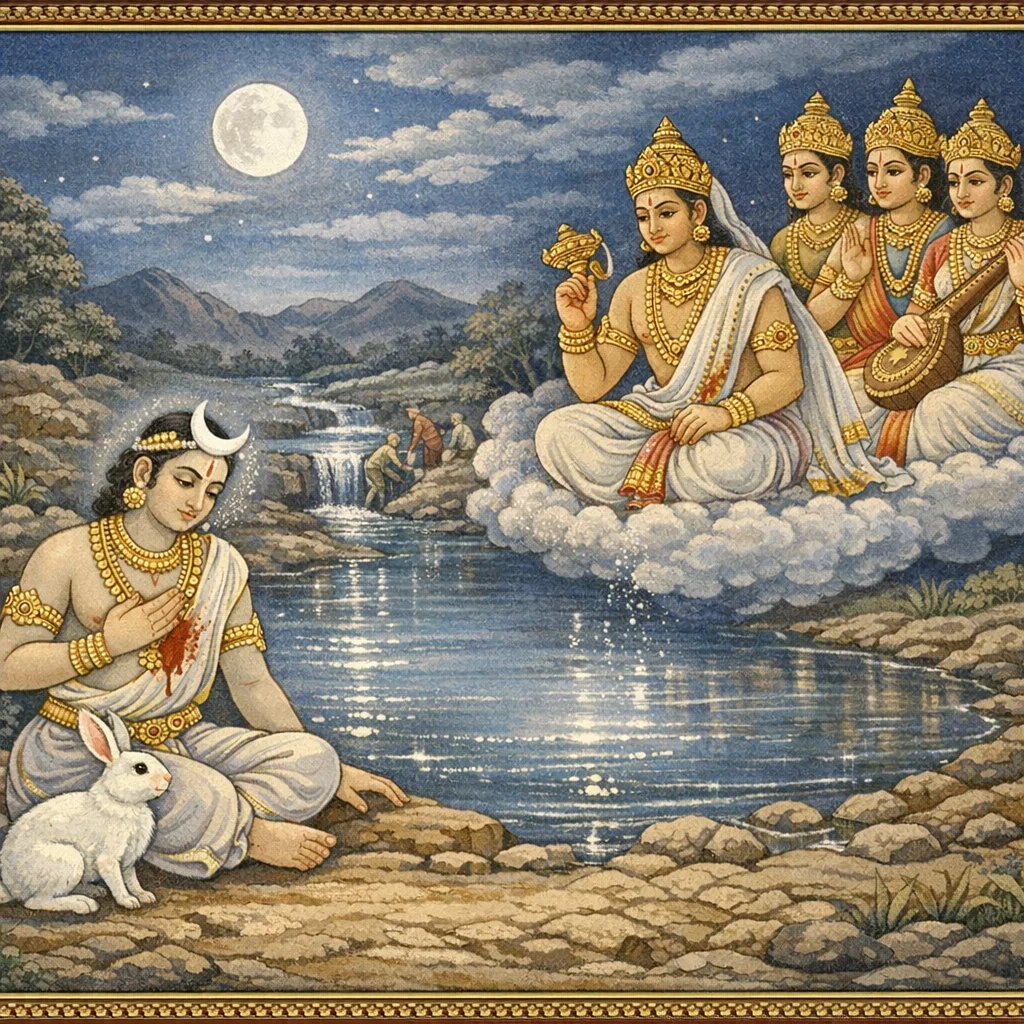
Īśvara tells Devī the origin of a sin-destroying tīrtha situated south of the place remembered as Śaśāpāna. After the devas obtain amṛta from the churning of the ocean, countless drops fall upon the earth. A thirsty hare (śaśaka) enters the water; because the reservoir is infused with amṛta, the hare becomes linked with it and attains an extraordinary condition. Fearing that humans might drink the fallen amṛta and become immortal, the devas deliberate in anxiety. The Moon (Niśānātha/Candra), struck by a hunter and unable to move, asks for amṛta; the devas direct him to drink from that reservoir, saying much amṛta has fallen there. Candra drinks the water “together with the hare,” becomes nourished and radiant, and the hare remains visibly present as a sign of contact with amṛta. The devas then excavate the dried basin until water springs forth again, and the place is named Śaśāpāna (“drinking with/through the hare”) because Candra drank the water connected with the hare. The phalaśruti concludes: devotees who bathe there attain the supreme destination associated with Maheśvara; those who feed Brahmins gain the fruit of all sacrifices. Later Sarasvatī is said to arrive with the Vadavāgni, further purifying the tīrtha and reaffirming the injunction to bathe there with full effort.
Shlokas
Verse 1
ईश्वर उवाच । ततो गच्छेन्महादेवि शशापानमिति स्मृतम् । तस्यैव दक्षिणे तीर्थं सर्वपापप्रणाशनम्
Īśvara said: Then, O great Goddess, one should go to the place remembered as Śaśāpāna. To its very south lies a sacred tīrtha that destroys all sins.
Verse 2
यस्मिन्स्नात्वा नरः सम्यङ्नापमृत्युभयं लभेत् । शृणु यस्मात्तदुत्पत्तिं वदतो मम वल्लभे
Bathing there properly, a man does not incur fear of untimely death. Hear from me, O beloved, the origin of that tīrtha, as I relate it.
Verse 3
मथित्वा सागरं देवा गृहीत्वाऽमृतमुत्तमम् । सत्वरास्तत्र ते गत्वा पपुश्चैव यथेप्सया
After churning the ocean, the gods took hold of the supreme nectar. Hastening there, they went and drank it as they wished.
Verse 4
पिबतां तत्र पीयूषं देवानां वरवर्णिनि । बिंदवः पतिता भूमौ शतशोथ सहस्रशः
As the gods drank the nectar there, O fair lady, drops fell upon the earth—by hundreds, and indeed by thousands.
Verse 5
एतस्मिन्नेव काले तु शशकस्तत्र चागतः । प्रविष्टः सलिले तत्र तृषार्तो वरवर्णिनि
At that very time, a hare came there as well. Tormented by thirst, it entered the water there, O fair lady.
Verse 6
अमरत्वमनुप्राप्तो वर्द्धते सलिलालये । तं दृष्ट्वा त्रिदशाः सर्वे स्पर्द्धमाना मुहुर्मुहुः । ज्ञात्वामृतान्वितं तोयं मंत्रं चक्रुर्भयान्विताः
Having attained immortality, it flourished in that watery abode. Seeing it, all the thirty gods again and again grew jealous in rivalry; realizing the water was infused with amṛta, they fearfully devised a mantra.
Verse 7
अमृतं पतितं भूमौ भक्षयिष्यंति मानवाः । ततोऽमर्त्त्या भविष्यंति नात्र कार्या विचारणा
“Humans will consume the amṛta that has fallen upon the earth; then they will become deathless—of this there is no need for doubt or deliberation.”
Verse 8
तिर्यग्योन्यां समुत्पन्नः कृपणः शशको ह्ययम् । अस्माभिः स्पर्द्धते तस्मात्ततो भयमुपस्थितम्
“This wretched hare has been born in an animal womb, yet he dares to compete with us. Therefore, because of him, fear has arisen among us.”
Verse 9
अथ प्राप्तो निशानाथो व्याधिना स परिप्लुतः । अब्रवीत्त्रिदशान्सर्वानमृतं मे प्रयच्छत
Then the Lord of the Night, the Moon, arrived, overwhelmed by illness, and said to all the gods: “Grant me amṛta.”
Verse 10
कृच्छ्रेण महता प्राप्तो नाहं शक्तो विसर्पितुम् । अथोचुस्त्रिदशाः सर्वे सर्वमस्माभिर्भक्षितम्
“With great difficulty I have come; I am not able to move about.” Then all the gods replied: “Everything has already been consumed by us.”
Verse 11
विस्मृतस्त्वं निशानाथ चिरात्कस्मादिहागतः । कुरुष्व वचनं चंद्र अस्माकं तिमिरापह
O Lord of the Night, you have long been forgotten—why have you come here after so long? O Candra, dispeller of darkness, do as we ask.
Verse 12
अस्मिञ्जलेऽमृतं भूरि पतितं पिबतां हि नः । तत्पिबस्व निशानाथ सर्वमेतज्जलाशयम्
In this water, abundant nectar has fallen—let us drink of it. Therefore, O Lord of the Night, drink up this entire reservoir of water.
Verse 13
अर्द्धं निपतितं चात्र सत्यमेतन्निशामय । तेषां तद्वचनं श्रुत्वा शीतरश्मिस्त्वरान्वितः
And here, half of it has indeed fallen—know this to be true.” Hearing their words, the cool-rayed Moon hastened.
Verse 14
तृषार्तो वाऽपिबत्तोयं शशकेन समन्वितम् । अस्थिशेषं तु तत्तस्य कायं पीयूषभक्षणात्
Tormented by thirst, he drank that water in which the hare was present. From consuming the nectar, the hare’s body was reduced to mere bones.
Verse 15
तत्क्षणात्पुष्टिमगमत्कांत्या परमया युतः । धातुषु क्षीयमाणेषु पुष्टो हि सुधया हि सः
At that very moment he attained vigor, endowed with supreme radiance. Though his bodily elements were wasting away, he was nourished indeed by the nectar.
Verse 16
स चापि शशकस्तस्य न मृतो जठरं गतः । अद्यापि दृश्यते तत्र देहे पीयूषभक्षणात्
And that hare, having entered his belly, did not die. Even today it is seen there within his body, for it had consumed the nectar of immortality.
Verse 17
तत्क्षणात्तुष्टिमगमत्कांत्या परमया युतः । अब्रुवन्खन्यतामेतद्यथा भूयो जलं भवेत्
At that very moment he became content, endowed with supreme radiance. They said: “Let this place be dug out, so that water may arise here again in abundance.”
Verse 18
अस्माकं संगमादेतच्छुष्कं श्वभ्रं जलाशयम् । तद्युक्तं च कृतं कर्म नैतत्साधुविचेष्टितम्
“Because of our coming together here, this dry pit has become a reservoir of water. Yet the deed done in connection with it is not the conduct of the righteous.”
Verse 19
ततोऽखनंश्च ते सर्वे यावत्तोयविनिर्गमः । अथाब्रुवंस्ततः सर्वे हर्षेण महतान्विताः
Then all of them dug on, until at last water sprang forth. Thereafter, filled with great joy, they all spoke.
Verse 20
यस्माच्छशेन संयुक्तं पीतमेतज्जलाशयम् । चंद्रेण हि शशापानं तस्मादेतद्भविष्यति
“Because this reservoir was drunk in association with the Hare (śaśa), and because the Moon—bearing the mark of the Hare—indeed drank it, therefore it shall be known as ‘Śaśāpāna’.”
Verse 21
अत्रागत्य नरः स्नानं यः करिष्यति भक्तितः । स यास्यति परं स्थानं यत्र देवो महेश्वरः
Whoever comes here and bathes with devotion will attain the supreme abode—where the Lord Maheśvara dwells.
Verse 22
अत्रान्नं संप्रदास्यंति ब्राह्मणेभ्यः समा हिताः । सर्वयज्ञफलं तेषां भविष्यति न संशयः
Here, people of good intent will offer food to Brāhmaṇas; for them, the fruit of all sacrifices will arise—of this there is no doubt.
Verse 23
अस्मिन्दृष्टे सुराः सर्वे दृष्टाः स्युः सर्वदेवताः । एवमुक्त्वा सुराः सर्वे जग्मुश्चैव सुरालयम्
“When this is beheld, all the gods are as though beheld—indeed all the deities.” Having said so, all the gods departed for their celestial abode.
Verse 24
अथ कालेन महता प्राप्ता तत्र सरस्वती । वडवाग्निं समादाय तयानुप्लावितं पुनः
After a long time, Sarasvatī came there; bearing the Vaḍavāgni, she again inundated that place.
Verse 25
ततो मेध्यतरं जातं तीर्थं च वरवर्णिनि । तस्मात्सर्वप्रयत्नेन तत्र स्नानं समाचरेत्
“Then the tīrtha became even more purifying, O fair lady. Therefore, with every effort, one should perform bathing there.”