Adhyaya 256
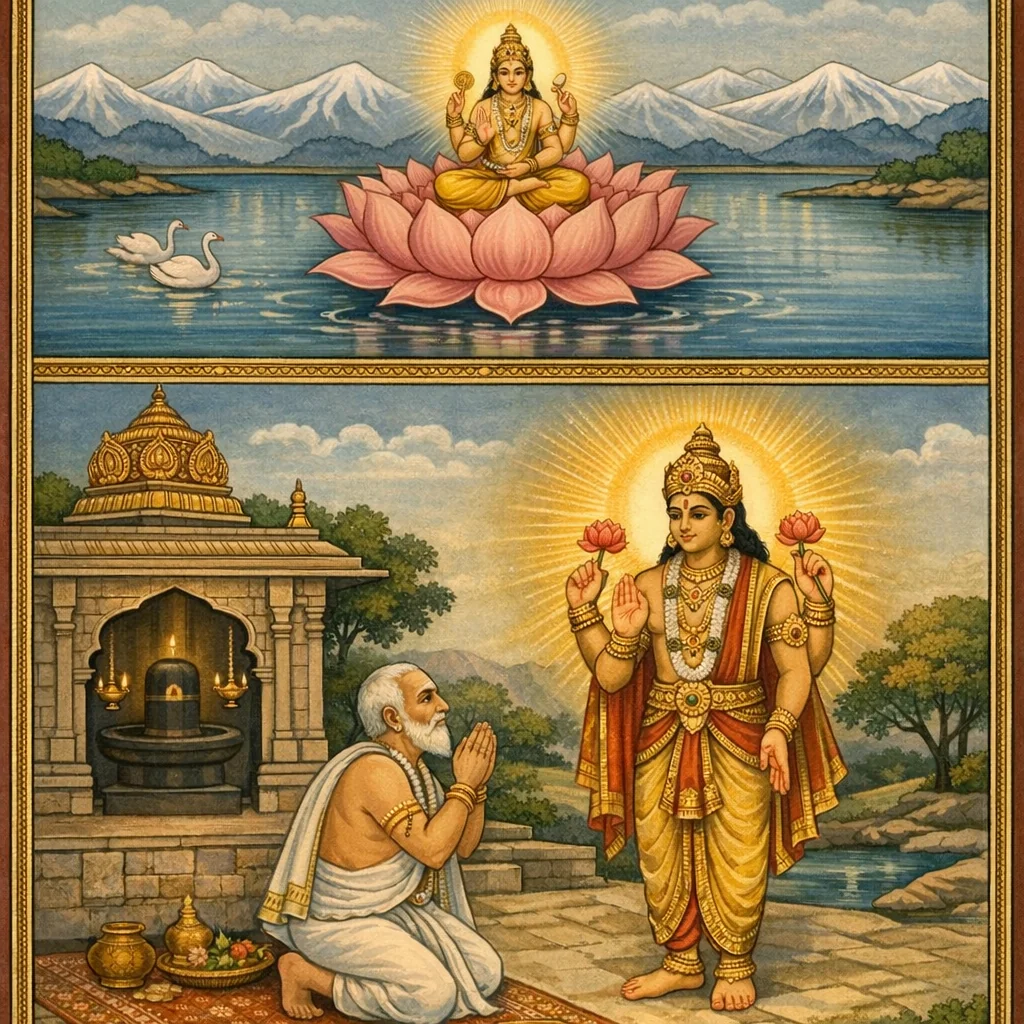
This adhyāya is framed as a divine exposition, with Īśvara speaking to Devī, affirming a solar shrine within Prabhāsa-kṣetra. It opens with the instruction to approach Nandāditya, the Sun-form installed by King Nanda. Nanda is praised as an exemplary ruler whose realm enjoys well-being, yet by a karmic reversal he becomes afflicted with severe leprosy. Seeking the cause, the narrative turns to an earlier event: traveling in a celestial vimāna granted by Viṣṇu, Nanda reaches the heavenly Mānasarovar and beholds a rare “Brahma-born lotus,” within which shines a thumb-sized radiant Puruṣa. Desiring prestige, he orders the lotus seized; at the touch a dreadful sound arises and he is struck down at once. Sage Vasiṣṭha explains that the lotus is supremely sacred, that the intent to display it publicly is a moral fault, and that the indwelling deity is the solar principle (Pradyotana/Sūrya). Vasiṣṭha prescribes propitiation of Bhāskara at Prabhāsa. Nanda installs and worships Nandāditya with offerings; Sūrya grants immediate cure, promises enduring presence, and declares that those who behold the deity on Saptamī falling on a Sunday attain the highest state. The chapter concludes with phalaśruti benefits: bathing, śrāddha, and gifting—especially a kapilā cow or a ghee-cow—at this tīrtha yield incalculable merit and support liberation.
Shlokas
Verse 1
ईश्वर उवाच । ततो गच्छेन्महादेवि नंदादित्यं समाहितः । नंदेन स्थापितं पूर्वं तत्रैवामितबुद्धिना
Īśvara said: “Then, O great goddess, with a focused mind one should go to Nandāditya, formerly established right there by King Nanda of boundless understanding.”
Verse 2
नंदो राजा पुरा ह्यासीत्सर्वलोकसुखप्रदः । न दुर्भिक्षं न च व्याधि नाकाले मरणं नृणाम्
“In former times King Nanda ruled, a giver of happiness to all people. There was no famine, no disease, and no untimely death among men.”
Verse 3
तस्मिञ्छासति धर्मज्ञे न चावृष्टिकृतं भयम् । कस्यचित्त्वथ कालस्य पूर्वकर्मानुसारतः
While that dharma-knowing king ruled, there was no fear brought on by drought. Yet at a certain time—according to the ripening of former deeds—a change arose.
Verse 4
कुष्ठेन महता व्याप्तो वैराग्यपरमं गतः । तेन रोगाभिभूतेन देवदेवो दिवाकरः । प्रतिष्ठितो नदीतीरे स च रोगाद्विमोचितः
Afflicted by severe leprosy, he attained the height of dispassion (vairāgya). Overwhelmed by that disease, he installed the God of gods, Divākara—the Sun—upon a riverbank, and he was freed from the illness.
Verse 5
देव्युवाच । किमसौ रोगवान्राजा सार्वभौमो महीपतिः । तस्य धर्मरतस्यापि कस्माद्रोग समुद्भवः
The Goddess said: “Why is that sovereign king—the universal ruler and lord of the earth—afflicted with illness? Though devoted to dharma, from what cause has this disease arisen?”
Verse 6
ईश्वर उवाच । एष धर्मसदाचारो नंदो राजा प्रतापवान् । व्यचरत्सर्वलोकान्स विमानवरमास्थितः
Īśvara said: “This is Nanda, a mighty and glorious king of righteous conduct in dharma. Mounted upon an excellent celestial chariot (vimāna), he roamed through all the worlds.”
Verse 7
विमानं तस्य तुष्टेन दत्तं वै विष्णुना स्वयम् । कामगं वरवर्णेन बर्हिणेन विनादितम्
That vimāna was bestowed upon the king by Viṣṇu himself, pleased with him—able to go wherever one wished, and resonant with the sweet calls of a splendid peacock of radiant hue.
Verse 8
स कदाचिन्नृपश्रेष्ठो विचरंस्तत्र संस्थितः । गतवान्मानसं दिव्यं सरो देवगणान्वितम्
Once, that foremost of kings, while roaming and pausing there, came to the divine lake Mānasasaras, attended by hosts of gods.
Verse 9
तत्रापश्यद्बृहत्पद्मं सरोमध्यगतं सितम् । तत्र चांगुष्ठमात्रं तु स्थितं पुरुषसत्तमम्
There he beheld a great white lotus standing in the middle of the lake; and upon it was stationed the Supreme Person, only thumb-sized in form.
Verse 10
रक्तवासोभिराच्छन्नं द्विभुजं तिग्मतेजसम् । तं दृष्ट्वा सारथिं प्राह पद्ममेतत्समाहर
Covered in red garments, two-armed, and blazing with sharp radiance—seeing him there, the king said to his charioteer: “Bring that lotus here.”
Verse 11
इदं तु शिरसा बिभ्रत्सर्वलोकस्य सन्निधौ । श्लाघनीयो भविष्यामि तस्मादाहर मा चिरम्
“If I bear this upon my head in the presence of all the worlds, I shall become worthy of praise. Therefore bring it—do not delay.”
Verse 12
एवमुक्तस्ततस्तेन सारथिः प्रविवेश ह । ग्रहीतुमुपचक्राम तत्पद्मं वरवर्णिनि । स्पृष्टमात्रे तदा पद्मे हुंकारः समपद्यत
Thus commanded by him, the charioteer entered the lake and began to seize that lotus, O fair one. But the very moment the lotus was touched, a terrifying “huṃ” resounded.
Verse 13
राजा च तत्क्षणात्तेन शब्देन समजायत । कुष्ठी विगतवर्णश्च बलवीर्यविवर्जितः
And at that very instant, by that sound, the king became afflicted—stricken with leprosy, his complexion ruined, and deprived of strength and vigor.
Verse 14
तथागतमथात्मानं दृष्ट्वा स पुरुषर्षभः । तस्थौ तत्रैव शोकार्तः किमेतदिति चिंतयन्
Seeing himself brought to such a condition, that bull among men stood there, overwhelmed with grief, reflecting: “What is this that has happened?”
Verse 15
तस्य चिंतयतो धीमानाजगाम महातपाः । वसिष्ठो ब्रह्मपुत्रस्तु स तं पप्रच्छ पार्थिवः
As that wise king sat absorbed in anxious thought, the great ascetic Vasiṣṭha—son of Brahmā—came to him. Seeing him, the ruler questioned the sage.
Verse 16
एष मे भगवञ्जातो देहस्यास्य विपर्ययः । कुष्ठरोगाभिभूतात्मा नाहं जीवितुमुत्सहे
“O Blessed One, this body of mine has fallen into a dreadful reversal. Overwhelmed by leprosy, my spirit is crushed; I no longer have the will to live.”
Verse 17
उपायं ब्रूहि मे ब्रह्मन्व्याधितस्य चिकित्सितम् । उताहो व्रतमन्यद्वा दानं यज्ञमथापि वा
“O Brahmin, tell me the means—the proper remedy for one afflicted. Or is it some vow, or some other observance, or charity, or even a sacrifice?”
Verse 18
वसिष्ठ उवाच । एतद्ब्रह्मोद्भवं नाम पद्मं त्रैलोक्यविश्रुतम् । दृष्टमात्रेण चानेन दृष्टाः स्युः सर्व देवताः
Vasiṣṭha said: “This is the lotus called ‘Brahmodbhava’, renowned throughout the three worlds. By merely beholding it, one is deemed to have beheld all the deities.”
Verse 19
एतद्धि दृश्यते धन्यैः पद्मं कैः क्वापि पार्थिव । एतस्मिन्दृष्टमात्रे तु यो जलं विशते नरः
“Indeed, O King, this lotus is seen only by the fortunate—rarely, by someone, somewhere. And the man who, having merely seen it, enters the water…”
Verse 20
सर्वपापविनिर्मुक्तः पदं निर्वाण माप्नुयात् । एष दृष्ट्वा तु ते सूतो हर्तुं तोये प्रविष्टवान्
“…becomes freed from all sins and attains the state of nirvāṇa. And your charioteer—having seen it—entered the water, intending to take the lotus.”
Verse 21
तव वाक्येन राजेंद्र मृतोऽसौ रोगवान्भवेत् । ब्रह्मपुत्रोऽप्यहं तेन पश्यामि परमेश्वरम्
“By your command, O best of kings, he would be as good as dead—becoming diseased. Yet by that very sacred power, even I—though a son of Brahmā—behold the Supreme Lord.”
Verse 22
अहन्यहनि चागच्छंस्त्वं पुनर्दृष्टवानसि । वांछंति देवता नित्यममुं हृदि मनोरथम्
“Coming day after day, you have again obtained its sight. The gods constantly long in their hearts for this very cherished desire.”
Verse 23
मानसे ब्रह्मपद्मं तु दृष्ट्वा स्नात्वा कदा वयम् । प्राप्स्यामः परमं ब्रह्म यद्गत्वा न पुनर्भवेत्
When shall we behold the Brahma-lotus at Mānasa, bathe there, and attain the Supreme Brahman—reaching which one is not born again?
Verse 24
इदं च कारणं भूयो द्वितीयं शृणु पार्थिव । कुष्ठस्य यत्त्वया प्राप्तं हर्तुकामेन पंकजम्
And hear, O King, a second reason as well: it is because of leprosy that you were led to this—when, desiring to take the lotus, you approached it.
Verse 25
प्रद्योतनस्तु गर्भेऽस्मिन्स्वयमेव व्यवस्थितः । तवैषा बुद्धिरभवद्दृष्ट्वेदं वरपंकजम्
Pradyotana himself is established of his own accord within this womb. Seeing this excellent lotus, this understanding arose in you.
Verse 26
धारयामि शिरस्येनं लोकमध्ये विभूषणम् । इदं चिन्तयतः पापमेवं देवेन दर्शितम्
I shall bear this upon my head as an ornament in the midst of the world. Thus has the deity revealed the sin that was troubling my mind.
Verse 27
ततः सर्वप्रयत्नेन तमाराधय भास्करम् । प्रसादाद्देवदेवस्य मोक्ष्यसे नात्र संशयः
Therefore, with every effort, worship that Bhāskara (the Sun). By the grace of the God of gods, you will be released—of this there is no doubt.
Verse 28
प्रभासं गच्छ राजेंद्र तीर्थं त्रैलोक्यविश्रुतम् । तत्र सिद्धिर्भवेच्छीघ्रमार्त्तानां प्राणिनां भुवि
Go to Prabhāsa, O lord of kings—the tīrtha renowned in the three worlds. There, upon the earth, afflicted beings swiftly attain success and relief.
Verse 29
ईश्वर उवाच । तस्य तद्वचनं श्रुत्वा वसिष्ठस्य महात्मनः । प्रभासं क्षेत्रमासाद्य माहेश्वर्यास्तटे शुभे
Īśvara said: Having heard those words of the great-souled Vasiṣṭha, he reached the sacred kṣetra of Prabhāsa, to the auspicious bank of Māheśvarī.
Verse 30
नंदादित्यं प्रतिष्ठाप्य गंधधूपानुलेपनैः । पूजयामास तं देवि पुष्पैरुच्चावचैस्तथा
Having installed Nandāditya, he worshipped him, O Goddess, with fragrances, incense, and unguents—also with flowers of many kinds.
Verse 31
तस्य तुष्टो दिवानाथो वरदोऽहमथाब्रवीत्
Pleased with him, the Lord of the Day (the Sun) then spoke: “I am the granter of boons.”
Verse 32
नन्द उवाच । कुष्ठेन महता व्याप्तं पश्य मां सुरसत्तम । यथाऽयं नाशमायाति तथा कुरु दिवाकर
Nanda said: Behold me, O best of the gods—overwhelmed by a dreadful leprosy. O Divākara, act so that this disease is destroyed.
Verse 33
सान्निध्यं कुरु देवेश स्थानेऽस्मिन्नित्यदा विभो
O Lord of the gods, O Mighty One—grant Your abiding presence in this place, forever.
Verse 34
सूर्य उवाच । नीरोगस्त्वं महाराज सद्य एव भविष्यसि । अत्र ये मां समागत्य द्रक्ष्यंति च नरा भुवि
Sūrya said: O great king, this very day you shall be free from disease. And those men on earth who come here and behold Me…
Verse 35
सप्तम्यां सूर्यवारेण यास्यंति परमां गतिम् । अत्र मे सूर्यवारेण सांनिध्यं सप्तमीदिने । भविष्यति न संदेहो गमिष्ये त्वं सुखी भव
On Saptamī, when it coincides with Sunday, they attain the supreme goal. On that Saptamī day, if it is Sunday, My presence will surely be here—without doubt. I shall depart; you remain happy.
Verse 36
एवमुक्त्वा सहस्रांशुस्तत्रैवांतरधीयत
Having spoken thus, Sahasrāṃśu—the thousand-rayed Sun—vanished there itself.
Verse 37
नीरोगत्वमवा प्यासौ कृत्वा राज्यमनुत्तमम् । जगाम परमं स्थानं यत्र देवो दिवाकरः । तस्मिंस्तीर्थे नरः स्नात्वा कृत्वा श्राद्धं प्रयत्नतः
Having attained freedom from disease and established an unsurpassed kingdom, he went to the supreme abode where the god Divākara (the Sun) dwells. At that sacred tīrtha, when a man bathes and performs śrāddha with earnest effort…
Verse 38
नंदादित्यं पुनर्दृष्ट्वा न पुनर्मर्त्त्यतां व्रजेत । प्रदद्यात्कपिलां तत्र ब्राह्मणे वेदपारगे
Having beheld Nandāditya once more, one should not return to mortal existence. There, one should gift a tawny cow (kapilā) to a Brāhmaṇa well-versed in the Vedas.
Verse 39
अहोरात्रोषितो भूत्वा घृतधेनुमथापि वा । न तस्य गुणितुं शक्या संख्या पुण्यस्य केनचित्
Even by merely staying there for a full day and night—or even by offering a ghee-giving cow—no one is able to calculate the measure of the merit gained.
Verse 40
इत्येवं देवदेवस्य माहात्म्यं दीप्तदीधितेः । कथितं तव सुश्रोणि सर्वपापप्रणाशनम्
Thus, O fair-hipped one, the greatness of the God of gods—of the radiant, blazing-lustred one—has been told to you; it is the destroyer of all sins.
Verse 256
इति श्रीस्कांदे महापुराण एकाशीतिसाहस्र्यां संहितायां सप्तमे प्रभासखण्डे प्रथमे प्रभासक्षेत्रमाहात्म्ये नन्दादित्यमाहात्म्यवर्णनंनाम षट्पञ्चाशदुत्तरद्विशततमो ऽध्यायः
Thus ends the two-hundred-and-fifty-sixth chapter, named “The Description of the Glory of Nandāditya,” in the Prabhāsa Khaṇḍa, within the Prabhāsa-kṣetra Māhātmya section, of the Śrī Skanda Mahāpurāṇa in the Ekāśītisāhasrī Saṃhitā.