Adhyaya 249
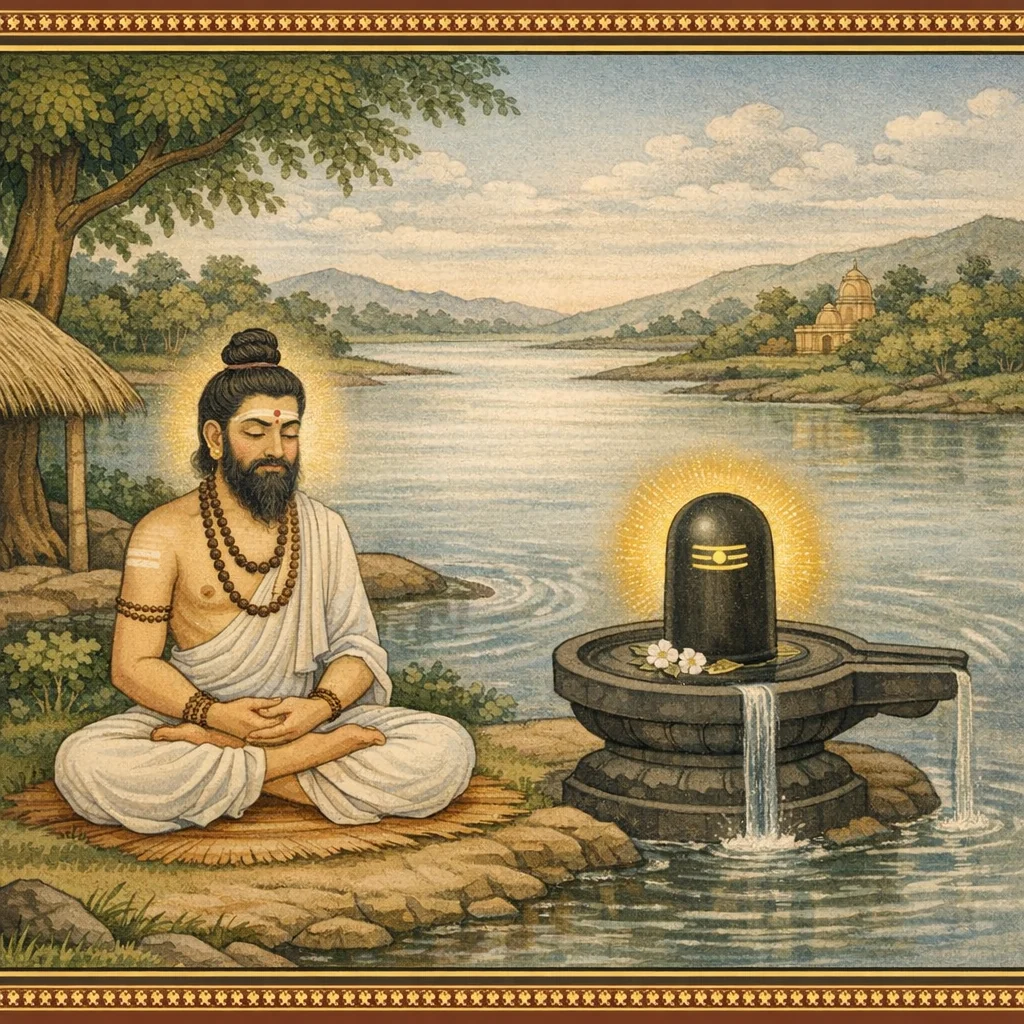
Īśvara instructs Devī to go to the deity called Saṅgameśvara, also known as “Golaka,” famed as a destroyer of sins. The narrative identifies the sacred site at the saṅgama, the confluence of the Sarasvatī and Piṅgā, and introduces the sage Uddālaka, an accomplished ascetic performing austerities there. As Uddālaka undertakes intense tapas, a liṅga manifests before him, serving as a radiant confirmation of devotion. A disembodied voice (aśarīriṇī vāk) proclaims the Lord’s permanent presence at that spot and establishes the shrine-name “Saṅgameśvara,” since the liṅga arose at the confluence. The chapter states the phala: those who bathe at the renowned confluence and behold Saṅgameśvara attain the highest destiny. Uddālaka worships the liṅga unceasingly and, at life’s end, reaches the abode of Maheśvara—an exemplar of tīrtha-centered devotion culminating in liberation.
Shlokas
Verse 1
ईश्वर उवाच । ततो गच्छेन्महादेवि देवं वै संगमेश्वरम् । गोलक्षमिति विख्यातं सर्वपातकनाशनम्
Īśvara said: “Then, O Mahādevī, one should go to the deity Saṃgameśvara, renowned as Golakṣa, the destroyer of all sins.”
Verse 2
तस्यैव पश्चिमे भागे सर्वकामफलप्रदम् । ऋषिरुद्दालकोनाम पुरा ह्यासीन्महातपाः
In its western region, which grants the fruits of all desires, there once lived a great ascetic—the ṛṣi named Uddālaka.
Verse 3
स पुरा संगमं प्राप्य सर्वपापप्रणाशनम् । सरस्वत्याश्च पिंगायास्तपस्तेपे सुरेश्वरि
Having formerly reached the sacred confluence—the destroyer of all sins—he performed austerities, O Queen of the gods, at the meeting of Sarasvatī and Piṅgā.
Verse 4
ततस्तपस्यतस्तस्य तपो रौद्रं महात्मनः । पुरतो ह्युत्थितं लिंगं भक्त्या युक्तस्य सुन्दरि
As that great-souled one continued his fierce austerities, O Fair One, a liṅga arose before him, for he was endowed with devotion.
Verse 5
एतस्मिन्नेव काले तु वागुवाचाशरीरिणी । उद्दालक महाबाहो शृणुष्वैतद्वचो मम
At that very time, a bodiless voice spoke: “O Uddālaka, mighty-armed one, listen to these words of mine.”
Verse 6
अद्यप्रभृति वासोऽत्र मम नित्यं भविष्यति । यस्मादत्र समुत्पन्नं संगमे लिंगमुत्तमम् । संगमेश्वरमित्येव नाम चास्य भवि ष्यति
“From today onward, my dwelling here will be perpetual. Because at this confluence the supreme liṅga has arisen, its name too shall indeed be ‘Saṃgameśvara’.”
Verse 7
येत्र स्नानं नराः कृत्वा संगमे लोकविश्रुते । संगमेश्वरमीक्षन्ते ते यांति परमां गतिम्
Those who bathe there at the world-famed confluence and behold Saṃgameśvara attain the supreme goal.
Verse 8
ईश्वर उवाच । ततस्तं पूजयामास दिवारात्रमतंद्रितः । ततो देहावसानेऽसौ गतो यत्र महेश्वरः
Īśvara said: “Then he worshipped that liṅga day and night without weariness; and when his body fell away, he went to the realm where Maheśvara is.”
Verse 249
इति श्रीस्कांदे महापुराण एकाशीतिसाहस्र्यां संहितायां सप्तमे प्रभासखण्डे प्रथमे प्रभासक्षेत्रमाहात्म्ये संगमेश्वरमाहात्म्यवर्णनंनामैकोनपञ्चाशदुत्तरद्विशततमोऽध्यायः
Thus ends the two-hundred and forty-ninth chapter, entitled “The Description of the Greatness of Saṃgameśvara,” in the Prabhāsa Khaṇḍa, within the Prabhāsakṣetra Māhātmya, of the venerable Skanda Mahāpurāṇa (the Saṃhitā of eighty-one thousand verses).