Adhyaya 247
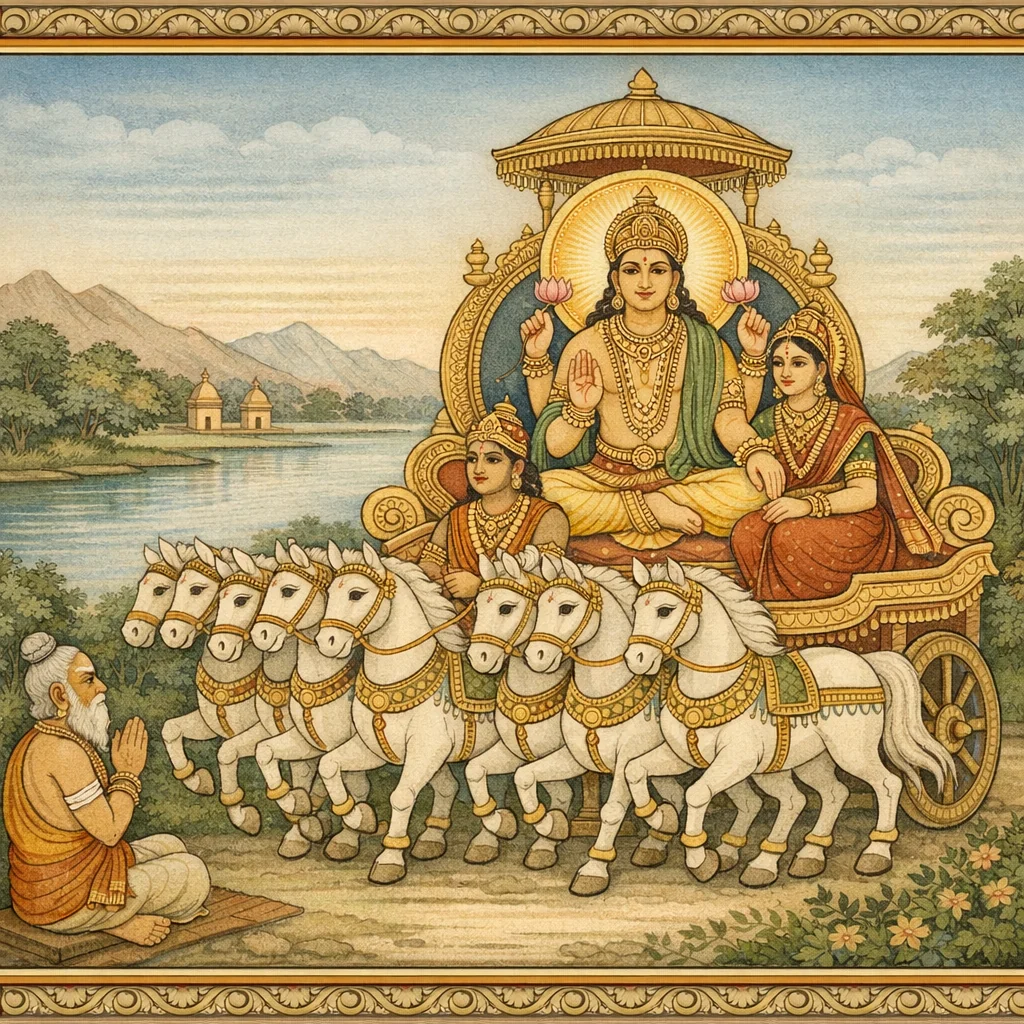
This chapter takes the form of a theological discourse from Īśvara to Devī, listing the key darśana sites within Prabhāsa-kṣetra and linking specific observances to stated fruits. It first directs the pilgrim to behold the sin-destroying presence of Sūrya there, presenting solar darśana as an act of purification. It then identifies Piṅgalā Devī as a manifestation in the form of Pārvatī, bringing goddess worship into the same sacred circuit. A distinctive fast on the third lunar day (tṛtīyā) is prescribed, promising fulfillment of aims and auspicious gains such as wealth and progeny. Finally, Śukreśvara (a named liṅga/shrine) is introduced; its darśana is praised as freeing one from all faults and sins (sarva-pātaka), underscoring that right pilgrimage—seeing, fasting, and devotion—functions as an ethical-ritual means within the kṣetra.
Shlokas
Verse 1
ईश्वर उवाच । तत्रैव संस्थितं पश्येत्सूर्यं पापप्रणाशनम् । तथा च पिंगलां देवीं पार्वतीरूपधारिणीम्
Īśvara said: There itself one should behold the Sun, the destroyer of sins; and also the Goddess Piṅgalā, who bears the form of Pārvatī.
Verse 2
तृतीयायां विशेषेण ह्युपवासं करोति यः । सर्वान्कामानवाप्नोति धनवान्पुत्रवान्भवेत्
Whoever, especially on the third lunar day (Tṛtīyā), observes a fast, attains all desired aims, becomes wealthy, and is blessed with sons.
Verse 3
तत्रैव संस्थितं पश्येच्छुकेश्वरमिति श्रुतम् । तं दृष्ट्वा मानवो देवि मुक्तः स्यात्सर्वपातकैः
There itself one should behold Śukreśvara—so it is heard. Having seen Him, O Goddess, a person is freed from all sins.
Verse 247
इति श्रीस्कान्दे महापुराण एकाशीतिसाहस्र्यां संहितायां सप्तमे प्रभासखण्डे प्रथमे प्रभासक्षेत्रमाहात्म्ये पिंगलादित्यपिंगादेवीशुक्रेश्वरमाहात्म्यवर्णनंनाम सप्तचत्वारिंश दुत्तरद्विशततमोऽध्यायः
Thus ends the two-hundred-and-forty-seventh chapter, called “The Description of the Greatness of Piṅgalāditya, Piṅgā Devī, and Śukreśvara,” in the Prabhāsa Khaṇḍa, within the Prabhāsa Kṣetra Māhātmya of the venerable Skanda Mahāpurāṇa, in the Saṃhitā of eighty-one thousand verses.