Adhyaya 244
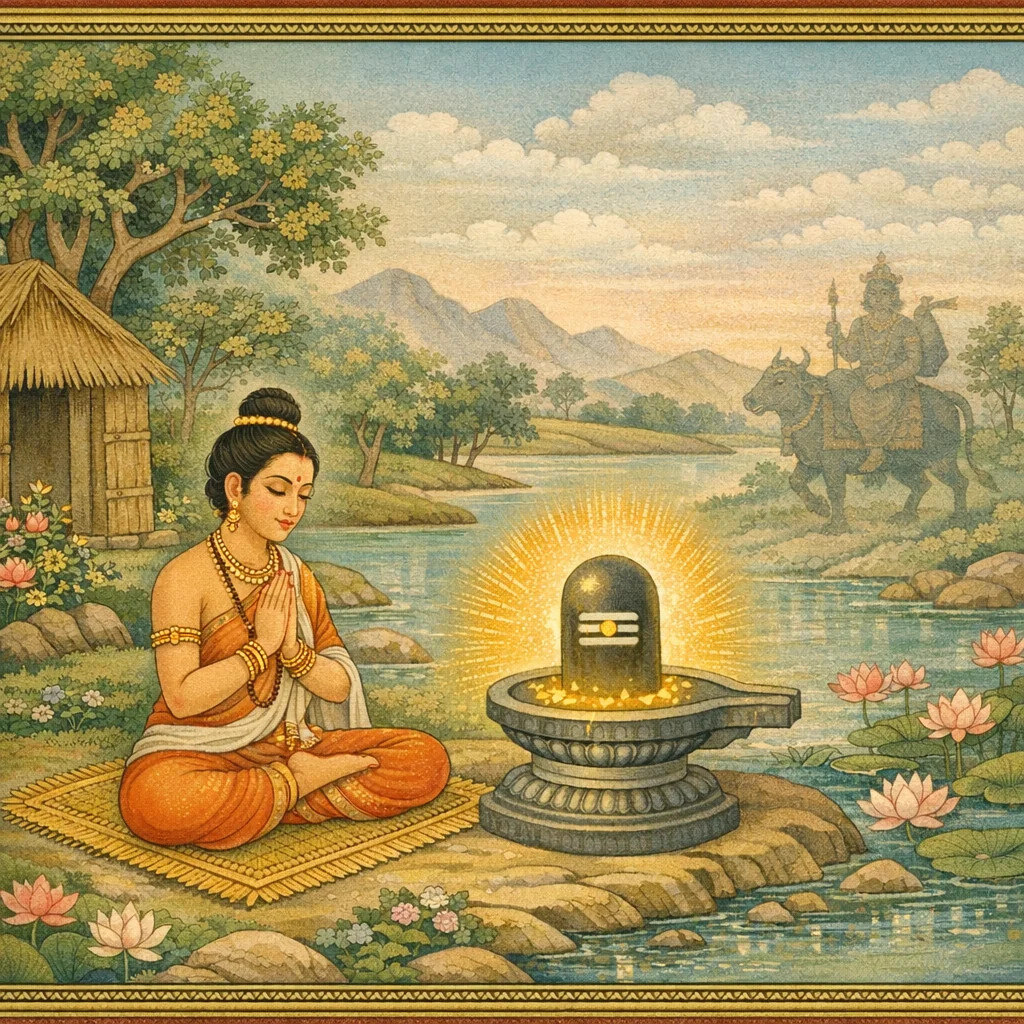
Īśvara instructs Devī to go to the eminent shrine called Vicitreśvara, situated on the Hiraṇyā-tīra and praised as a destroyer of great sins (mahāpātaka-nāśana). Within the pilgrimage ethos of Prabhāsa-kṣetra, it is upheld as a place of purification and sacred merit. The chapter traces the shrine’s origin to Vicitra, a scribe associated with Yama, who undertakes intense austerities. By the power of that tapas, a fierce and awe-inspiring liṅga (mahāraudra) is established there. In an explicit phalaśruti, it is promised that one who beholds this liṅga will not behold Yama’s realm. Thus darśana is presented as both a protective act and a means toward liberation in the Prabhāsa pilgrimage tradition.
Shlokas
Verse 1
ईश्वर उवाच । ततो गच्छेन्महादेवि विचित्रेश्वरमुत्तमम् । हिरण्यातीरनिलयं महापातकनाशनम्
Īśvara said: “Then, O great Goddess, one should go to the supreme Vicitreśvara, who dwells on the bank of the Hiraṇyā and who destroys great sins.”
Verse 2
विचित्रेण महादेवि लेखकेन यमस्य च । तपः कृत्वा महारौद्रं लिंगं तत्र प्रतिष्ठितम्
O great Goddess, Vicitra—Yama’s scribe—having performed austerities, established there a most formidable Mahāraudra liṅga.
Verse 3
तं दृष्ट्वा मानवो देवि यमलोकं न पश्यति
O Goddess, having beheld Vicitreśvara, a human being does not behold Yama’s realm.
Verse 244
इति श्रीस्कांदे महापुराण एकाशीतिसाहस्र्यां संहितायां सप्तमे प्रभासखंडे प्रथमे प्रभासक्षेत्रमाहात्म्ये विचित्रेश्वरमाहात्म्यवर्णनंनाम चतुश्चत्वारिंशदुत्तरद्विशततमोऽध्यायः
Thus ends Chapter 244, entitled “The Account of the Glory of Vicitreśvara,” in the Prabhāsa Khaṇḍa, within the Prabhāsa Kṣetra Māhātmya of the venerable Skanda Mahāpurāṇa, in the Saṃhitā of eighty-one thousand verses.