Adhyaya 242
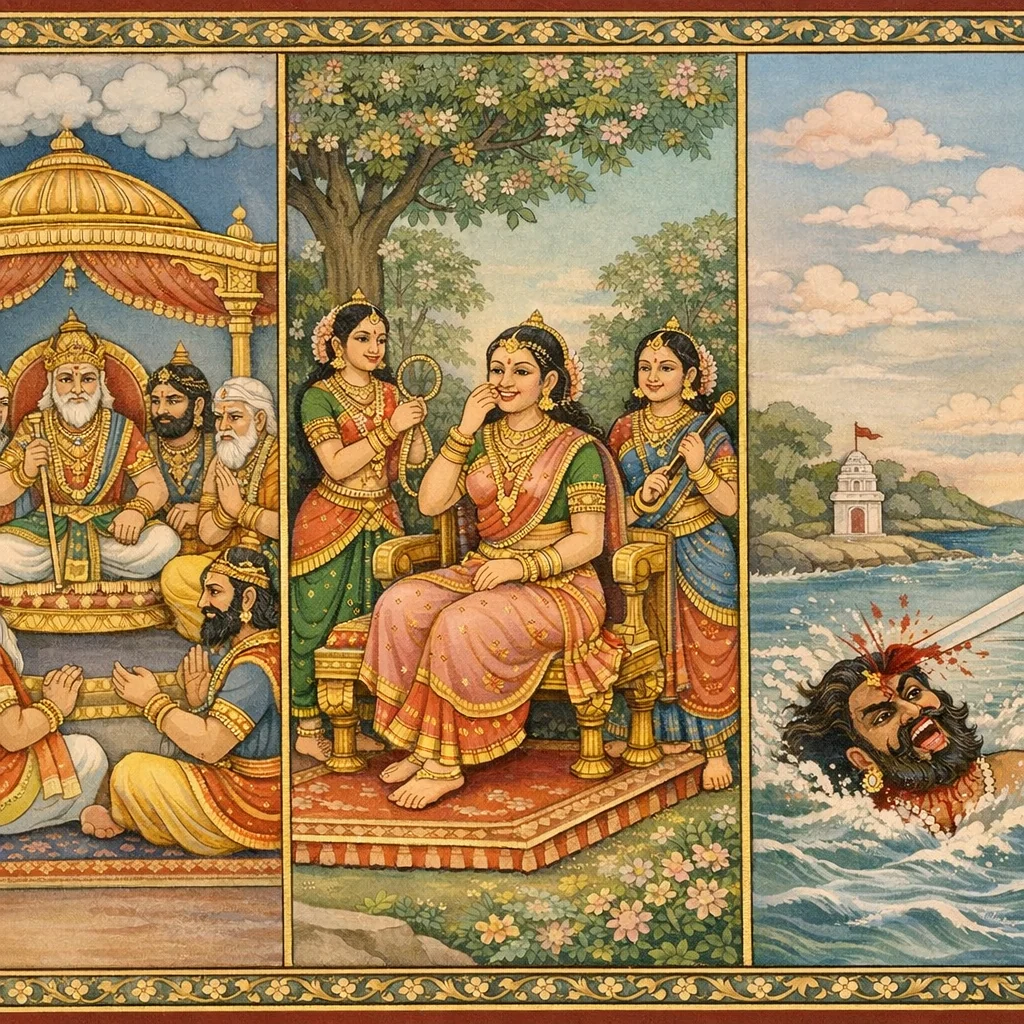
Īśvara tells Mahādevī of a protective episode near the sacred seat of the Maiden-Goddess, Devī Kumārikā, marking the eastern direction as a cue within the holy landscape. In a former aeon (Rathantara kalpa) the great asura Ruru rises as a terror to the worlds, harassing devas and gandharvas, slaying ascetics and dharma-practitioners, and bringing about the decline of svādhyāya, the vaṣaṭ calls, and the celebrations of yajña upon the earth. Devas and great ṛṣis deliberate on how to kill him; from their collective bodily emanation (sweat) a lotus-eyed divine maiden manifests. Asked to end the crisis, she laughs, and from that laughter arise attendant maidens bearing pāśa and aṅkuśa, who rout Ruru’s forces in battle. Ruru casts a dark (tāmasī) illusion, but the Devī remains unconfused; she pierces him with śakti, and when he flees toward the sea she pursues, enters the oceanic realm, and beheads him with a sword, emerging as Cārma-Muṇḍa-dharā, bearing skin and severed head. Returning to Prabhāsa with a radiant, multi-formed retinue, she receives hymns from astonished devas who praise her as Cāmuṇḍā, Kālarātri, Mahāmāyā, Mahākālī/Kālikā, and other fierce, protective names. She grants boons: the devas ask that she remain established in this kṣetra, that her stotra bestow fruits on reciters, and that devotees who hear her origin with bhakti attain purification and the higher goal (parā gati). Worship in the bright fortnight—especially on Navamī in the month of Āśvina—is declared auspicious; the chapter ends with the Devī abiding there and the devas returning to heaven, their enemies defeated.
Shlokas
Verse 1
ईश्वर उवाच । ततो गच्छेन्महादेवि यत्र देवीकुमारिका । तस्यैव पूर्वदिग्भागे स्थिता रक्षार्थमेव हि
Īśvara said: Then, O great Goddess, one should go to the place where Devī Kumārikā is present; in the eastern quarter of that very region she stands indeed for the sake of protection.
Verse 2
पुरा रथंतरे कल्पे रुरुर्नाम महासुरः । उत्पन्नः स महाकायः सर्वलोकभयावहः
Long ago, in the Rathantara Kalpa, a great asura named Ruru arose—vast in form and bringing terror to all the worlds.
Verse 3
तेन देवाः सगन्धर्वास्त्रासितास्त्रिदशा लयात् । तस्य भीत्या ततः सर्वे ब्रह्मलोकमधिस्थिताः
By him the gods, together with the Gandharvas, were struck with terror; the thirty devas fled in panic. Fearing him, they all then sought refuge in Brahmā’s world.
Verse 4
तथा भूमितले विप्रान्यज्वनोऽथ तपस्विनः । निजघान स दुष्टात्मा ये चान्ये धर्मचारिणः
Likewise upon the earth, that wicked-souled one struck down brāhmaṇas, sacrificers, and ascetics—and also others who walked in dharma.
Verse 5
निःस्वाध्यायवषट्कारं तदाऽसीद्धरणीतलम् । नष्टयज्ञोत्सवं सर्वं रुरोर्भयनिपीडितम्
Then the face of the earth fell silent—bereft of Vedic recitation and the cry of “vaṣaṭ.” All sacrificial festivals were ruined, as the whole world was crushed under fear of Ruru.
Verse 6
ततः प्रव्यथिता देवास्तथा सर्वे महर्षयः । समेत्यामंत्रयन्मंत्रं वधार्थं तस्य दुर्मतेः
Therefore the gods, deeply shaken, and all the great seers assembled together and invoked a sacred mantra, intent on the destruction of that evil-minded one.
Verse 7
ततः कायोद्भवः स्वेदः सर्वेषां समजायत । तेषां चिंतयतां देवि निरोधाज्जगृहुश्च तम्
Then, O Goddess, sweat born of the body arose in all of them; and as they contemplated, through restraint they gathered and contained that very essence.
Verse 8
तत्र कन्या समुत्पन्ना दिव्या कमललोचना । व्यापयंती दिशः सर्वाः सर्वेषां पुरतः स्थिता
There a maiden arose—divine, lotus-eyed—filling all directions with her presence, standing before them all.
Verse 9
सर्वान्देवांस्ततः प्राह किमर्थं निर्मितास्म्य हम् । तद्वः कार्यं करिष्यामि श्रुत्वा तस्यास्तदा गिरम्
Then she addressed all the gods: “For what purpose have I been created? I shall accomplish your task.” Hearing her words, they listened intently.
Verse 10
आचख्युः संकटं तस्यास्ते देवा रुरुचेष्टितम् । श्रुत्वा जहास सा देवी देवानां कार्य सिद्धये
The gods told her of their peril—caused by Ruru’s deeds. Hearing it, that Goddess laughed, intent on accomplishing the gods’ purpose.
Verse 11
तस्या हसंत्या निश्चेरुर्वरांगाः कन्यकाः पुनः । पाशांकुशधराः सर्वाः पीनश्रोणिपयोधराः
As she laughed, there emerged again many splendid-limbed maidens—each bearing a noose and a goad—full-hipped and full-breasted.
Verse 12
फेत्कारारावमात्रेण त्रास यंत्यश्चराचरम् । अन्वगात्सा रुरुर्यत्र ताभिः सार्द्धं यशस्विनी
By the mere roar of their fierce cries they terrified all that moves and does not move. That illustrious one went to the place where Ruru was, together with them.
Verse 13
अथाभूत्तुमुलं तासां युद्धं घोरं तु तैः सह । शस्त्रास्त्रैर्विविधैर्घोरैः शत्रुपक्ष क्षयंकरैः
Then there arose between those maidens and them a tumultuous, dreadful battle, with many kinds of terrible weapons and missiles, ruinous to the enemy host.
Verse 14
ताभिस्तदनुगाः सर्वे प्रहारैर्जर्जरीकृताः । पराङ्मुखाः क्षणेनैव जाताः केचिन्निपातिताः
By them all his followers were shattered by blows; in a single moment they turned their backs, and some were struck down.
Verse 15
ततो हतं बलं दृष्ट्वा रुरुर्मायामथाऽसृजत् । तामसींनाम देवेशि तयामुह्यत नैव सा
Seeing his forces slain, the Dānava Ruru cast an illusion called Tāmasī, “Darkness.” Yet, O Goddess of the gods, she was not deluded in the least by that deception.
Verse 16
तमोभूते ततस्तत्र देवी दैत्यं तदा रुरुम् । शक्त्या बिभेद हृदये ततो मूर्छां जगाम ह
When darkness spread there, the Goddess struck the demon Ruru in the heart with her śakti, the sacred spear; thereupon he fell into a faint.
Verse 17
मुहूर्त्ताल्लब्धसंज्ञोऽथ ज्ञात्वा तस्याः पराक्रमम् । पलायनकृतोत्साहः समुद्राभिमुखो ययौ
After a short while he regained consciousness; realizing her might, he resolved to flee and went forth facing toward the sea.
Verse 18
साऽपि देवी जगामाथ पृष्ठतोऽस्य दुरात्मनः । स्तूयमाना सुरगणैः किंनरैः समहोरगैः
The Goddess too went after that wicked one, following behind him, while being praised by hosts of gods, Kiṃnaras, and great serpents (Nāgas).
Verse 19
ततः प्रविश्य जलधिं तं दृष्ट्वा दानवं रुषा । खङ्गाग्रेण शिरश्छित्त्वा चर्ममुण्डधरा ततः
Then, entering the ocean and seeing that Dānava, she in wrath severed his head with the sword’s edge; thereafter she bore the hide and the severed head.
Verse 20
निश्चक्राम पुनस्तस्मात्प्रभासं क्षेत्रमागता । कन्या सैन्येन संयुक्ता बहुरूपेण भास्वता
Then she emerged again from there and came to the sacred field of Prabhāsa—appearing as a maiden, accompanied by an army, radiant in many forms.
Verse 21
देवैः सुविस्मितैर्दृष्टा चर्ममुण्डधरा वरा । ततो देवाः स्तुतिं चक्रुः कृतांजलिपुटाः स्थिताः
Seen by the gods—utterly astonished—she, the excellent Carmamuṇḍadharā, was beheld. Then the gods, standing with joined palms, offered hymns of praise.
Verse 22
देवा ऊचुः । जय त्वं देवि चामुंडे जय भूतापहारिणि । जय सर्वगते देवि कालरात्रि नमोऽस्तु ते
The gods said: Victory to you, O Goddess Cāmuṇḍā; victory to you, remover of malignant beings. Victory to you, O all-pervading Goddess—O Kālarātri, salutations to you.
Verse 23
भीमरूपे शिवे विद्ये महामाये महोदये । महाभागे जये जृम्भे भीमाक्षि भीमदर्शने
O you of fearsome form; O auspicious Śivā; O sacred Vidyā; O Mahāmāyā; O Great Rising Power! O greatly blessed one—O Victory! O Jṛmbhā! O fierce-eyed one, O you of formidable presence!
Verse 24
महामाये विचित्रांगि गेयनृत्यप्रिये शुभे । विकरालि महाकालि कालिके कालरूपिणि
O Mahāmāyā, O wonderfully formed one; O auspicious one who delights in song and dance. O Vikarālī, O Mahākālī, O Kālikā—O you whose very form is Time!
Verse 25
प्रासहस्ते दण्डहस्ते भीमहस्ते भयानने । चामुण्डे ज्वलमानास्ये तीक्ष्णदंष्ट्रे महाबले । शवयानस्थिते देवि प्रेतसंघनिषेविते
O Goddess—bearing a spear in hand, bearing a staff in hand; with formidable hands and a fearsome face; O Cāmuṇḍā, with a blazing countenance, with sharp fangs, of great strength—O Devī who abides upon a bier of corpses, attended by hosts of preta (spirits).
Verse 26
एवं स्तुता तदा देवी सर्वैः शक्रपुरोगमैः । प्रहृष्टवदना भूत्वा वाक्यमेतदुवाच ह
Thus praised at that time by all the gods, with Indra at their head, the Goddess—her face bright with joy—spoke these words.
Verse 27
वरं वृणुध्वं भद्रं वो नित्यं यन्मनसि स्थितम् । अहं दास्यामि तत्सर्वं यद्यपि स्यात्सुदुर्ल्लभम्
“Choose a boon—may auspiciousness be yours—whatever is ever fixed in your mind. I shall grant all of that, even if it be exceedingly difficult to obtain.”
Verse 28
देवा ऊचुः । कृतकृत्यास्त्वया भद्रे दानवस्य निषूदनात्
The gods said: “O auspicious Lady, by slaying the asura you have fulfilled what had to be fulfilled.”
Verse 29
स्तोत्रेणानेन यो देवि त्वां वै स्तौति वरानने । तस्य त्वं वरदा देवि भव सर्वगता सती
“O Goddess of beautiful face, whoever truly praises you with this hymn—be to that person a bestower of boons, O Devi, all-pervading Satī.”
Verse 30
यश्चेदं शृणुयाद्भक्त्या तव देवि समुद्भवम् । सर्वपापविनिर्मुक्तः स प्राप्नोतु परां गतिम्
“And whoever hears, with devotion, this account of your manifestation, O Goddess—freed from all sins—may that person attain the supreme state.”
Verse 31
अस्मिन्क्षेत्रे त्वया देवि स्थितिः कार्या सदा शुभे
“O auspicious Goddess, in this sacred kṣetra may you ever establish your abiding presence.”
Verse 32
अत्र त्वां पूजयेद्यस्तु शुक्लपक्षे समाहितः । नवम्यामाश्विने मासि तस्य कार्यं सदा शुभम्
“Whoever, with a focused mind, worships you here in the bright fortnight—on the ninth lunar day of the month of Āśvina—for that person all undertakings will ever be auspicious.”
Verse 33
ईश्वर उवाच । एवमुक्ता महादेवी तत्रैव निरताऽभवत् । देवास्त्रिविष्टपं जग्मुः प्रहृष्टा हतशत्रवः
Īśvara said: “Thus addressed, the Great Goddess remained engaged right there. And the gods, their enemies slain, departed joyfully to Triviṣṭapa (heaven).”
Verse 242
इति श्रीस्कांदे महापुराण एकाशीति साहस्र्यां सहितायां सप्तमे प्रभासखंडे प्रथमे प्रभासक्षेत्रमाहात्म्ये कुमारीमाहात्म्यवर्णनंनाम द्विचत्वारिंशदुत्तरद्विशततमोऽध्यायः
Thus ends the two-hundred-and-forty-second chapter, called “The Description of the Greatness of Kumārī,” in the Prabhāsa Khaṇḍa (Book Seven) of the Śrī Skanda Mahāpurāṇa, within the Prabhāsakṣetra Māhātmya.