Adhyaya 235
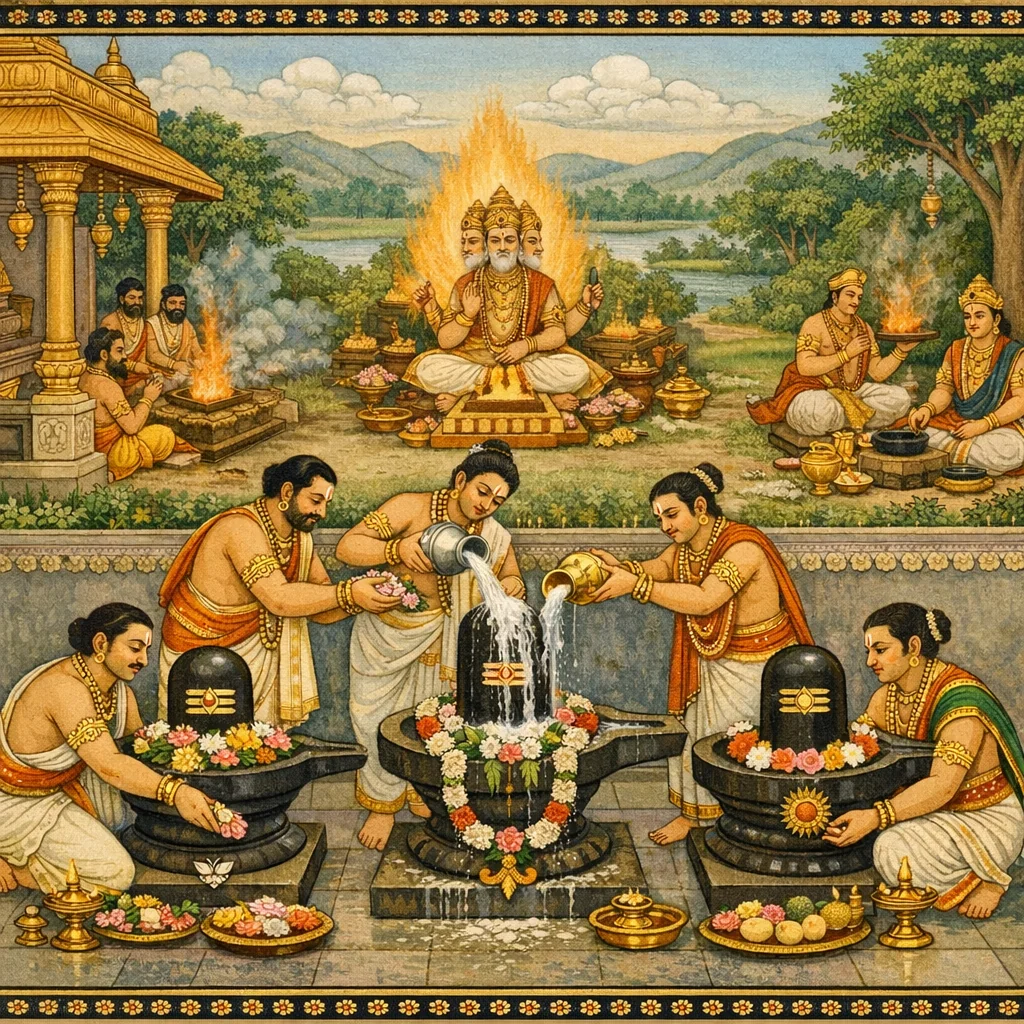
In this adhyāya, Īśvara instructs Devī to behold an “unsurpassed triad of liṅgas” in Prabhāsa-kṣetra, each bearing a sacrificial epithet and set in its proper direction. The southern liṅga is called Śatamedha, said to bestow the fruit of a hundred sacrifices and linked to Kārtavīrya’s earlier performance of a hundred yajñas; its installation is declared to destroy every burden of pāpa. The central liṅga is famed as Koṭimedha, connected with Brahmā’s innumerable (koṭi) excellent sacrifices and with the establishment of Mahādeva as “Śaṅkara, benefactor of worlds.” The northern liṅga is Sahasrakratu (Sahasramedha), associated with Śakra/Indra, who is said to have performed a thousand rites and installed the great liṅga as the primordial divinity of the gods. The chapter further describes worship with gandha and puṣpa, and abhiṣeka with pañcāmṛta and water, affirming that devotees gain fruits corresponding to the liṅga-names. It recommends go-dāna for those seeking the full pilgrimage reward, and concludes that “ten million tīrthas” abide there, with the tri-liṅga sanctuary at the center praised as universally sin-destroying.
Shlokas
Verse 1
ईश्वर उवाच । तत्रैव संस्थितं पश्येल्लिंगत्रयमनुत्तमम् । शतमेधं सहस्रमेधं कोटिमेधमिति क्रमात्
Īśvara said: There itself one should behold the unsurpassed triad of liṅgas, established in that place—named in order: Śatamedha, Sahasramedha, and Koṭimedha.
Verse 2
दक्षिणे शतमेधं तु शतयज्ञफलप्रदम् । कार्तवीर्य्येण तत्रैव कृतं यज्ञशतं पुरा
To the south is the liṅga called Śatamedha, which bestows the fruit of a hundred sacrifices. There, long ago, Kārtavīrya indeed performed a hundred sacrifices.
Verse 3
प्रतिष्ठाप्य महालिंगं सर्वपातकनाशनम् । मध्यभागेऽत्र यल्लिंगं कोटिमेधेति विश्रुतम्
Having established the great liṅga that destroys all sins—here, the liṅga in the central region is famed as Koṭimedha.
Verse 4
तत्रेष्टा ब्रह्मणा पूर्वं कोटि संख्या मखोत्तमाः । संस्थाप्य तु महादेवं शंकरं लोकशंकरम
There, in ancient times, Brahmā performed the most excellent sacrifices, numbering a koṭi (a crore). And he established Mahādeva—Śaṅkara, the benefactor of the worlds.
Verse 5
तस्य उत्तरभागस्थं सहस्रक्रतुसंज्ञकम् । शक्रश्च देवराजोऽपि सहस्रं यष्टवान्क्रतून्
In its northern part stands the (liṅga) known as Sahasrakratu. There Śakra—the king of the gods—performed a thousand sacrifices.
Verse 6
प्रतिष्ठाप्य महालिंगं देवानामादिदैवतम् । गंधपुष्पादिविधिना पंचामृतरसोदकैः
Having consecrated the great liṅga, the primordial divinity of the gods, one should worship according to rite with fragrance and flowers, and with the liquid offerings of pañcāmṛta.
Verse 7
स प्राप्नुयात्फलं देवि लिंगनामोद्भवं क्रमात् । गोदानं तत्र देयं तु सम्यग्यात्राफलेप्सुभिः
O Devī, one attains—step by step—the fruit that arises from the very names of these liṅgas. And there, those who seek the full fruit of pilgrimage should indeed give the gift of a cow.
Verse 8
दशलक्षाणि तीर्थानां तत्र तिष्ठंति भामिनि । लिंगत्रयं तथा मध्ये सर्वपातकनाशनम्
O fair lady, ten million tīrthas abide there. And in the midst is the triad of liṅgas, likewise destroying all sins.
Verse 235
इति श्रीस्कान्दे महापुराण एकाशीतिसाहस्र्यां सहितायां सप्तमे प्रभास खण्डे प्रथमे प्रभासक्षेत्रमाहात्म्ये दशाश्वमेधमाहात्म्ये शतमेधादि लिंगत्रयमाहात्म्यवर्णनंनाम पञ्चत्रिंशदुत्तरद्विशततमोऽध्यायः
Thus ends the 235th chapter, called “The Description of the Glory of the Triad of Liṅgas beginning with Śatamedha,” in the Prabhāsa Khaṇḍa, within the Prabhāsa-kṣetra Māhātmya (in the section on the glory of Daśāśvamedha), of the Śrī Skanda Mahāpurāṇa, comprising eighty-one thousand verses.