Adhyaya 234
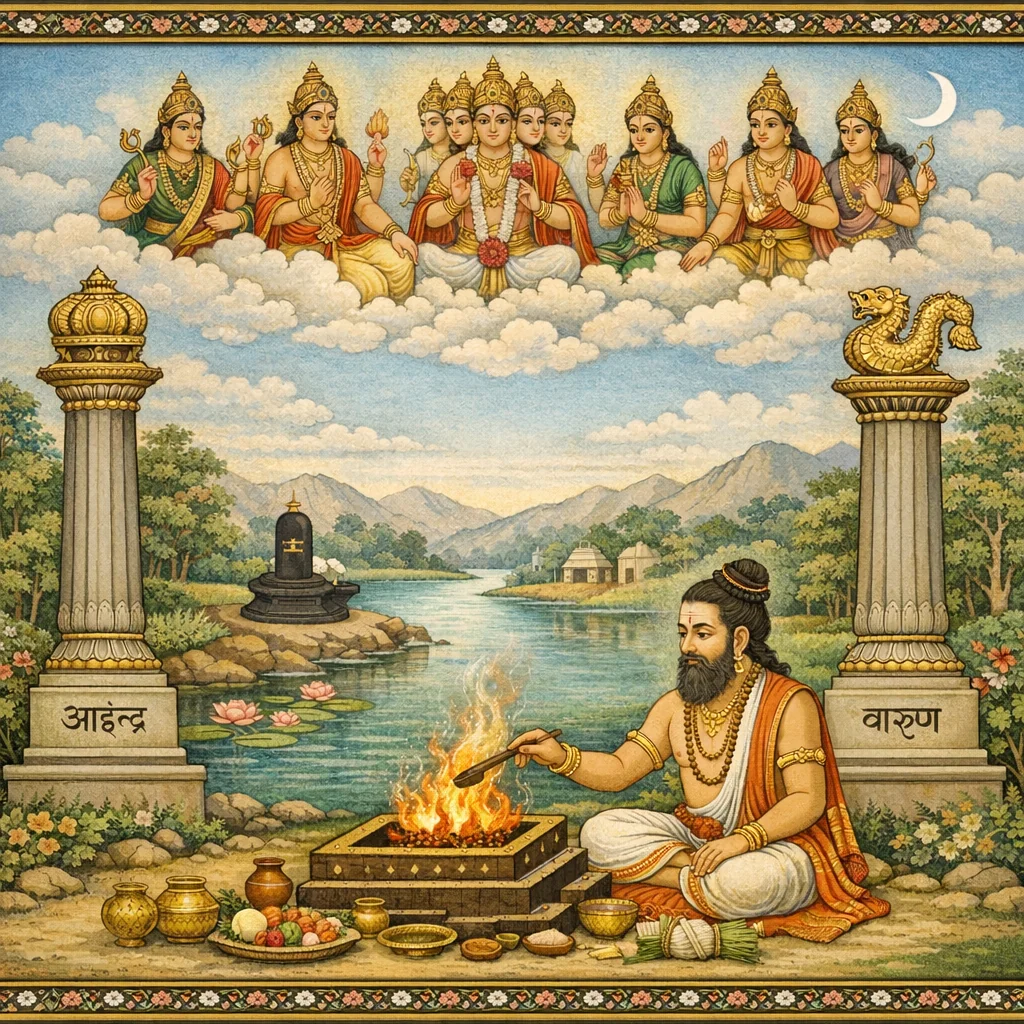
Chapter 234 is a māhātmya of the tīrtha called Daśāśvamedhika, as Īśvara recounts to Devī its origin and merits. The pilgrim is directed to a “three-world-renowned” spot that destroys even great sins. King Bharata is said to have performed ten aśvamedha sacrifices there, recognizing the place as unsurpassed. Pleased by the sacrificial offerings, the devas grant him a boon; Bharata asks that any devotee who bathes there receive the auspicious fruit equal to ten aśvamedhas. The devas affirm the tīrtha’s name and fame on earth, and Īśvara declares that from then on it is widely known as Daśāśvamedhika, powerful for the eradication of sins. The site is located between the Āindra and Vāruṇa markers, identified as a Śiva-kṣetra and a station within great clusters of tīrthas. The phalaśruti extends beyond death: dying there brings joy in Śiva’s world, and even beings in non-human births are said to rise to a higher state. Ancestor offerings of tila-udaka satisfy the pitṛs until cosmic dissolution. The chapter also recalls Brahmā’s earlier sacrifices, Indra’s attainment of devarāja status through worship there, and Kartavīrya’s hundred sacrifices, concluding with apunarbhava (non-return) for those who die there and heavenly exaltation through vṛṣotsarga in proportion to a bull’s hairs.
Shlokas
Verse 1
ईश्वर उवाच । ततो गच्छेन्महादेवि तीर्थं त्रैलोक्यविश्रुतम् । दशाश्वमेधिकंनाम महापातकनाशनम्
Īśvara said: “Then, O Great Goddess, one should go to the tīrtha famed in the three worlds, called Daśāśvamedhika—the destroyer of great sins.”
Verse 2
वाजिमेधः पुरा चेष्टं दशभिस्तत्र भामिनि । भरतेन समागत्य मत्वा क्षेत्रमनुत्तमम्
O lovely one, long ago Bharata performed ten Aśvamedha sacrifices there, having come knowing that this kṣetra was an unsurpassed sacred field.
Verse 3
तत्र तृप्तः सहस्राक्षः सोमनाथेन भामिनि । कृपणाः खानपानैश्च दक्षिणाभिर्द्विजातयः
There, O fair one, Sahasrākṣa (Indra) was satisfied through Somanātha; and the twice-born were gratified with food and drink and with priestly gifts (dakṣiṇā).
Verse 4
अथोचुस्त्रिदशाः सर्वे सुप्रीता भरतं नृपम् । तुष्टास्तव महाबाहो यज्ञैः संतर्पिता वयम् । वरं वृणीष्व राजेंद्र यत्ते मनसि वर्त्तते
Then all the gods, greatly pleased, said to King Bharata: “O mighty-armed one, we are satisfied—nourished by your sacrifices. O lord of kings, choose a boon, whatever is in your heart.”
Verse 5
राजोवाच । अत्रागत्य नरो भक्त्या यः स्नानं कुरुते नरः । दशानामश्वमेधानां स प्राप्नोतु फलं शुभम्
The king said: “Having come here, whoever bathes with devotion—may that person obtain the auspicious fruit of ten Aśvamedha sacrifices.”
Verse 6
देवा ऊचुः । दशानामश्वमेधानां श्रद्धया फलमाप्स्यति । दशाश्वमेधिकंनाम तीर्थमेतन्महीतले । ख्यातिं यास्यति राजेंद्र नात्र कार्या विचारणा
The gods said: “With faith, one truly gains the fruit of ten Aśvamedhas. This tīrtha upon the earth shall be known as Daśāśvamedhika. O best of kings, it will attain renown—there is no need for doubt.”
Verse 7
ईश्वर उवाच । ततः प्रभृति तत्तीर्थं प्रख्यातं धरणीतले । दशाश्वमेधिकमिति सर्वपापप्रणाशनम्
Īśvara said: “From that time onward, that tīrtha became famed upon the earth as ‘Daśāśvamedhika,’ the destroyer of all sins.”
Verse 8
ऐंद्रवारुणमाश्रित्य गोमुखादाऽश्वमेधिकम् । अत्रांतरे महादेवि शिवक्षेत्रं विदुर्बुधाः
Near the holy region associated with Indra and Varuṇa, from Gomukha up to the Aśvamedhika tīrtha, O Great Goddess, the wise know the intervening tract as Śiva’s sacred domain.
Verse 9
सर्वपापहरं दिव्यं स्वर्गसोपानसंनिभम् । सपादकोटितीर्थानां स्थानं तत्परिकीर्तितम
It is divine, removing all sins, like a stairway leading to heaven; it is renowned as the very abode of the ‘one-and-a-quarter koṭi’ of tīrthas.
Verse 10
प्राणत्यागे कृते तत्र शिवलोके च मोदते । तिर्यग्योनिगताः पापा कीटपक्षिमृगादयः
If one gives up life there, one rejoices in Śiva’s world. Even sinful beings born in non-human wombs—worms, birds, deer, and the like—are uplifted by that place.
Verse 11
तेऽपि यांति परं स्थानं यत्र देवो महेश्वरः । तिलोदकप्रदानेन मातृकाः पैतृकास्तथा
They too attain the supreme abode where the Lord Maheśvara dwells. And by offering sesame-water (tilodaka), the ancestors on the mother’s and father’s sides likewise receive benefit.
Verse 12
पितरस्तस्य तृप्यंति यावदाभूतसंप्लवम् । तत्रेष्टा ब्रह्मणा पूर्वमसंख्याता मखोत्तमाः
His ancestors are satisfied until the cosmic dissolution (pralaya). Formerly, Brahmā performed there countless excellent sacrifices (yajñas).
Verse 13
शक्रश्च देवराजत्वे तत्रेष्ट्वा समवाप्तवान् । कार्त्तवीर्येण तत्रैव कृतं यज्ञशतं पुरा
Śakra (Indra) too attained sovereignty over the gods by offering sacrifice there. And in ancient times Kārttavīrya performed a hundred sacrifices at that very place.
Verse 14
एवं तत्प्रवरं स्थानं क्षेत्रगर्भांतिकं प्रिये । मृतानां तत्र जंतूनामपुनर्भवदायकम्
Thus, O beloved, that place is most excellent, lying close to the heart of the sacred field; for creatures who die there, it grants freedom from rebirth.
Verse 15
वृषोत्सर्गं तु यस्तत्र कुर्याद्वै भावितात्मवान् । यावंति वृषरोमाणि तावत्स्वर्गे महीयते
But whoever, with a disciplined and devotional mind, performs there the rite of vṛṣotsarga—the releasing of a bull—will be honored in heaven for as many (years) as there are hairs upon that bull.
Verse 234
इति श्रीस्कांदे महापुराण एकाशीतिसाहस्र्यां संहितायां सप्तमे प्रभासखंडे प्रथमे प्रभासक्षेत्र माहात्म्ये दशाश्वमेधमाहत्म्यवर्णनंनाम चतुस्त्रिंशदुत्तरद्विशततमोऽध्यायः
Thus ends the two-hundred-and-thirty-fourth chapter, called “The Description of the Greatness of Daśāśvamedha,” in the Prabhāsa Khaṇḍa—within the Prabhāsa-kṣetra Māhātmya—of the holy Skanda Mahāpurāṇa, in the Saṃhitā of eighty-one thousand verses.