Adhyaya 232
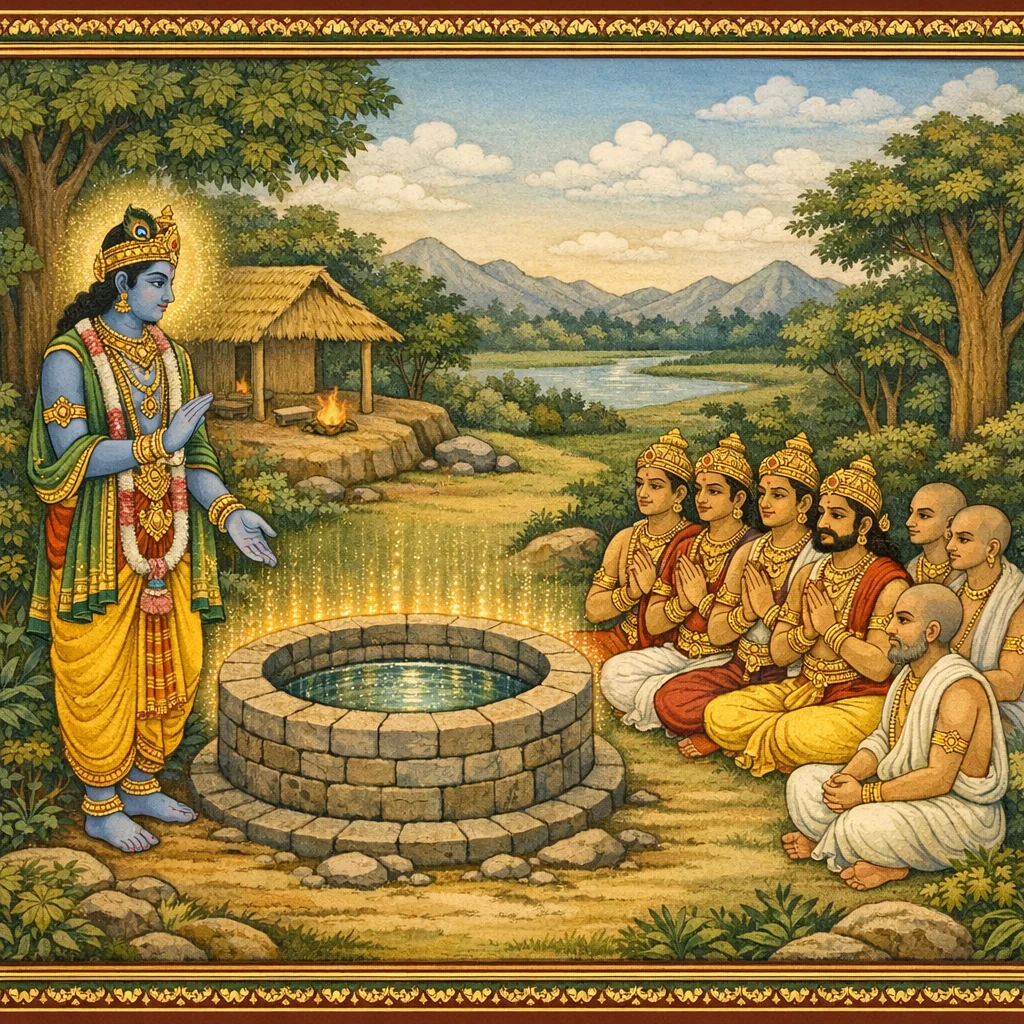
Chapter 232 is a place-authorizing theological discourse narrated by Īśvara, establishing the sanctity of Prabhāsa. During their forest wandering, the Pāṇḍavas arrive at Prabhāsa and stay for a time near an āśrama in a composed state. A practical ritual difficulty arises: hosting large numbers of brāhmaṇas is hindered because water is far away. At Draupadī’s urging, the Pāṇḍavas dig a well (kūpa) near the āśrama to provide a nearby water-source. The narrative then turns to Kṛṣṇa’s arrival from Dvārakā with Yādava companions, including Pradyumna and Sāmba. In a formal exchange, Kṛṣṇa asks Yudhiṣṭhira what boon he desires. Yudhiṣṭhira requests Kṛṣṇa’s perpetual proximity (nitya-sānnidhya) at the well and proclaims a bhakti-based soteriology: those who bathe there with devotion attain a Vaiṣṇava destination through Kṛṣṇa’s grace. Īśvara affirms the boon, and Kṛṣṇa departs. The chapter concludes with prescriptive phalaśruti: śrāddha performed at that site yields merit like an Aśvamedha; tarpaṇa and snāna grant proportional benefits; special observance on the Jyeṣṭha full moon with Savitrī worship leads to the “supreme state.” For those seeking the full fruit of pilgrimage, go-dāna is recommended.
Shlokas
Verse 1
ईश्वर उवाच । ततो गच्छेन्महादेवि कूपं त्रैलोक्यपूजितम् । पश्चिमे तस्य तीर्थस्य पांडवानां महात्मनाम्
Īśvara said: “Then, O Mahādevī, one should go to the well revered in the three worlds—the sacred well of the great-souled Pāṇḍavas—situated to the west of that tīrtha.”
Verse 2
यदाऽरण्यमनुप्राप्ताः पांडवाः पृथिवीतले । भ्रममाणा महादेवि प्रभासं क्षेत्रमागताः
“When the Pāṇḍavas had entered the wilderness upon the earth, wandering about, O Mahādevī, they came to the sacred field of Prabhāsa.”
Verse 3
ततस्ते न्यवसंस्तत्र किंचित्कालं समाहिताः । गत्वा क्षेत्रं महापुण्यं ततः कृष्णाऽब्रवीदिदम्
“Then they stayed there for some time, composed in mind. Having come to that supremely meritorious sacred region, Kṛṣṇā (Draupadī) then spoke these words.”
Verse 4
ब्राह्मणानां सहस्राणि भुंजते भवतां गृहे । दूरे जलाश्रयश्चैव न तावंतश्च किंकराः
Thousands of brāhmaṇas partake of meals in your dwelling; yet the water-source is far away, and attendants are not sufficient.
Verse 5
तस्माज्जलाश्रयः कार्यं आश्रमस्य समीपतः । यत्र स्नानं करिष्यामि युष्माकं संप्रसादतः
Therefore a water-reservoir should be made near the hermitage, so that, by your gracious consent and support, I may perform my bathing there.
Verse 6
ततस्तु पांडवाः सर्वे सहितास्ते वरानने । अखनंस्तत्र ते कूपं द्रौपदीवाक्यप्रेरिताः
Then all the Pāṇḍavas together, O fair-faced one, urged on by Draupadī’s words, dug a well there.
Verse 7
अथाजगाम तत्रैव भगवान्देवकीसुतः । श्रुत्वा समागतान्पार्थान्द्वारावत्याः सबांधवः
Then the Blessed Lord, Devakī’s son, came there as well. Hearing that the sons of Pāṇḍu had arrived, he came from Dvāravatī together with his kinsmen.
Verse 8
प्रद्युम्नेन च सांबेन गदेन निषधेन च । युयुधानेन रामेण चारुदेष्णेन धीमता
With Pradyumna and Sāmba, with Gada and Niṣadha, with Yuyudhāna, with Rāma, and with the wise Cārudeṣṇa…
Verse 9
अन्यैः परिवृतः शूरैर्यादवैर्युद्ध दुर्मदैः । ते समेत्य यथान्यायं समस्ता यदुपुंगवाः
Surrounded by other heroic Yādavas, proud in battle, all those foremost among the Yadus assembled together and met in due and proper manner.
Verse 10
ततः कथावसाने च कस्मिंश्चित्कारणांतरे । वासुदेवः पांडुसुतमिदं वचनमब्रवीत्
Then, when the conversation had concluded, on an occasion arising from some particular cause, Vāsudeva spoke these words to a son of Pāṇḍu.
Verse 11
युधिष्ठिर महाबाहो किं ते कामकरोम्यहम् । राज्यं धान्यं धनं चापि अथवा रिपुनाशनम्
O mighty-armed Yudhiṣṭhira, what boon shall I grant you—kingdom, grain, wealth, or even the destruction of your foes?
Verse 12
युधिष्ठिर उवाच । शक्तस्त्वं यादवश्रेष्ठ सर्वकर्मस्वसंशयः । प्रतिज्ञातं त्वया पूर्वं वर्षैर्द्वादशभिः प्रियम्
Yudhiṣṭhira said: You are able, O best of the Yādavas, in every undertaking—without doubt. Formerly you promised to grant what is dear after twelve years.
Verse 13
तन्नास्ति त्रिषु लोकेषु यन्न सिद्ध्यति भूतले । त्वयि तुष्टे जगन्नाथ सर्वदेवनमस्कृते
There is nothing in the three worlds that cannot be accomplished on earth, O Lord of the universe, when you are pleased—O One revered by all the gods.
Verse 14
अवश्यं यदि तुष्टोऽसि मम सर्वजगत्पते । अत्र सांनिध्यमागच्छ कूपे नित्यं जनार्दन
If you are indeed pleased with me, O Lord of all the worlds, then come and abide here in perpetual presence—within this well, O Janārdana.
Verse 15
अत्रागत्य नरो यस्तु भक्त्या स्नानं समाचरेत् । स यातु वैष्णवं स्थानं प्रसादात्तव केशव
Whoever comes here and performs bathing with devotion—by your grace, O Keśava, may he attain the Vaiṣṇava abode.
Verse 16
ईश्वर उवाच । एवं भविष्यतीत्युक्त्वा तदाऽमन्त्र्य युधिष्ठिरम् । प्रययौ द्वारकां कृष्णः सर्वलोकनमस्कृतः
The Lord said: “So shall it be.” Having spoken thus, and then taking leave of Yudhiṣṭhira, Kṛṣṇa—revered by all worlds—departed for Dvārakā.
Verse 17
तस्मिञ्छ्राद्धं नरः कृत्वा वाजिमेधफलं लभेत् । प्रसादाद्देवदेवस्य विष्णोरमिततेजसः
Performing śrāddha there, a person obtains the fruit of the Aśvamedha sacrifice—by the grace of Viṣṇu, the God of gods, of immeasurable splendor.
Verse 18
तदर्धं तर्पणेनैव स्नानात्पादमवाप्नुयात् । तस्मात्सर्वप्रयत्नेन तत्र श्राद्धं समाचरेत्
By tarpaṇa alone one gains half of that merit, and by bathing one gains a quarter. Therefore, with every effort one should perform śrāddha there.
Verse 19
ज्येष्ठस्य पौर्णमास्यां यः स्नानं श्राद्धं करिष्यति । सावित्रीं चैव संपूज्य स यास्यति परमं पदम्
Whoever, on the full-moon day of Jyeṣṭha, performs the sacred bath and the śrāddha rite, and also worships Sāvitrī, shall attain the supreme state.
Verse 20
गोदानं तत्र देयं तु सम्यग्यात्राफलेप्सुभिः
Those who seek the full fruit of pilgrimage should indeed offer there the gift of a cow.