Adhyaya 231
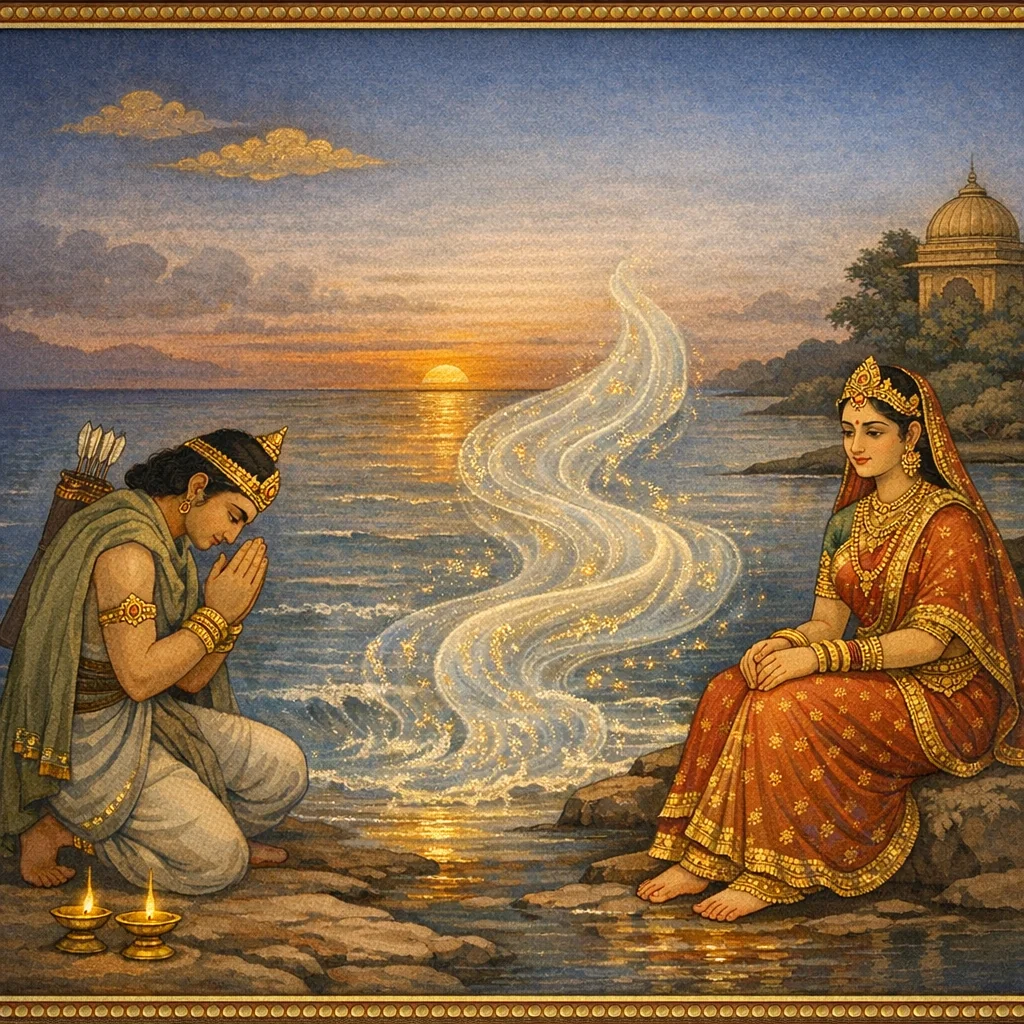
Īśvara speaks to Devī and points to a sacred locale connected with the Jāmbavatī river, identified with Jāmbavatī herself—remembered in Purāṇic tradition as a beloved consort of Viṣṇu. In a dialogue, Jāmbavatī questions Arjuna about current events; Arjuna, overwhelmed with grief, reports catastrophic outcomes that have struck leading Yādava figures, including Baladeva and Sātyaki, and the wider Yādava community, marking the episode as a moral and historical rupture. On hearing of her husband’s death, Jāmbavatī performs self-immolation on the bank of the Gaṅgā, gathers the cremation ash, and then, through a mythic transformation, becomes a river flowing to the ocean—thereby sanctifying that watercourse as a tīrtha. The chapter declares its fruit: women who bathe there with devotion—and even women in their lineage—are said not to suffer widowhood, while any practitioner, man or woman, who bathes with full effort is promised the supreme spiritual end (paramā gati).
Shlokas
Verse 1
ईश्वर उवाच । ततो गच्छेन्महादेवि यत्र जांबवती नदी । पुरा जांबवतीनाम विष्णोर्या महिषीप्रिया । अपृच्छदर्जुनं साध्वी वद वार्तां कुरू द्वह
Īśvara said: “Then, O Great Devī, one should go to the place where the river Jāmbavatī flows. Long ago, the chaste lady named Jāmbavatī—beloved queen of Viṣṇu—questioned Arjuna, saying: ‘Tell me the tidings; speak truly, without concealment.’”
Verse 2
तस्यास्तद्वचनं श्रुत्वा अर्जुनो निश्वसन्मुहुः । वाष्पगद्गदया वाचा इदं वचनमब्रवीत्
Hearing her words, Arjuna sighed again and again; and with a voice choked by tears, he spoke these words.
Verse 3
बलदेवस्य वीरस्य सात्यकेश्च महात्मनः
(He spoke) of the heroic Baladeva, and of Sātyaki, that great-souled one.
Verse 4
अन्येषां यदुवीराणां पापकर्मातिनिर्घृणः । जिजीविषुरिह प्राप्तो वासुदेवनिराकृतः
And (he spoke) of other Yadu heroes—sinful in conduct and utterly without compassion. Desiring to cling to life, I have come here, cast off (as it were) by Vāsudeva.
Verse 5
सा श्रुत्वा भर्तृनिधनमर्जुनाच्च महासती । गंगातीरे समुत्पाद्य पावकं पावकप्रभा । समुत्सृज्य महाकायं नदीभूत्वा विनिर्ययौ
Hearing from Arjuna of her husband’s death, that great chaste lady—radiant as fire—kindled a blaze upon the bank of the Gaṅgā. Casting off her great bodily form, she departed, becoming a river.
Verse 6
सा गृहीत्वा सती भर्तुर्भस्म सर्वं चितेस्तथा । प्रविष्टा सागरं देवि तदा जांबवती शुभा
That virtuous lady, taking up all the ashes of her husband and of the funeral pyre, entered the ocean, O Goddess—then she became the auspicious Jāmbavatī (river).
Verse 7
या नारी तत्र देवेशि भक्त्या स्नानं समाचरेत् । तदन्वयेपि काचित्स्त्री न वैधव्यमवाप्नुयात्
Any woman who, O Lady of the Gods, performs devotional bathing there—no woman even in her lineage would suffer widowhood.
Verse 8
तस्मात्सर्वप्रयत्नेन तत्र स्नानं समाचरेत् । नरो वा यदि वा नारी प्राप्नोति परमां गतिम्
Therefore, with every effort one should bathe there; whether man or woman, one attains the supreme goal.
Verse 9
परित्यक्ता वयं भद्रे यादवैः सुमहात्मभिः
“O gentle lady, we have been abandoned by the Yādavas, those great-souled ones.”