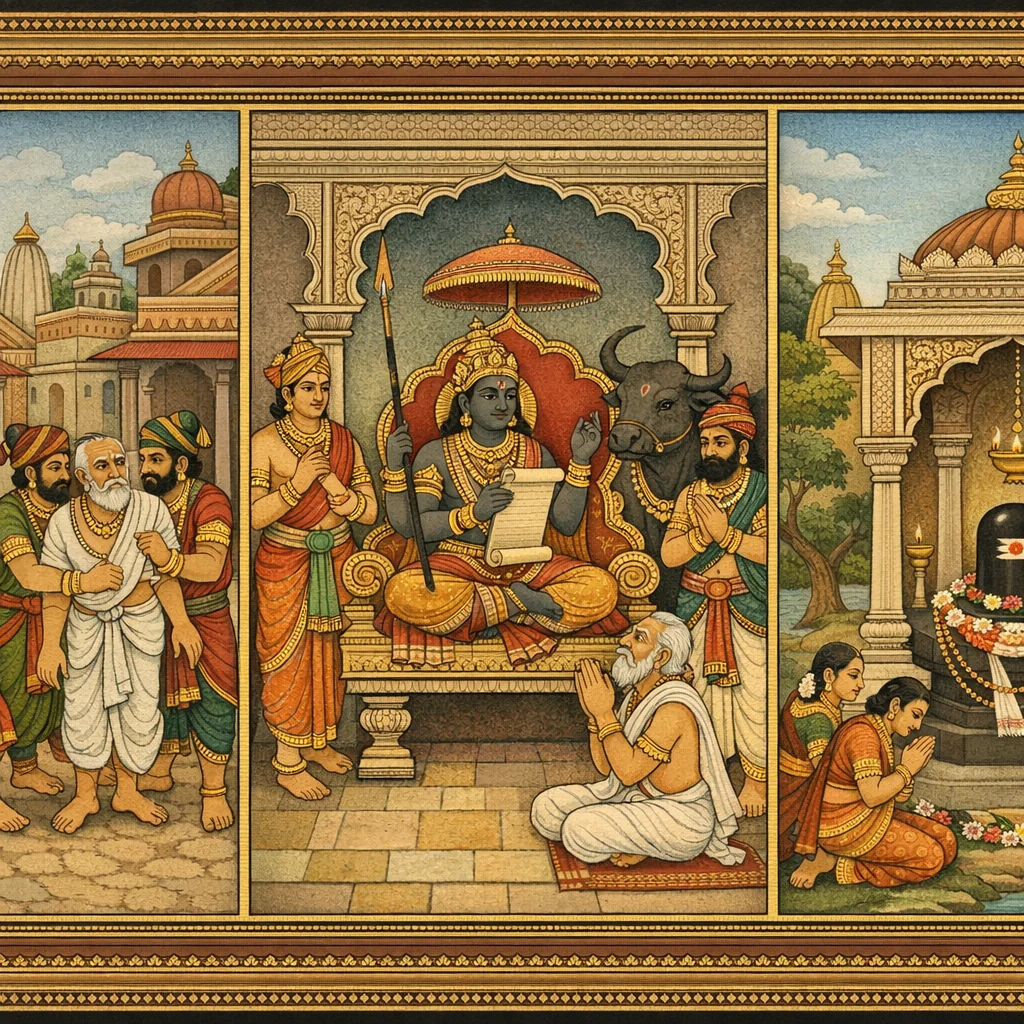
Adhyaya 225
Īśvara points out a sacred northern site connected with Narakeśvara, praised as a sin-destroying liṅga, and then relates an exemplum from Mathurā. A brāhmaṇa named Devaśarman (of Agastya-gotra), oppressed by poverty, is caught in a bureaucratic mistake when Yama’s messenger is sent to seize a different Devaśarman. Yama corrects the error and declares his office as Dharma-rāja: death does not come before the proper time, even amid injury, and no being dies “out of season.” The brāhmaṇa asks for a technical account of the visible hell-realms (narakas): their number and the karmic causes that lead to them. Yama enumerates the narakas (said to be twenty-one) and links them to ethical breaches—betrayal of trust, false testimony, harsh and deceitful speech, adultery, theft, harming vow-keepers, violence toward cows, hostility to devas and brāhmaṇas, misappropriating temple/brāhmaṇa property, and other social-religious transgressions. The discourse culminates in a preventive soteriology: Yama states that one who reaches Prabhāsa and devotionally beholds Narakeśvara will not behold naraka. The liṅga is said to have been established by Yama through Śiva-bhakti and is to be preserved as a guarded teaching. The chapter closes with ritual application and phalaśruti: lifelong worship brings “supreme attainment”; śrāddha on Kṛṣṇa Caturdaśī in Āśvayuja yields Aśvamedha-like merit; and gifting a black deer-skin to a Veda-knowing brāhmaṇa grants heavenly honor in proportion to the number of sesame seeds (tila).
Shlokas
Verse 1
ईश्वर उवाच । ततोगच्छेन्महादेवि देवं चाऽनरकेश्वरम् । तस्मादुत्तरदिग्भागे सर्वपातकनाशनम् । तन्माहात्म्यं प्रवक्ष्यामि शृणु ह्येकमनाः प्रिये
Īśvara said: “Then, O Great Goddess, one should go to the deity Anarakeśvara. To the north of that place is a sacred site that destroys all sins. Now I shall proclaim its greatness—listen with single-minded attention, beloved.”
Verse 2
मथुरानाम विख्याता नगरी धरणीतले । तत्र विप्रोऽभवत्पूर्वं देवशर्मेति विश्रुतः । अगस्त्यगोत्रो विद्वान्वै स तु दारिद्र्यपीडितः
On the face of the earth there was a renowned city named Mathurā. There once lived a Brāhmaṇa, famed as Devaśarman—learned, of the lineage of Agastya, yet afflicted by poverty.
Verse 3
अथापरोऽभवत्तत्र तादृग्रूपवयोऽन्वितः । तन्नाम गोत्रो देवेशि ब्राह्मणो वेदपारगः
Then there was another Brāhmaṇa there, endowed with similar form and age—O Lady of the Gods—having the same name and lineage, and he was a master of the Vedas.
Verse 4
अथ प्राह यमो दूतं रौद्रमूर्धशिरोरुहम् । गच्छ भो मथुरां शीघ्रं देवशर्माणमानय
Then Yama spoke to his messenger—whose head and hair were fearsome: “Go, sir, quickly to Mathurā and bring Devaśarman.”
Verse 5
अथागत्य ततो दूतो गृहीत्वा तत्र वै गतः । तं दृष्ट्वाथ यमो नत्वा प्राह दूतं क्रुधान्वितः
Then the messenger went there, seized (the person), and returned. Seeing him, Yama bowed in formal regard and then—filled with anger—spoke to the messenger.
Verse 6
नायमानेतुमादिष्टो देवशर्मां मया तव । अन्योस्ति देवशर्मा यस्त मानय गतायुषम् । एनं विप्रं च दीर्घायुं नय तत्राविलंबितम्
“This is not the Devaśarman whom I commanded you to bring. There is another Devaśarman—bring that one, whose span of life has reached its end. But this Brāhmaṇa, long-lived as he is, take back there at once, without delay.”
Verse 7
ईश्वर उवाच । अथाब्रवीद्ब्राह्मणो वै नाहं यास्ये गृहं विभो । दारिद्र्येणातिनिर्विण्णो यावज्जीवं सुरेश्वर । इहैव क्षपयिष्यामि शेषमायुस्तवांतिके
Īśvara said: Then the Brāhmaṇa declared, “O Lord, I will not go home. Worn down by poverty throughout my life, O Lord of the gods, I shall spend the remainder of my lifespan here alone, close to you.”
Verse 8
यम उवाच । अकाले नात्र चायाति कश्चिद्ब्राह्मणसत्तम । मुहूर्तमपि नो जीवेत्पूर्णकालेन वै भुवि
Yama said: “O best of Brāhmaṇas, no one comes here before his time. Indeed, on earth no being lives even for a single muhūrta beyond the moment when his allotted span has been fully completed.”
Verse 9
अत एव हि मे नाम धर्मराजेति विश्रुतम्
“For this very reason my name is renowned as Dharmarāja, the King of Dharma.”
Verse 10
न मे सुहृन्न मे द्वेष्यः कश्चिदस्ति धरातले । विद्धः शरशतेनापि नाऽकाले म्रियते यतः
“On the earth I have no friend and no enemy at all. For even if a man is pierced by a hundred arrows, he does not die before his appointed time.”
Verse 11
कुशाग्रेणापि विद्धः सन्काले पूर्णे न जीवति । तस्माद्गच्छ द्विजश्रेष्ठ यावद्गात्रं न दह्यते
Even if one is pricked merely by the tip of a kuśa blade, when the appointed time is complete he does not live. Therefore go, O best of twice-born, while your body has not yet been burned.
Verse 12
अथाब्रवीद्ब्राह्मणोऽसौ यदि प्रेषयसे प्रभो । प्रश्नमेकं मया पृष्टो यथावद्वक्तुमर्हसि
Then that Brāhmaṇa said: 'O Lord, if you are sending me away, you should properly answer one question that I ask.'
Verse 13
न वृथा जायते देव साधूनां दर्शनं क्वचित् । युष्माकं च विशेषेण तस्मादेतद्ब्रवीम्यहम्
O Deva, the sight of holy beings is never without purpose. And especially in your case; therefore I say this to you.
Verse 14
एते ये नरका रौद्रा दृश्यन्ते च सुदारुणाः । कर्मणा केन कं गच्छेन्मानवो नरकं यम
Yama, these hells that are seen—terrifying and exceedingly dreadful—by what deeds does a human go to which particular hell?
Verse 15
कति संख्याः स्युरेते च नरकाः किंप्रमाणतः । एतत्सर्वं सुरश्रेष्ठ यथावद्वक्तुमर्हसि
How many are these hells, and what is their measure or extent? O best among the gods, you should explain all this correctly.
Verse 16
यम उवाच । शृणु देव प्रवक्ष्यामि यावन्तो नरकाः स्थिताः । कर्मणा येन गच्छेत मानवो द्विजसत्तम । एकविंशत्समाख्याता नरका मम मन्दिरे
Yama said: “Listen, O noble one; I shall declare how many hells there are, and by what deeds a human goes to them, O best of Brāhmaṇas. In my abode, the hells are proclaimed to be twenty-one in number.”
Verse 17
यानेतान्प्रेक्षसे विप्र यंत्र मध्ये व्यवस्थितान् । पीड्यमानान्किंकरैर्मे कृतघ्नान्पा पसंयुतान्
“O Brāhmaṇa, those whom you see set within instruments of torment—afflicted by my attendants—are the ungrateful, bound fast by sin.”},{
Verse 18
लोहास्यवायसा येषां नेत्रोद्धारं प्रकुर्वते । एतैर्निरीक्षितान्येव कलत्राणि दुरात्मभिः
Those wicked men who cast their eyes, with sinful intent, upon the wives of others—iron-beaked crows tear out their eyes as retribution.
Verse 19
परेषां द्विजशार्दूल सरागैः पापि भिः सदा । कुम्भीपाकगतानेतानथ पश्यसि पापिनः
O tiger among Brāhmaṇas, you now behold these sinners—ever clinging to passion and wrongdoing—fallen into the hell called Kumbhīpāka.
Verse 20
कूटसाक्ष्यरता ह्येते कटुवाङ्निरतास्तथा । एते लोहमयास्तम्भान्संतप्तान्पावकप्र भान्
These are they who delight in false testimony and persist in harsh speech; they are made to embrace iron pillars, heated and blazing like fire.
Verse 21
आलिंगंति दुरात्मानः परदाररतास्तु ये । एते वैतरणीमध्ये पूयशोणितसंकुले
Those evil-souled men who delight in another man’s wife are forced, in torment, to embrace; they dwell in the midst of the Vaitaraṇī, a river choked with pus and blood.
Verse 22
ये तिष्ठंति द्विजश्रेष्ठ सर्वे विश्वासघातकाः । असिपत्रवने घोरे भिद्यन्ते ये तु खण्डशः । ते नष्टाः स्वामिनं त्यक्त्वा संग्रामे समुपस्थिते
O best of brāhmaṇas, all who betray trust are split into pieces in the dreadful Asipatra forest. Likewise ruined are those who abandon their lord or leader once battle has begun.
Verse 23
अंगारराशीन्वै दीप्तान्ये गाहन्ते नराधमाः । स्वामिद्रोहरता ह्येते तथा हेतुप्रवादकाः
Those worst of men who plunge into heaps of glowing embers are the ones devoted to betraying their master, and those who fabricate pretexts and slanderous ‘reasons’.
Verse 24
लोहशंकुभिराकीर्णमाक्रमन्ति नराधमाः । क्रन्दमाना द्विजश्रेष्ठ उपानद्दानवर्जिताः
O best of brāhmaṇas, those lowest of men, wailing aloud, are made to tread upon ground strewn with iron spikes—because they withheld the charitable gift of footwear.
Verse 25
अधोमुखा निबद्धा ये वृक्षाग्रे पावकोपरि । ब्रह्महत्यान्विताः सर्व एते चैव नराधमाः
Those who are bound upside down upon the tops of trees above fire—these lowest of men are all stained with the sin of brahmin-slaying (brahmahatyā).
Verse 26
मशकैर्मत्कुणैः काकैर्ये भक्ष्यंते विहंगमैः । व्रतभंगरता ह्येते व्रतिना चैव हिंसकाः
Those who are consumed by mosquitoes, bedbugs, crows, and other birds are they who delight in breaking sacred vows (vratas) and who harm the keepers of vows.
Verse 27
कुठारकण्ठिता ह्येते भूयः संति तथाविधाः । गोहन्तारो दुरात्मानो देवब्राह्मणानिंदका
These, as though axes were set upon their necks, are many of that kind—evil-souled killers of cows and revilers of the gods and the brāhmaṇas.
Verse 28
ये भक्ष्यंते शृगालैश्च वृकैर्लोहमयैर्मुखैः । परस्वानां च हर्तारः परस्त्रीणां च हर्तृकाः । आत्ममांसानि ये पापा भक्षयंति बुभुक्षिताः
Those sinners who steal the wealth of others and abduct the wives of others are devoured by jackals and wolves with iron-like mouths; driven by hunger, they are made to eat their own flesh.
Verse 29
न दत्तमन्नमेतैस्तु कदाचिद्वै द्विजोत्तम । रुधिरं ये पिबंत्येते वसापूयपरिप्लुतम् । ब्राह्मणानां विनाशाय गवामेते सदा स्थिताः
O best of the twice-born, these men never gave food in charity; they are made to drink blood, flooded with fat and pus—those who ever stand intent on the ruin of brāhmaṇas and cows.
Verse 30
कूटशाल्मलिबद्धाश्च तीक्ष्णकण्टकपीडिताः । छिद्रान्वेषणसंयुक्ताः परेषां नित्यसंस्थिताः
Bound to thorny śālmalī-trees and tormented by sharp spines, they remain ever engaged in searching for faults, constantly fixed upon others’ weaknesses.
Verse 31
क्रकचेन तु छिद्यन्ते य इमे द्विजसत्तम । अभक्ष्यनिरता ह्येते स्वधर्मस्य विदूषकाः
O best of the twice-born, these are cut with saws—those who delight in eating what is forbidden and who defile their own dharma.
Verse 32
कन्याविक्रयकर्त्तारः कन्यानां जीवभंजकाः । पुरीषमध्यगा ह्येते पच्यंते मम किंकरैः
Those who sell maidens, and those who break the very life of maidens, are made to cook in the midst of filth—tormented by my attendants.
Verse 33
संदेशैर्दारुणैर्जिह्वा येषामुत्पाट्यते मुहुः । वाग्लोपनिरता ह्येते मृषावादपरायणाः
By dreadful commands their tongues are repeatedly torn out; these are the ones devoted to the ruin of speech—those who are given over to falsehood.
Verse 34
ये शीतेन प्रबाध्यंते वेप माना मुहुर्मुहुः । देवस्वानां च हर्तारो ब्राह्मणानां विशेषतः
Those who are oppressed by biting cold, trembling again and again—these are the stealers of temple property, and especially the robbers of brāhmaṇas’ wealth.
Verse 35
तेषां शिरसि निक्षिप्तो भूरिभारो द्विजोत्तम । अतोऽमी ब्राह्मणश्रेष्ठ पूत्का रयन्ति भैरवम्
O best of the twice-born, a massive burden is placed upon their heads; therefore, O foremost brāhmaṇa, they cry out in terrifying anguish.
Verse 36
यम उवाच । एवमेतत्समाख्यातं तव सर्वं द्विजोत्तम । नरकाणां स्वरूपं तु कर्मणां वै यथाक्रमम्
Yama said: “Thus has all this been declared to you, O best of the twice-born—the very nature of the hells and the deeds that lead to them, in due order.”
Verse 37
गच्छ शीघ्रं महाभाग यावत्कायो न दह्यते
Go quickly, O fortunate one, before the body is consumed by the funeral fire.
Verse 38
ब्राह्मण उवाच । कथय त्वं सुरश्रेष्ठ मम सर्वं समाहितः । न गच्छेत्कर्मणा येन नरकं मानवः क्वचित्
The Brāhmaṇa said: “O best among the gods, tell me everything, for my mind is wholly fixed upon your words—by what conduct may a human being, through his actions, never fall into hell at any time?”
Verse 39
सतां सप्तपदं मैत्रमित्याहुर्बुद्धिकोविदाः । मित्रतां च पुरस्कृत्य समासाद्वक्तुमर्हसि
The wise declare that among the good, friendship is sealed by ‘seven steps’ taken together. Therefore, honoring that bond of friendship, you should graciously speak to me in confidence.
Verse 40
यम उवाच । प्रभासं क्षेत्रमासाद्या नरकेश्वरमुत्तमम् । यः पश्यति नरो भक्त्या नरकं स न पश्यति
Yama said: “Having come to the sacred field of Prabhāsa and beholding the supreme Narakeśvara with devotion, that person does not behold hell—he is freed from the vision of naraka.”
Verse 41
स्थापितं यन्मया लिंगं शिवभक्त्या युतेन च । एतद्गुह्यं मया प्रोक्तं तव प्रीत्यै द्विजोत्तम
The liṅga that I established, together with devotion to Śiva—this secret I have disclosed for your satisfaction, O best of the twice-born.
Verse 42
गोपनीयं प्रयत्नेन मम वाक्यादसंशयम् । एवमुक्तस्तदा विप्रः स्वयमेवावनिं ययौ
It must be kept secret with great care—according to my word, without doubt. Thus instructed, the brāhmaṇa then returned by himself to the earth.
Verse 43
लब्ध्वा कलेवरं सोऽथ विस्मयं परमं गतः । तत्स्मृत्वा वचनं सर्वं धर्मराजस्य धीमतः
Regaining his body, he was filled with the greatest wonder; and he remembered every word spoken by the wise Dharmarāja.
Verse 44
गत्वा तत्र स नित्यं वै पूजयामास तं प्रभुम् । यावज्जीवं वरारोहे ततः सिद्धिं परां गतः
Going there, he indeed worshipped that Lord daily for as long as he lived; and thereafter he attained the highest spiritual fulfillment.
Verse 45
तस्मात्सर्वप्रयत्नेन भक्त्या तमवलोकयन् । अपि पातकयुक्तोऽपि न याति नरके नरः
Therefore, with every effort, beholding Him with devotion—even a person burdened with sins does not go to hell.
Verse 46
आश्वयुक्कृष्णपक्षे तु चतुर्दश्यां विधानतः । यस्तत्र कुरुते श्राद्धं सोऽश्वमेधफलं लभेत्
In the dark fortnight of Āśvayuja, on the fourteenth lunar day, whoever performs śrāddha there according to the prescribed rite attains merit equal to an Aśvamedha sacrifice.
Verse 47
कृष्णाजिनं तत्र देयं ब्राह्मणे वेदपारगे । यावत्तिलानां संख्यानं तावत्स्वर्गे महीयते
There one should gift a black antelope-skin (kṛṣṇājina) to a Brāhmaṇa learned in the Vedas; for as many sesame seeds as are counted, for that long he is honored in heaven.