Adhyaya 224
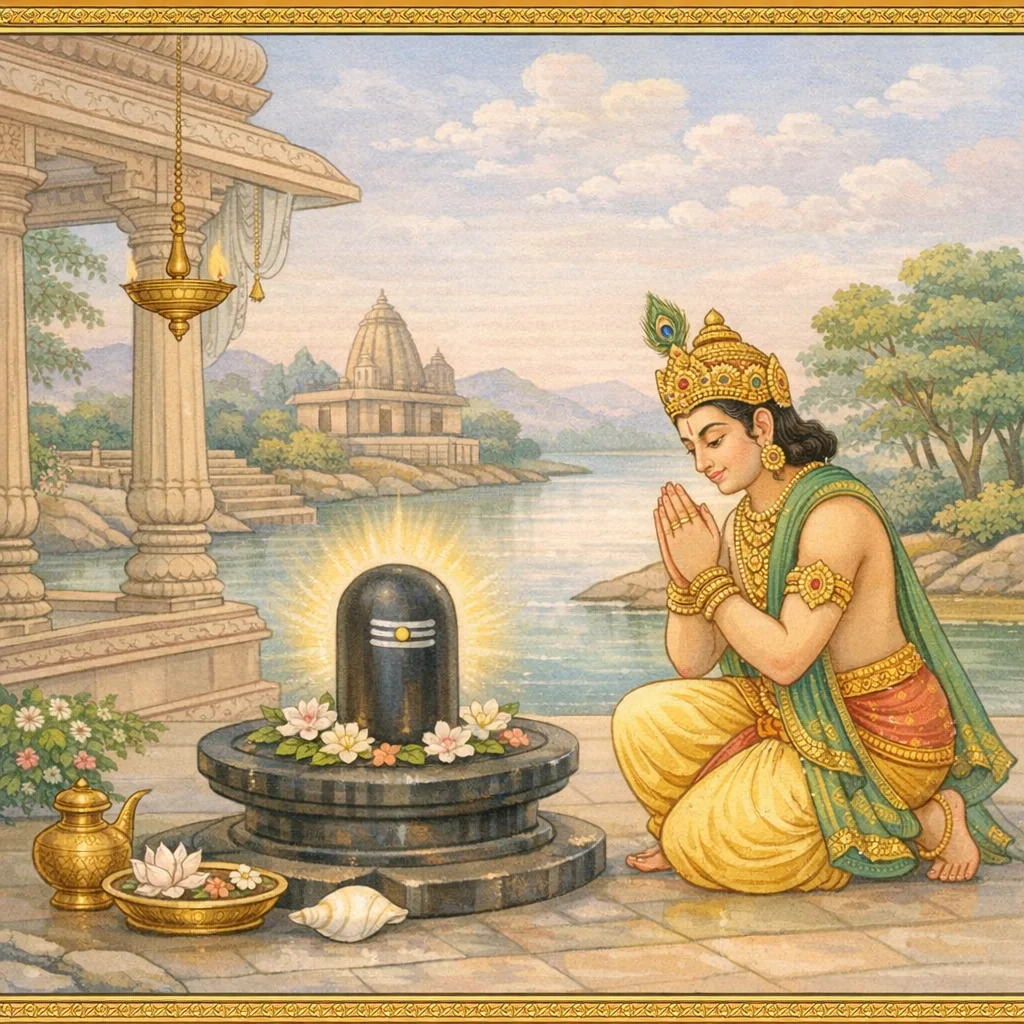
This adhyāya gives a theological and ritual account in which Īśvara speaks to Devī and points to a liṅga established by Indra to the south of Puruṣottama, renowned as “Pāpamocana” (the remover of sin). It recalls Indra’s slaying of Vṛtra and the ensuing burden of brahmahatyā-like impurity, made visible through bodily discoloration and a foul odor that diminishes vitality and radiance. Sages and divine beings, including Nārada, counsel Indra to go to Prabhāsa, praised as a pāpa-hara kṣetra. There Indra installs and worships the liṅga of the trident-bearing Lord with incense, fragrance, and unguents; the expiatory power is shown by his transformation as the odor and discoloration cease and his form becomes excellent. Indra proclaims an enduring boon: whoever worships this liṅga with devotion attains the destruction of grave sins, even brahmahatyā. The chapter ends with practical guidance—gift of a cow (go-dāna) to a Veda-versed brāhmaṇa and performance of śrāddha at the site—as supportive acts for removing brahmahatyā-related affliction.
Shlokas
Verse 1
ईश्वर उवाच । ततो गच्छेन्महादेवि लिंगमिंद्रप्रतिष्ठितम् । पापमोचननामाढ्यं दक्षिणे पुरुषोत्तमात्
Īśvara said: “Then, O great goddess, one should go to the liṅga established by Indra, renowned by the name ‘Pāpamocana’ (Remover of Sin), situated to the south of Puruṣottama.”
Verse 2
वृत्रं हत्वा पुरा शक्रो ब्रह्महत्यासमन्वितः । अब्रवीत्स ऋषीन्दिव्यान्कथमेषा गमिष्यति
In ancient times, after slaying Vṛtra, Śakra (Indra), stained with the sin of brahmahatyā, spoke to the divine sages: “How will this (sin) depart from me?”
Verse 3
ब्रह्महत्या हि दुष्प्रेक्ष्या विवर्णजननी मम । दुर्गंधचारिणी चैव सर्वतेजोविनाशिनी
“For brahmahatyā is dreadful to behold: it brings pallor upon me; it roams with a foul stench and destroys all splendor and vitality.”
Verse 4
अथोचुस्तं सुरगणा नारदाद्या महर्षयः । प्रभासं गच्छ देवेश क्षेत्रं पापहरं हि तत्
Then the hosts of gods and the great sages—Nārada and others—said to him: “Go to Prabhāsa, O lord of the gods; for that sacred field truly removes sins.”
Verse 5
तत्राराध्य महादेवं मोक्ष्यसे ब्रह्महत्यया । स तथेति प्रतिज्ञाय गतस्तत्र वरानने
“There, by worshipping Mahādeva, you will be freed from brahmahatyā.” Thus pledging, “So be it,” he went there, O fair-faced one.
Verse 6
लिंगं संस्थापयामास देवदेवस्य शूलिनः । तस्य पूजारतो नित्यं धूपगंधानुलेपनैः
He established a liṅga of the Trident-bearing Lord, the God of gods; and he remained ever devoted to its worship with incense, fragrance, and sacred unguents.
Verse 7
ततोऽस्य गात्रदौर्गंध्यं नाशमाश्वभ्यगच्छत । विवर्णत्वं गतं सर्वं वपुश्चाभूत्तथोत्तमम्
Then the foul odor of his body swiftly vanished; all discoloration departed, and his form became excellent once again.
Verse 8
अथ हृष्टमना भूत्वा वाक्यमेतदुवाच ह । तत्रागत्य नरो भक्त्या यश्चैनं पूजयिष्यति
Then, becoming joyful, he spoke these words: “Whoever comes there with devotion and worships this liṅga…”
Verse 9
ब्रह्महत्यादिकं पापं नाशं तस्य प्रयास्यति । एवमुक्त्वा सहस्राक्षः प्रहृष्टस्त्रिदिवं ययौ
“The sin of brahmin-slaying and other grave offenses will surely be destroyed for him.” Having said thus, Sahasrākṣa (Indra), delighted at heart, departed for the heaven-world.
Verse 10
ब्रह्महत्याविनिर्मुक्तः पूज्यमानो दिवौकसैः । गोदानं तत्र दातव्यं ब्राह्मणे वेदपारगे । ब्रह्महत्यापनोदार्थं तत्र श्राद्धं समाचरेत्
Freed from the sin of brahmahatyā and honored by the dwellers of heaven, one should there give the gift of a cow to a Brāhmaṇa who has mastered the Vedas. And for the removal of brahmahatyā, one should duly perform Śrāddha there.
Verse 224
इति श्रीस्कान्दे महापुराण एकाशीतिसाहस्र्यां संहितायां सप्तमे प्रभासखण्डे प्रथमे प्रभासक्षेत्रमाहात्म्य इन्द्रेश्वरमाहात्म्यवर्णनंनाम चतुर्विंशत्युत्तरद्विशततमोऽध्यायः
Thus ends the two-hundred-and-twenty-fourth chapter, called “The Description of the Greatness of Indreśvara,” in the Prabhāsa Khaṇḍa (the seventh), within the Prabhāsa-kṣetra Māhātmya (the first), of the Śrī Skanda Mahāpurāṇa in the Ekāśītisāhasrī Saṃhitā.