Adhyaya 221
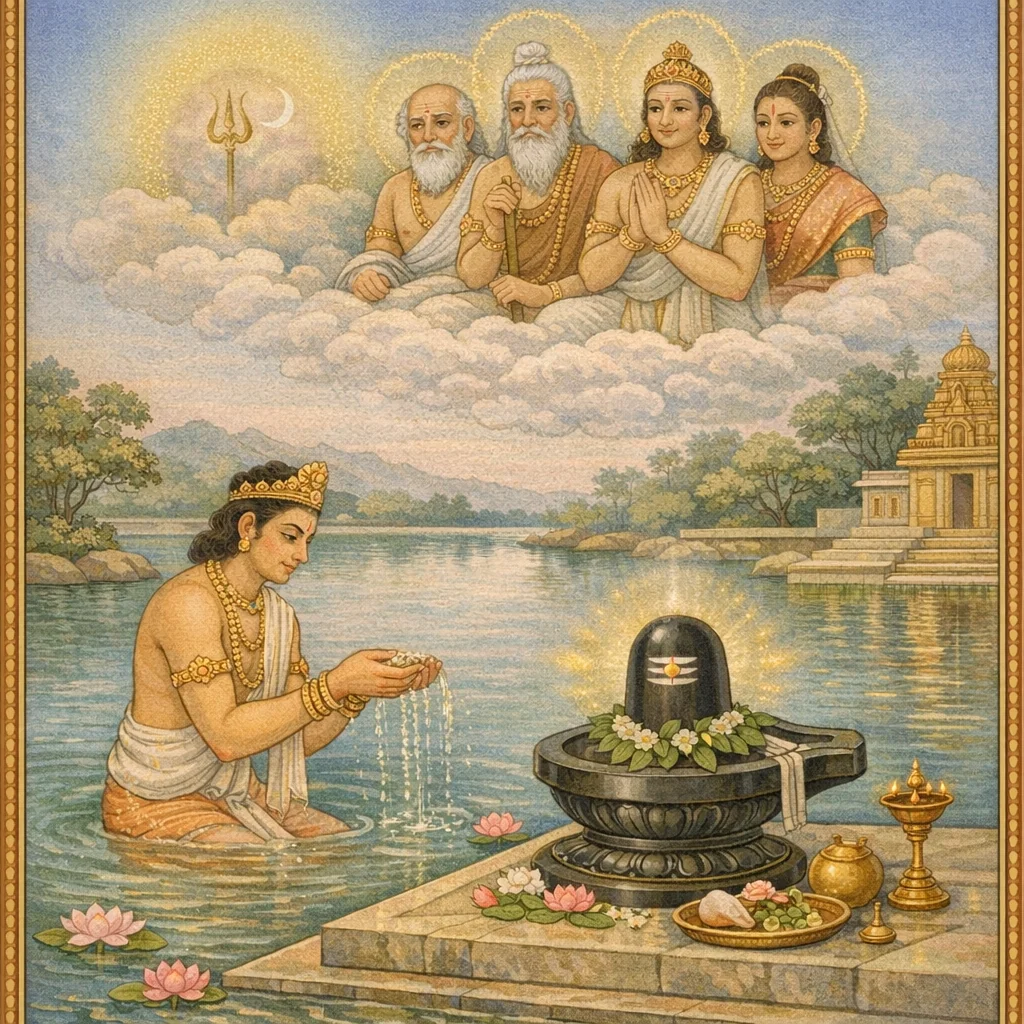
This adhyāya is cast as Īśvara’s discourse on a sacred locus at Prabhāsa centered on the deity/liṅga named R̥ṇamocana (“Debt-Release”). It declares that the darśana of R̥ṇamocana itself nullifies the debt arising from one’s maternal and paternal lineages—ancestral debt. A host of Pitṛs is then described as having performed long tapas at Prabhāsa and, in devotion, established a liṅga. Pleased, Mahādeva appears and invites them to ask a boon. The Pitṛs request a lasting vṛtti—an efficacious religious provision—for beings of the divine, ṛṣi, and human orders: that those who come in faith be freed from ancestral debt and moral taint; and that even ancestors who died irregular deaths (by serpents, fire, poison) or whose post-death rites were incomplete—lacking sapīṇḍīkaraṇa, ekoddiṣṭa/ṣoḍaśa offerings, vṛṣotsarga, or proper śauca—may attain a higher course when propitiated here. Maheśvara replies that humans devoted to pitṛ-bhakti who bathe in the sacred water and perform pitṛ-tarpaṇa gain immediate deliverance; even heavy sin does not bar His grace, for He is varapradā, the boon-giver. The chapter’s prescription links snāna and worship of the Pitṛ-installed liṅga to release from ancestral debt, explaining the name: since one is freed from ṛṇa by its darśana, it is called R̥ṇamocana. It adds that bathing after placing gold upon the head yields merit equal to gifting a hundred cows, and concludes by urging śrāddha there with full effort and worship of the pitṛ-liṅga, beloved of the gods.
Shlokas
Verse 1
ईश्वर उवाच । ततो गच्छेन्महादेवि देवं च ऋणमोचनम् । तस्मिन्दृष्टे ऋणं न स्यान्मातापितृसमुद्भवम्
Īśvara said: “Then, O Mahādevī, one should go to the deity called Ṛṇamocana. Upon beholding him, no debt remains that arises from one’s mother and father—ancestral obligations are dissolved.”
Verse 2
पितरस्तु पुरा सर्वे दिव्यक्षेत्रं समागताः । प्रभासे तपसा युक्ताः स्थिता वर्षगणान्बहून्
Long ago, all the Pitṛs gathered in that divine sacred region. In Prabhāsa they remained for many years, steadfast in austerity (tapas).
Verse 3
अग्निष्वात्ता बर्हिषदः सोमपा आज्यपास्तथा । लिंगं संस्थापयामासुः सर्वे भक्तिपरायणाः
The Agniṣvāttas, the Barhiṣads, the Somapās, and likewise the Ājyapās—all steadfast in bhakti—established a Śiva-liṅga.
Verse 4
ततः कालेन महता तुष्टस्तेषां महेश्वरः । ततः प्रत्यक्षतां गत्वा वाक्यमेतदुवाच ह
After a long time, Maheśvara was pleased with them. Then, manifesting directly before them, he spoke these words.
Verse 5
परितुष्टोऽस्मि भद्रं वो ब्रूत यन्मनसेप्सितम्
“I am well pleased with you; may auspiciousness be yours. Speak what your heart desires.”
Verse 6
पितर ऊचुः । अस्माकं दीयतां वृत्तिर्जगत्यस्मिन्स्वयं कृते । देवानां च ऋषीणां च मानुषाणां महीतले
The Pitṛs said: “Grant us a means of sustenance in this world fashioned by You Yourself—upon the earth—for the gods, the ṛṣis, and humankind.”
Verse 7
भवानेव परो लोके सर्वेषां पद्मसंभव । आगत्य वर्णाश्चत्वार इह ये श्रद्धयान्विताः
“You alone are the supreme refuge in all the worlds for everyone, O Padma-saṃbhava. Those of the four varṇas who come here endowed with faith…”
Verse 8
पैतृकात्तु ऋणान्मुक्ता भवंतु गतकल्मषाः । व्यन्तरत्वं सुरश्रेष्ठ येषां वै पितरो गताः
“May they be freed from ancestral debts and cleansed of every taint. O best of the gods, even those whose forefathers have fallen into the state of vyantaras—restless intermediary beings—may they be uplifted here.”
Verse 9
सर्प्पे वह्नि विषैर्वा ये नाशं नीताः पितामहाः । अपुत्रा वा सपुत्रा वा सपिण्डीकरणं विना
“Whether the grandfathers were destroyed by a serpent, by fire, or by poison—whether they died without sons or even with sons, yet without the rite of sapiṇḍīkaraṇa—may they be benefited through the rites performed here.”
Verse 10
न कृतानि पुरा येषामेकोद्दिष्टानि षोडश । तथा नैव वृषोत्सर्गो गोहताश्चाथ चान्त्यजैः
“Those for whom, in former times, the sixteen ekoddiṣṭa offerings were not performed; likewise those for whom the vṛṣotsarga rite was not done; and also those slain by outcastes—may all such ancestors be aided by the sanctity of this place.”
Verse 11
अथापरे ये च मृताः शौचेन तु विना कृताः । ते चात्र तर्पिताः सर्वे प्रयान्तु परमां गतिम्
And others too—those who died without the proper observances of purity—may all of them, being satisfied here through offerings, depart to the supreme state.
Verse 12
श्रीभगवानुवाच । स्नात्वा तु सलिले पुण्ये पितृणां चैव तर्पणम् । ये करिष्यंति मनुजाः पितृभक्तिपरायणाः
The Blessed Lord said: Those people who, devoted to reverence for their ancestors, bathe in this sacred water and perform tarpaṇa for the Pitṛs—
Verse 13
अहं वरप्रदस्तेषां तारयिष्यामि तत्क्षणात् । पितृन्सर्वान्न संदेहो यदि पापशतैर्वृताः
I, the giver of boons, shall deliver all their ancestors that very instant—there is no doubt—even if they are enveloped by hundreds of sins.
Verse 14
अस्मिंस्तीर्थे नरः स्नात्वा यो लिंगं पूजयिष्यति । युष्माभिः स्थापितं लिंगं स मुक्तः पैतृकादृणात्
In this tīrtha, whoever bathes and worships the liṅga—this liṅga established by you—he is released from ancestral debt.
Verse 15
यस्मादृणात्प्रमुच्येत अस्य लिंगस्य दर्शनात् । तस्मान्मया कृतं नाम ह्येतस्य ऋणमोचनम्
Because, by the mere sight of this liṅga, one is released from debt, therefore I have given it the name ‘Ṛṇamocana’—the Liberator from Debt.
Verse 16
ईश्वर उवाच । हिरण्यं मस्तके दत्त्वा यः स्नाति ऋणमोचने । आत्मा वै तारितस्तेन दत्तं भवति गोशतम्
Īśvara said: Whoever bathes at Ṛṇamocana after placing gold upon his head—his very self is thereby delivered, and that act becomes equal to the gift of a hundred cows.
Verse 17
एवमुक्त्वा स भगवांस्तत्रैवान्तरधीयत । तस्मात्सर्वप्रयत्नेन तत्र श्राद्धं समाचरेत् । पूजयेत्तन्महादेवि पितृलिंगं सुरप्रियम्
Having spoken thus, the Blessed Lord vanished right there. Therefore, with every effort one should perform śrāddha in that place; and, O Great Goddess, one should worship that Pitṛ-liṅga, beloved of the gods.
Verse 221
इति श्रीस्कांदे महापुराण एकाशीतिसाहस्र्यां संहितायां सप्तमे प्रभासखण्डे प्रथमे प्रभासक्षेत्रमाहात्म्य ऋणमोचनमाहात्म्यवर्णनंनामैकविंशत्युत्तरद्विशततमो ऽध्यायः
Thus, in the holy Skanda Mahāpurāṇa—within the eighty-one-thousand-verse Saṃhitā—ends the two-hundred-and-twenty-first chapter in the seventh, the Prabhāsa Khaṇḍa, in the first part, the Prabhāsa-kṣetra Māhātmya, entitled “The Description of the Greatness of Ṛṇamocana (the Liberator from Debts).”