Adhyaya 218
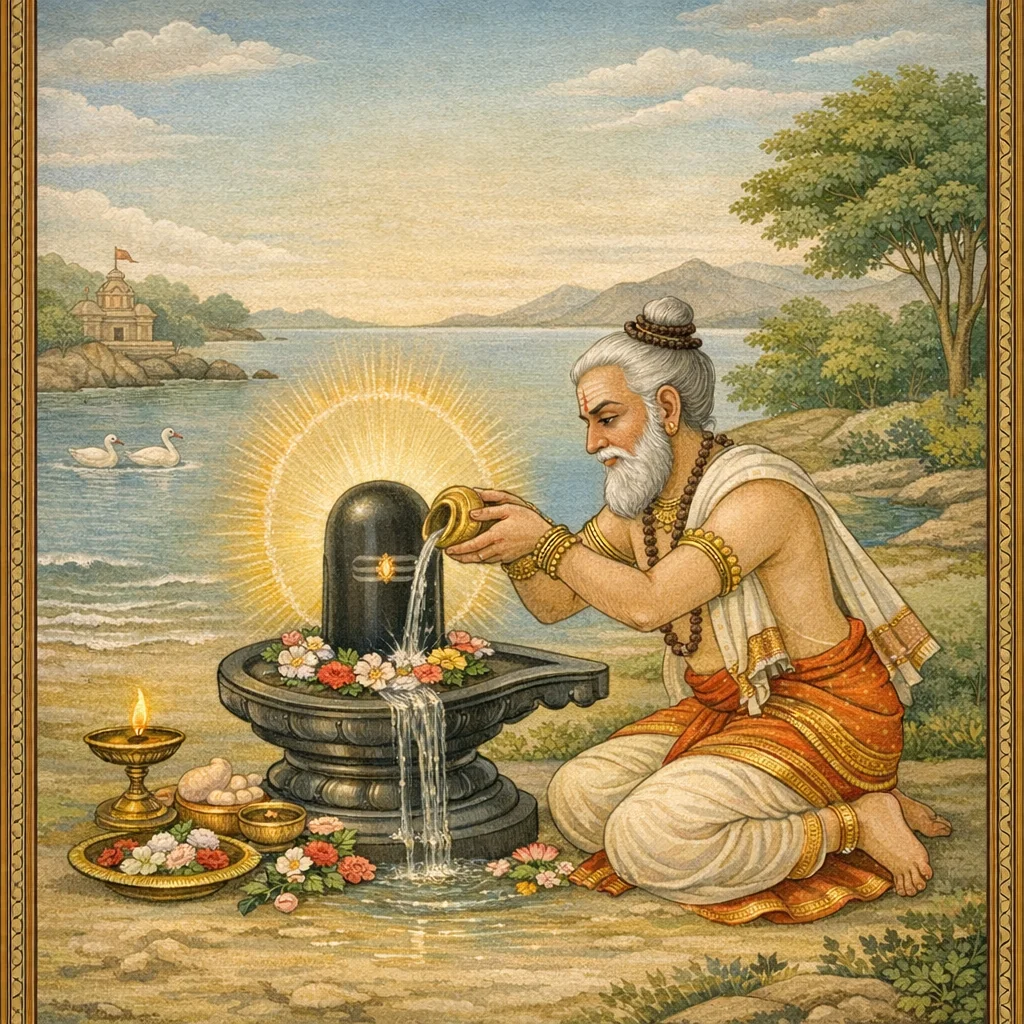
This chapter is framed as a brief theological instruction spoken by Īśvara. It introduces a sacred liṅga at Prabhāsa-kṣetra called the “Mānava-liṅga,” which was installed and consecrated by Manu. Burdened by the demerit of killing his own son, Manu recognizes that place as pāpa-hara, a remover of sin. He performs the rites of consecration and establishes Īśvara there, and is thus described as freed from that moral weight. The teaching then extends the promise to all: any human devotee who worships the Mānava-liṅga is said to be released from sins. The chapter ends with a formal colophon identifying it as Skanda Mahāpurāṇa, within the Prabhāsa Khaṇḍa, Prabhāsakṣetramāhātmya, naming this as the 218th adhyāya on the glory of Mānaveśvara.
Shlokas
Verse 1
ईश्वर उवाच । तत्रैव मानवं लिंगं मनुना संप्रतिष्ठितम् । पूर्वं हत्वा सुतं देवि मनुः पापसमन्वितः
Īśvara said: “There itself, Manu duly installed the ‘Mānava’ liṅga. Formerly, O Devī, having slain his son, Manu became burdened with sin.”
Verse 2
क्षेत्रं पापहरं ज्ञात्वा तत्र प्रातिष्ठदीश्वरम् । मुक्तश्चैवाभवत्पापात्तस्मात्पुत्रवधोद्भवात्
Knowing that the holy field removes sin, he installed Īśvara there; and he indeed became free from that sin which had arisen from the killing of his son.
Verse 3
पूजयेन्मानवो यस्तु स मुक्तः पातकैर्भवेत्
Whoever worships the Mānava (liṅga) becomes freed from sins.
Verse 218
इति श्रीस्कान्दे महापुराण एका शीतिसाहस्र्यां संहितायां सप्तमे प्रभासखण्डे प्रथमे प्रभासक्षेत्रमाहात्म्ये मानवेश्वरमाहात्म्यवर्णनंनामाष्टादशोत्तरद्विशततमोऽध्यायः
Thus ends, in the Śrī Skanda Mahāpurāṇa—within the eighty-one-thousand-verse compilation—in the seventh, the Prabhāsa-khaṇḍa, in the first division called the Prabhāsakṣetra-māhātmya, the chapter entitled “Narration of the Greatness of Mānavīśvara,” being Chapter 218.