Adhyaya 215
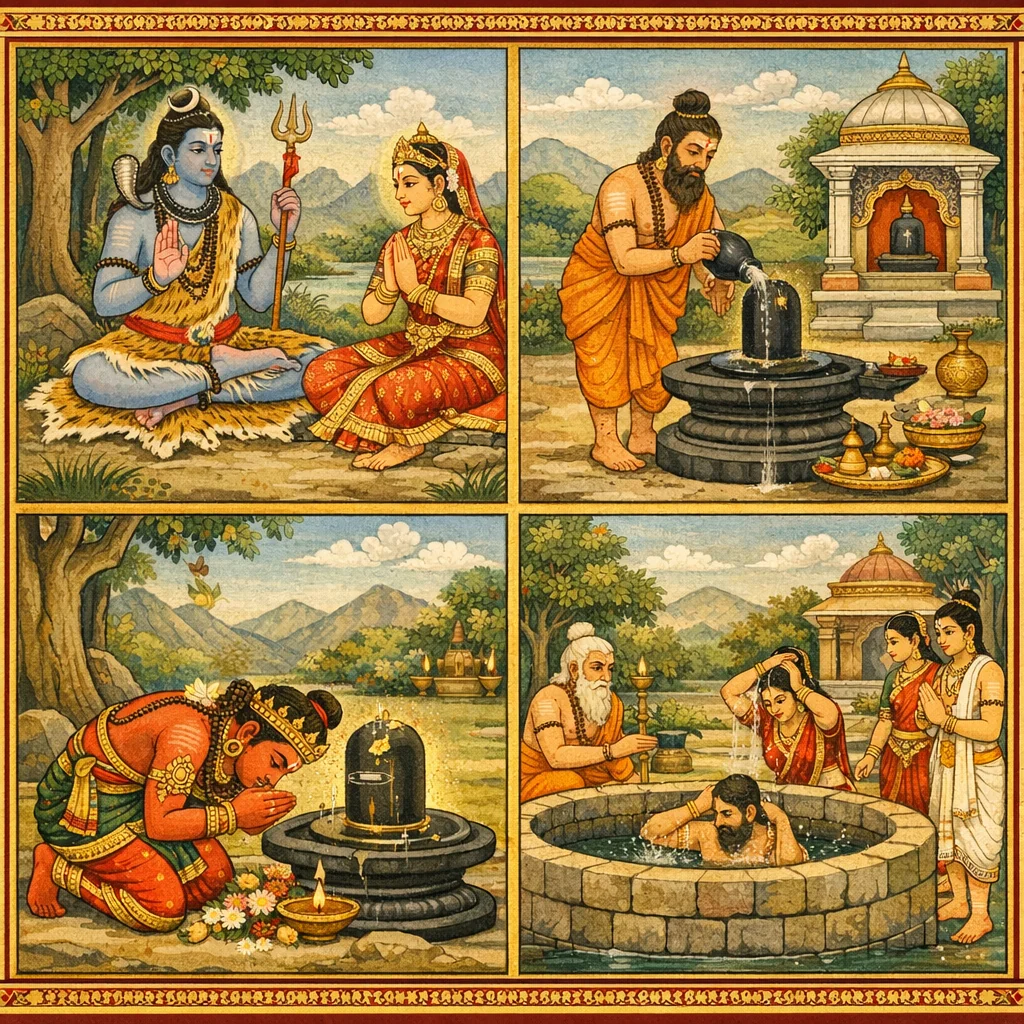
Īśvara directs Devī to the shrine of Kumāreśvara, a short distance south of Mārkaṇḍeśvara, known as a liṅga established by Svāmī, a devoted worshiper, within the sacred terrain. The chapter presents this spot as a place of expiation: intense tapas connected with Kārttikeya is taught to destroy sins born of transgressive desire, especially wrongdoing involving another’s spouse. A paradigmatic devotee installs the liṅga and is said to be freed from impurity, regaining through renunciation a renewed state of “kaumāra,” youthful purity. A second exemplum speaks of Sumāli, who, after the grave act of killing his ancestors, worships here and is released from the sin of violence against father/forebears. The text also marks a well before the deity: bathing there and worshiping Svāmī’s liṅga removes faults and grants access to the great divine city, Svāmīpura. Finally, a rule of gifting is given: donating, in Svāmī’s name, a “tāmracūḍa” item made of high-purity śātakaumbha gold to a twice-born (dvijāti) yields the fruit of pilgrimage.
Shlokas
Verse 1
ईश्वर उवाच । ततो गच्छेन्महादेवि कुमारेश्वरमुत्तमम् । मार्कण्डेश्वरतो देवि दक्षिणे नातिदूरतः । धनुर्विंशतिभिस्तत्र स्थितं स्वामिप्रतिष्ठितम्
Īśvara said: Then, O great Goddess, one should go to the excellent Kumāreśvara. O Goddess, it stands not far to the south of Mārkaṇḍeśvara—there, at a distance of twenty dhanu—installed by Svāmī, the Lord.
Verse 2
ततः कृत्वा तपो घोरं कार्त्तिकेयेन भाभिनि । परदारापहारोत्थपापानां नाशहेतवे
Then, O radiant lady, Kārttikeya performed severe austerity there, to destroy the sins that arise from abducting another man’s wife.
Verse 3
लिंगं स्थापितवांस्तत्र स मुक्तः किल्विषात्ततः । वैराग्याद्यौवनं त्यक्त्वा कौमारं पुनराददे
Having established a liṅga there, he was freed from sin. And through dispassion, casting off youthfulness, he regained the state of boyhood once again.
Verse 4
पितॄन्हत्वा सुमाली च तमाराधितवान्पुरा । सोऽपि मुक्तोऽभवद्देवि पापात्पितृवधोद्भवात्
And Sumālī too—having slain his forefathers in former times—worshipped him (Śiva) with devotion. He also, O Goddess, became freed from the sin that arose from the killing of ancestors.
Verse 5
कुमारेश्वरनामैतत्पूजितं वै सुरासुरैः । तस्याग्रतः कुमारस्य कूपस्तिष्ठति भामिनि
This liṅga is named Kumāreśvara and is indeed worshipped by both gods and asuras. In front of that Kumāra, O fair lady, a well stands there.
Verse 6
तत्र स्नात्वा पूजयेद्यः शूलिनं स्वामिपूजितम् । स मुक्तः पातकैः सर्वैर्गच्छेत्स्वामिपुरं महत्
Whoever bathes there and worships the Trident-bearing Lord (Śiva), worshipped even by Svāmī, is freed from all sins and goes to Svāmī’s great city, the Lord’s supreme abode.
Verse 7
शातकौंभमयं यस्तु ताम्रचूडं द्विजातये । दद्यात्स्वामिनमुद्दिश्य स तु यात्राफलं लभेत्
But whoever, dedicating it to the Lord, gives to a twice-born (brāhmaṇa) a “tāmra-cūḍa” made of pure gold, truly obtains the full fruit of the pilgrimage.
Verse 215
इति श्रीस्कांदे महापुराण एकाशीतिसाहस्र्यां संहितायां सप्तमे प्रभासखण्डे प्रथमे प्रभास क्षेत्रमाहात्म्ये कुमारेश्वरमाहात्म्यवर्णनंनाम पञ्चदशोत्तरद्विशततमोऽध्यायः
Thus ends, in the venerable Skanda Mahāpurāṇa—within the Saṃhitā of eighty-one thousand verses—within the seventh, the Prabhāsa Khaṇḍa, and within the first division, the Prabhāsa-kṣetra-māhātmya, the chapter entitled “Description of the Greatness of Kumāreśvara,” being Chapter 215.