Adhyaya 214
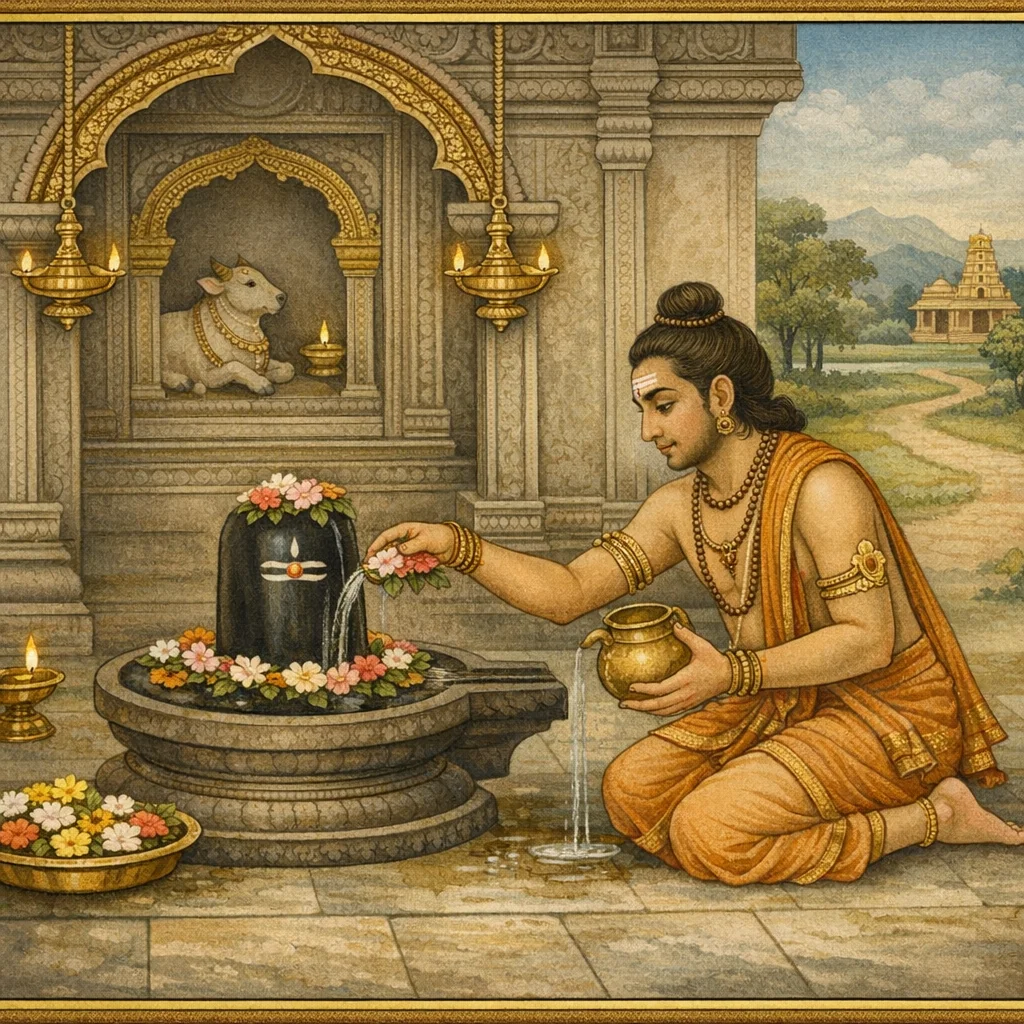
This adhyāya is cast as a theological discourse led by Īśvara, locating the shrine of Kauśikeśvara to the īśāna (northeast) of Kaśyapeśvara at a distance of eight dhanus (a traditional spatial measure). Kauśikeśvara is praised as a powerful purifier, explicitly described as a destroyer of great sins (mahāpātaka-nāśana). A brief origin-legend explains the name: Kauśika, having slain the sons of Vasiṣṭha—an act presented as a grave transgression—establishes a liṅga at that spot and, through consecration and worship, becomes freed from sin. The chapter ends with a concise phalaśruti: those who behold (darśana) and worship (pūjā) the liṅga obtain their desired fruits (vāñchita-phala).
Shlokas
Verse 1
ईश्वर उवाच । धनुषामष्टभिस्तस्मादीशाने कश्यपेश्वरात् । कौशकेश्वरनामानं महापातकनाशनम्
Īśvara said: From Kaśyapeśvara, to the northeast, at a distance of eight dhanu, is the liṅga called Kauśikeśvara, the destroyer of great sins.
Verse 2
वसिष्ठतनयान्हत्वा तत्र कौशिकसत्तमः । स्थापयामास तल्लिंगं मुक्तपापस्ततोऽभवत्
Having slain the sons of Vasiṣṭha, the excellent Kauśika there established that liṅga; and from that time he became freed from sin.
Verse 3
तं दृष्ट्वा पूजयित्वा तु लभते वाञ्छितं फलम्
By beholding it and worshipping it, one attains the desired fruit.
Verse 214
इति श्रीस्कांदे महा पुराण एकाशीतिसाहस्र्यां संहितायां सप्तमे प्रभासखण्डे प्रथमे प्रभासक्षेत्रमाहात्म्ये कौशिकेश्वरमाहात्म्यवर्णनंनामचतुर्दशोत्तरद्विशततमोऽध्यायः
Thus, in the Śrī Skanda Mahāpurāṇa—within the eighty-one-thousand-verse Saṃhitā—ends the two-hundred-and-fourteenth chapter, in the seventh Prabhāsa-khaṇḍa, in the first Prabhāsakṣetra-māhātmya, entitled “The Description of the Greatness of Kauśikeśvara.”