Adhyaya 210
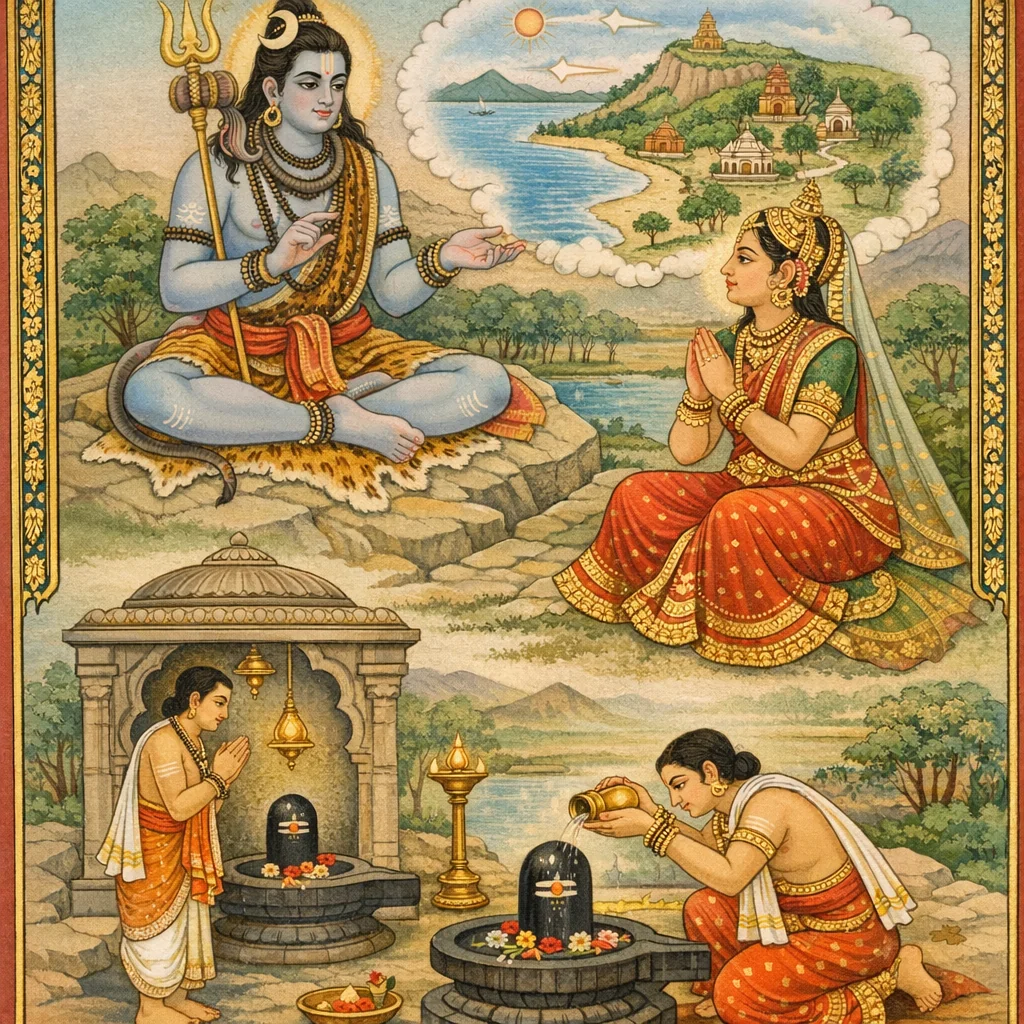
This adhyāya offers a compact tīrtha-instruction, framed as Īśvara’s theological discourse to Mahādevī. The pilgrim is directed to proceed to Pulastyēśvara, praised as an ‘uttama’ (preeminent) shrine, whose location within the sacred landscape of Prabhāsa is indicated through directional wording and a measure of distance. It then lays down the devotional sequence: first darśana, and then pūjā performed vidhānataḥ—according to proper ritual procedure. The chapter concludes with a firm phalaśruti: the worshipper is freed from sins accumulated across seven births, with the assurance, “there is no doubt in this” (nātra saṃśayaḥ).
Shlokas
Verse 1
ईश्वर उवाच । ततो गच्छेन्महादेवि पुलस्त्येश्वरमुत्तमम् । मार्कंडेयोत्तेरे भागे धनुषां पञ्चके स्थितम्
Īśvara said: “Then, O Great Goddess, one should go to the excellent shrine of Pulastyeśvara, situated five dhanu-lengths to the north of Mārkaṇḍeya.”
Verse 2
तं दृष्ट्वा मानवो देवि पूजयित्वा विधानतः । सप्तजन्मार्जितात्पापान्मुच्यते नात्र संशयः
O Goddess, having beheld Him and worshipped according to the proper rite, a person is freed from sins accumulated across seven births—of this there is no doubt.
Verse 210
इति श्रीस्कांदे महापुराण एकाशीतिसाहस्र्यां संहितायां सप्तमे प्रभासखण्डे प्रथमे प्रभासक्षेत्रमाहात्म्ये पुलस्त्येश्वरमाहात्म्यवर्णनंनाम दशोत्तरद्विशततमोऽध्यायः
Thus ends, in the Śrī Skanda Mahāpurāṇa—within the eighty-one-thousand-verse collection—within the seventh, the Prabhāsa Khaṇḍa, and within the first section, the Māhātmya of Prabhāsa Kṣetra, the chapter called “The Description of the Greatness of Pulastyeśvara,” being Chapter 210.