Adhyaya 21
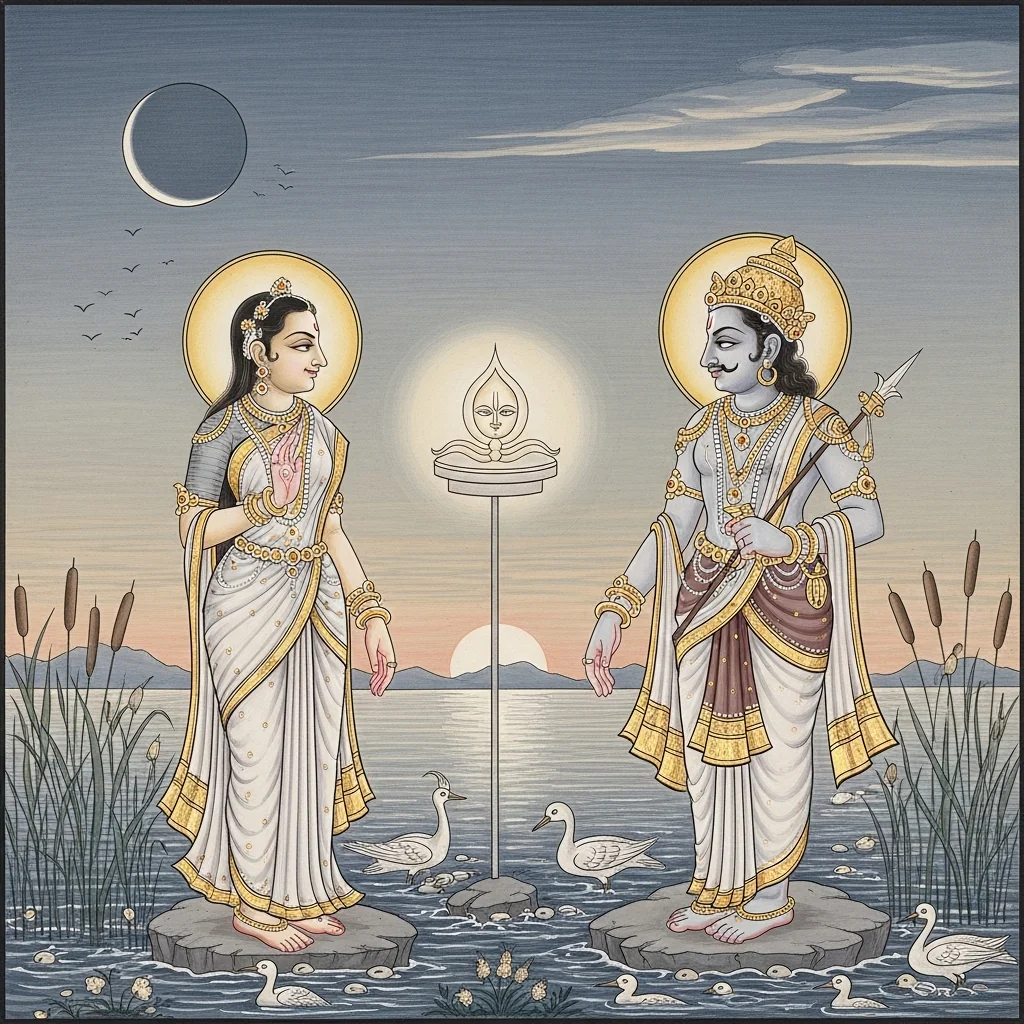
Chapter 21 presents a theological dialogue between Devī and Īśvara, weaving together genealogy, moral causality, and guidance to a sacred site. Devī asks about Soma’s distinctive condition and its cause. Īśvara recounts Dakṣa’s progeny and the marriages of his daughters to Dharma, Kaśyapa, Soma, and others, then expands into lineage lists: Dharma’s wives and children, the Vasus and their descendants, the Sādhyas, the twelve Ādityas, the eleven Rudras, and select asura lines (such as that of Hiraṇyakaśipu). The narrative then turns to Soma’s marriages with the twenty-seven Nakṣatras, emphasizing his special favor toward Rohiṇī. Neglected, the other wives appeal to Dakṣa. Dakṣa warns Soma to be impartial; Soma agrees but returns to exclusive attachment to Rohiṇī. Dakṣa therefore utters a curse: yakṣmā, a wasting disease, will seize Soma, and his radiance will progressively diminish (kṣaya). Afflicted and dimmed, Soma seeks counsel; Rohiṇī advises him to take refuge first in the authority who pronounced the curse and ultimately in Mahādeva. Soma begs Dakṣa for release, but Dakṣa declares the curse cannot be undone by ordinary means and directs Soma to propitiate Śaṅkara. He also gives a crucial locative instruction: in Varuṇa’s direction, near the ocean and marshland (anūpa), stands a self-manifest, supremely potent liṅga marked by luminous and physical signs; worshiping it with devotion brings purification and restoration of Soma’s splendor. Thus the chapter unites a lesson on partiality and its consequences with cosmological indexing and a navigable sacred-geographic goal in the Prabhāsa region.
Shlokas
Verse 1
देव्युवाच । श्रुतं सर्वमशेषेण चन्द्रस्योत्पत्ति कारणम् । चिह्नं यथाऽभवत्तस्य सांप्रतं तत्प्रकीर्त्तय
The Goddess said: “I have heard in full the cause of the Moon’s origin. Now relate, just as it happened, the distinctive mark that came to be upon him.”
Verse 2
ईश्वर उवाच । ब्रह्मणस्तु पुरा देवि दक्षो नाम सुतोऽभवत् । प्रजाः सृजेति उद्दिष्टः पूर्वं दक्षः स्वयंभुवा
Īśvara said: “In ages past, O Goddess, Brahmā had a son named Dakṣa. Formerly, Dakṣa was commanded by Svayambhū (Brahmā) to bring forth progeny and cause creation to multiply.”
Verse 3
षष्टिं दक्षोऽसृजत्कन्या वैरिण्यां वै प्रजापतिः । ददौ स दश धर्माय कश्यपाय त्रयोदश
Prajāpati Dakṣa begot sixty daughters from Vairiṇī. Of these, he gave ten to Dharma and thirteen to Kaśyapa.
Verse 4
सप्त विशतिं सोमाय चतस्रोऽरिष्टनेमिने । द्वे चैव भृगुपुत्राय द्वे कृशाश्वाय धीमते
He gave twenty-seven (daughters) to Soma, four to Ariṣṭanemi, two to Bhṛgu’s son, and two to the wise Kṛśāśva.
Verse 5
द्वे चैवांगिरसे तद्वत्तासां नामानि विस्तरात् । शृणु त्वं देवि मातॄणां प्रजाविस्तरमादितः
And likewise he gave two to Aṅgiras. Now, O Goddess, hear in detail the names of those mothers and, from the beginning, the unfolding of their progeny.
Verse 6
मरुत्वती वसुर्जामी लंबा भानुररुन्धती । संकल्पा च मुहूर्ता च साध्या विश्वा च भामिनि
O radiant one, (they are) Marutvatī, Vasu, Jāmī, Lambā, Bhānu, Arundhatī, and also Saṃkalpā, Muhūrtā, Sādhyā, and Viśvā.
Verse 7
धर्म पत्न्यः समाख्याता दक्षः प्राचेतसो ददौ । अदितिर्दितिर्दनुस्तद्वदरिष्टा सुरसैव च
Thus have the wives of Dharma been proclaimed by name. Dakṣa, son of Prācetas, also bestowed (his daughters) Aditi, Diti, and Danu—likewise Ariṣṭā and Surasā as well.
Verse 8
सुरभिर्विनता चैव नाम्ना क्रोधवशा त्विला । कद्रूस्त्विषा वसुस्तद्वत्तासां पुत्रान्वदामि वै
And there were also Surabhi and Vinatā; others named Krodhavaśā and Tvilā; and likewise Kadrū, Tviṣā, and Vasu. Truly, I shall now speak of their sons.
Verse 9
विश्वेदेवास्तु विश्वायाः साध्या साध्यानजीजनत् । मरुत्वत्यां मरुत्वंतो वसोस्तु वसवस्तथा
From Viśvā were born the Viśvedevas; and from Viśvā, the Sādhyas brought forth the Sādhyas. From Marutvatī were born the Maruts; and from Vasu, likewise, the Vasus came forth.
Verse 10
भानोस्तु भानवस्तेन मुहूर्त्तायां मुहूर्त्तकाः । लंबाया घोषनामानो नागवीथिस्तु जामिजा
From Bhānu were born the Bhānavas; and from Muhūrtā were born the Muhūrtakas. From Lambā came those known as the Ghoṣanāmanas; and from Jāmi was born Nāgavīthi.
Verse 11
संकल्पायास्तु संकल्पो धर्मपुत्रा दश स्मृताः । आपो ध्रुवश्च सोमश्च धरश्चैवानलोऽनिलः
From Saṃkalpā was born Saṃkalpa. Ten are remembered as the sons of Dharma: Āpa, Dhruva, Soma, Dhara, as well as Anala and Anila.
Verse 12
प्रत्यूषश्च प्रभासश्च वसवोष्टौ प्रकीर्तिताः । आपस्य पुत्रा वैदंड्यः श्रमः शान्तो ध्वनिस्तथा
Pratyūṣa and Prabhāsa are proclaimed among the eight Vasus. Of Āpa, the sons are said to be Vaidaṇḍya, Śrama, Śānta, and Dhvani.
Verse 13
ध्रुवस्य पुत्रो भगवान्कालो लोकप्रकालनः । सोमस्य भगवाञ्छर्वो ध्रुवश्च गृहबोधनः
Dhruva’s son is the venerable Kāla, the regulator of the world’s cycles. Soma’s son is the blessed Śarva; and Dhruva is also spoken of as the awakener of households.
Verse 14
हुतहव्यवहश्चैव धरस्य द्रविण स्मृतः । मनोजवोऽनिलस्यासीदविज्ञातगतिस्तथा
Hutahavyavaha is remembered as the son of Dhara, and Draviṇa as well. Of Anila were born Manojava and likewise Avijñātagati.
Verse 15
देवलो भगवान्योगी प्रत्यूषस्याभवन्सुताः । बृहस्पतेस्तु भगिनी भुवना ब्रह्मवादिनी
The blessed yogin Devala was born as a son of Pratyūṣa. And Bhuvanā—Bṛhaspati’s sister—was a speaker of Brahman, a knower of sacred truth.
Verse 16
प्रभासस्य तु सा भार्या वसूनामष्टमस्य च । विश्वकर्मा सुतस्तस्य शिल्पकर्त्ता प्रजापतिः
She was the wife of Prabhāsa, the eighth among the Vasus. Her son was Viśvakarmā, the cosmic artisan—Prajāpati, maker of crafts.
Verse 17
तुषितानां तु साध्यानां नामान्येतानि वच्मि ते । मनोऽनुमन्ता प्राणश्च नरोऽपानश्च वीर्यवान्
Now I shall declare to you these names of the Sādhyas among the Tuṣitas: Mano, Anumantā, Prāṇa, Nara, Apāna, and Vīryavān.
Verse 18
भक्तिर्भयोऽनघश्चैव हंसो नारायणस्तथा । विभुश्चैव प्रभुश्चैव साध्या द्वादश कीर्तिताः
Bhakti, Bhaya, and Anagha; Haṃsa and Nārāyaṇa; Vibhu and Prabhu as well—these are proclaimed as the twelve Sādhyas.
Verse 19
कश्यपस्य प्रवक्ष्यामि सन्ततिं वरवर्णिनि । अंशो धाता भगस्त्वष्टा मित्रोऽथ वरुणो र्यमा
O fair-complexioned lady, I shall declare the lineage of Kaśyapa: Aṃśa, Dhātā, Bhaga, Tvaṣṭṛ, Mitra, Varuṇa, and Aryamā.
Verse 20
विवस्वान्सविता पूषा ह्यंशुमान्विष्णुरेव च । एते सहस्रकिरणा आदित्या द्वादश स्मृताः
Vivasvān, Savitṛ, Pūṣan, Aṃśumān, and Viṣṇu as well—these thousand-rayed ones are remembered as the twelve Ādityas.
Verse 21
अजैकपादहिर्बुध्न्यो विरूपाक्षोऽथ रैवतः । हरश्च बहुरूपश्च त्र्यंबकश्च सुरेश्वरः
Ajaikapād, Ahirbudhnya, Virūpākṣa, and Raivata; Hara, Bahurūpa, Tryambaka, and Sureśvara—these are proclaimed among the manifestations of Rudra.
Verse 22
सावित्रश्च जयन्तश्च पिनाकी चापराजितः । एते रुद्राः समाख्याता एकादश गणेश्वराः
Sāvitra, Jayanta, Pinākī, and Aparājita—thus are these declared as Rudras, the eleven lords of the divine hosts.
Verse 23
दितिः पुत्रद्वयं लेभे कश्यपाद्बलगर्वितम् । हिरण्यकशिपुं श्रेष्ठं हिरण्याक्षं तथानुजम्
Diti bore two sons by Kaśyapa, proud of their might: the eminent Hiraṇyakaśipu and his younger brother Hiraṇyākṣa.
Verse 24
हिरण्यकशिपोर्दैत्यैः श्लोकोगीतः पुरातनैः
Concerning Hiraṇyakaśipu, the ancient Daityas sang a time-honored verse of praise.
Verse 25
राजा हिरण्यकशिपुर्यांयामाशां निरीक्षते । तस्यां तस्यां दिशि सुरा नमश्चक्रुर्महर्षिभिः । हिरण्यकशिपोः पुत्राश्चत्वारः सुमहाबलाः
Whichever direction King Hiraṇyakaśipu looked toward, in that very quarter the gods—along with the great seers—offered him obeisance. Hiraṇyakaśipu had four sons of immense strength.
Verse 26
प्रह्लादः पूर्वजस्तेषामनुह्रादस्ततः परः । ह्रादश्चैव ह्रदश्चैव पुत्राश्चैते प्रकीर्तिताः
Of them, Prahlāda was the eldest; next came Anuhrāda; and Hrāda and Hrada—these sons are thus enumerated.
Verse 27
उभौ सुन्दोपसुन्दौ तु ह्रदपुत्रौ बभूवतुः । ह्रादस्य पुत्रस्त्वेकोऽभून्मूक इत्यभिविश्रुतः
The two—Sunda and Upasunda—were born as the sons of Hrada. And Hrāda had a single son, widely renowned by the name Mūka.
Verse 28
मारीचः सुंदपुत्रस्तु ताडकायामजायत । दण्डके निहतः सोऽयं राघवेण वलीयसा
Mārīca, the son of Sunda, was born of Tāḍakā; and he was slain in the Daṇḍaka forest by the mighty Rāghava (Rāma).
Verse 29
मूको विनिहतश्चापि कैराते सब्यसाचिना । संह्रादस्य तु दैत्यस्य निवातकवचाः कुले
In the Kirāta episode as well, Mūka was slain by Savyasācī (Arjuna). And in the lineage of the Daitya Saṃhrāda were born the Nivātakavacas.
Verse 30
तिस्रः कोट्यस्तु विख्याता निहताः सव्यसाचिना । गवेष्ठी कालनेमिश्च जंभो वल्कल एव च
Three famed crores of foes were slain by Savyasācī (Arjuna)—Gaveṣṭhī, Kālanemi, Jambha, and also Valkala.
Verse 31
जृंभः षष्ठोनुजस्तेषां स्मृताः प्रह्रादसूनवः । शुंभश्चैव निशुंभश्च गवेष्ठिनः सुतौ स्मृतौ
Jṛmbha is remembered as the sixth younger brother among them; they are said to be the sons of Prahrāda. And Śuṃbha and Niśuṃbha are remembered as the sons of Gaveṣṭhī.
Verse 32
धनुकश्चासिलोमा च शुंभपुत्रौ प्रकीर्तितौ । विरोचनस्य पुत्रस्तु बलिरेकः प्रतापवान्
Dhanuka and Asilomā are proclaimed as the two sons of Śuṃbha. And Virocana’s son was Bali alone, mighty in valor.
Verse 33
हिरण्याक्षसुताः पंच विक्रांताः सुमहाबलाः । अन्धकः शकुनिश्चैव कालनाभस्तथैव च
Five sons of Hiraṇyākṣa—valiant and of great strength—were Andhaka, Śakuni, and likewise Kālanābha as well.
Verse 34
महानाभश्च विक्रांतो भूतसंतापनस्तथा । शतं शतसहस्राणि निहतास्तारकामये
Mahānābha, the valiant one, and Bhūtasaṃtāpana as well (were among them). In the war for Tārakā, hundreds of thousands were slain.
Verse 35
इति संक्षपतः प्रोक्ता कश्यपान्वयसंततिः । यया व्याप्तं जगत्सर्वं सदेवासुरमानुषम्
Thus, in brief, the succession of Kaśyapa’s lineage has been described—by which the entire world is pervaded, together with gods, demons, and humankind.
Verse 36
अथ याः कन्यका दत्ताः सप्तविंशतिरिंदवे । तासां मध्ये महादेवि प्रिया तस्य च रोहिणी
Now, of the twenty-seven maidens who were given to the Moon—among them, O Great Goddess, Rohiṇī was his beloved.
Verse 37
अथ नक्षत्रनाथस्य तासां मध्येतिवल्लभा । बभूव रोहिणी देवी प्राणेभ्योऽपि गरीयसी
Then, among them, Rohiṇī Devī became exceedingly dear to the lord of the Nakṣatras, Soma the Moon—dearer even than his own life-breath.
Verse 38
सर्वास्ताः संपरित्यज्य रोहिण्या सहितो रहः । रेमे कामपरीतात्मा वनेषूपवनेषु च । रमणीयेषु देशेषु कन्दरेषु गुहासु च
Abandoning all the others, he stayed in secret with Rohiṇī, delighting with a mind overpowered by desire—within forests and groves, in lovely places, in mountain clefts, and in caves.
Verse 39
अथ ता दुःखसंपन्नाः पत्न्यः शेषा यशस्विनि । जग्मुश्च शरणं दक्षं वचनं चेदमब्रुवन्
Then the remaining wives, overwhelmed with sorrow, O illustrious one, went for refuge to Dakṣa and spoke these words.
Verse 40
सोमः सर्वा तिक्रम्य रोहिण्या सह मोदते । संवत्सरसहस्रं तु क्रीडमानो यथासुखम्
Soma, passing over all the others, delighted only with Rohiṇī—sporting for a thousand years according to his pleasure.
Verse 41
अवशिष्टास्तु षड्विंशन्मलिना विगतश्रियः । पाणिग्रहणमारभ्य रोहिण्या सह चंद्रमाः
But the remaining twenty-six became sullied and bereft of their splendor; from the very time of the marriage rite, the Moon stayed with Rohiṇī alone.
Verse 42
संवत्सरसहस्रं तु जानात्येकां स शर्वरीम् । परित्यक्ता वयं तात शशिना दोषवर्जिताः
For a thousand years he has known only a single night with us; dear father, the Moon has abandoned us, though we are without fault.
Verse 43
स रेमे सह रोहिण्या अस्माकमसुखप्रदः । अस्माकं दुःखदग्धानां श्रेयोऽतो मरणं भवेत्
He sported with Rohiṇī, granting us only misery; for us who are scorched by grief, death would be better than this.
Verse 44
तासां तद्वचनं श्रुत्वा दुःखार्तानां प्रजापतिः । ब्रह्मतेजः समायुक्तः पुत्रीस्नेहेन कर्षितः । जगाम यत्र ऋक्षेशो वचनं चेदमब्रवीत्
Hearing the words of his daughters, distressed with sorrow, Prajāpati (Dakṣa)—endowed with brahmanic radiance and drawn by affection for his daughters—went to where the lord of the stars was and spoke these words.
Verse 45
समं वर्त्तस्व कन्यासु मामकासु निशाकर । अन्यथा दोषभागी त्वं भविष्यसि न संशयः
“Conduct yourself equally toward my daughters, O maker of night; otherwise you will surely become a sharer in fault—there is no doubt.”
Verse 46
तस्य तद्वचनं श्रुत्वा लज्जयावनतः स्थितः । बाढमित्येव ऋक्षेंद्रो दक्षस्य पुरतोऽब्रवीत्
Hearing his words, the lord of the stars stood with head bowed in shame; and before Dakṣa he replied, “So be it.”
Verse 47
अद्यप्रभृति विप्रर्षे समं वर्त्तयितास्म्यहम् । पुत्रीभिस्तव सत्यं वै शपेऽहं शपथेन ते
From this day onward, O brahmin-sage, I shall deal equally with your daughters. Truly, I swear it to you by a sacred oath.
Verse 48
एवं प्रतिज्ञासंयुक्ते निशानाथे तदांबिके । सर्वा रूपेण संयुक्तास्तस्य कन्या निवेदिताः
Thus, when the Lord of Night—the Moon—was bound by his vow, O Mother Ambikā, all those maidens were presented to him, once more endowed with beauty and radiance.
Verse 49
दक्षः स्वभवनं गत्वा निर्वृतिं परमां गतः । चन्द्रोऽपि पूर्ववद्देवि रोहिण्यां निरतोऽभवत्
Dakṣa returned to his own abode and attained the highest contentment. Yet the Moon, O Goddess, as before, remained devotedly attached to Rohiṇī.
Verse 50
संपरित्यज्य ताः सर्वाः कामोपहतमानसः । अथ भूयस्तु ताः सर्वा दक्षं वचनमब्रुवन्
Abandoning all the others, his mind struck by desire, the Moon turned away; then all of them again spoke words to Dakṣa.
Verse 51
मलिनास्ताः कृशांग्यश्च दीनाः सर्वा विचेतसः । ततो दृष्ट्वा तथारूपं दक्षो मोहमुपागतः
They became sullied, thin-limbed, miserable, and all were lost in distress. Seeing them in such a state, Dakṣa fell into bewilderment.
Verse 52
लब्धसंज्ञः पुनः सोऽपि क्रोधोद्भूततनूरुहः । उवाच सर्वाः स्वाः पुत्रीः किमित्थं मलिनांबराः । किमिदं निष्प्रभाः सर्वाः कथयध्वं ममानघाः
Regaining awareness, and with anger making the hairs of his body stand on end, he said to all his daughters: “Why are you clad in soiled garments? Why are you all without luster? Tell me, O blameless ones.”
Verse 53
असुरान्सानुगांश्चैव ये चान्ये सुरसत्तमाः । अद्य शापहतान्पुत्र्यः करिष्यामि न संशयः
“Even the Asuras with their followers—and any others, O best among the gods—today, my daughters, I shall surely strike down with a curse; there is no doubt.”
Verse 54
एवमुक्तास्तु दक्षेण सर्वास्ताः समुदैरयन्
Thus addressed by Dakṣa, all of them spoke out together.
Verse 55
न चास्माकं निशानाथ ऋतुमात्रमपि प्रभो । प्रयच्छति पुनस्तेन युष्मत्पार्श्वं समागताः
“And the Lord of the night does not grant to us, O Master, even a single season’s share of his company; therefore we have come again to your side.”
Verse 56
अनादृत्य तु ते वाक्यं रोहिण्यां निरतो रहः । रेमे कामपरीतात्मा अस्माकं शोकवर्द्धनः
“Disregarding your instruction, he remained secretly devoted to Rohiṇī; his heart engulfed by desire, he sported—only increasing our sorrow.”
Verse 57
तासां तद्वचनं श्रुत्वा दक्षः कोपमुपागतः । गत्वा चंद्रं महादेवि शशाप प्रमुखे स्थितम्
Hearing their words, Dakṣa was seized by wrath. O Great Goddess, he went to the Moon and cursed him to his face as he stood before him.
Verse 58
अनादृत्य हि मे वाक्यं यस्मात्त्वं रोहिणीरतः । संत्यज्य पुत्रीश्चास्माकं शेषा दोषेण वर्जिताः । तस्माद्यक्ष्मा शरीरं ते ग्रसिष्यति न संशयः
“Because you have disregarded my command and clung to Rohiṇī, abandoning my other daughters who are blameless, therefore Yakṣmā, the wasting affliction, shall seize your body—of this there is no doubt.”
Verse 59
एतस्मिन्नेव काले तु यक्ष्मा पर्वतपुत्रिके । दक्षेण तु समादिष्टस्तस्य कायं समाविशत्
At that very time, O daughter of the Mountain, Yakṣmā—the affliction set in motion by Dakṣa’s command—entered into his body.
Verse 60
यक्ष्मणा ग्रस्तकायोऽसौ क्षयं याति दिनेदिने
Seized in body by Yakṣmā, he declined day after day, wasting away.
Verse 61
एवं सोमस्तु दक्षेण कृतशापो गतप्रभः । पपात वसुधां देवि निश्चेष्टो रोहिणीयुतः
Thus Soma, cursed by Dakṣa and stripped of his radiance, fell upon the earth, O Goddess—motionless, with Rohiṇī beside him.
Verse 62
लब्ध्वसंज्ञो मुहूर्तेन रोहिणीवाक्य मब्रवीत्
Regaining consciousness after a brief while, he spoke words to Rohiṇī.
Verse 63
देवि कार्यं किमधुना त्वत्पित्रा शापितो ह्यहम् । क्षयकुष्ठेन संयुक्तः किं करोम्यधुना प्रिये
“O Goddess, what is to be done now? For indeed I have been cursed by your father. Afflicted with wasting disease and leprosy, beloved, what am I to do now?”
Verse 64
एवमुक्ता रोहिणी तु बाष्पव्याकुललोचना । दक्षशापहतं दृष्ट्वा सोमं वचनमब्रवीत्
Thus addressed, Rohiṇī—her eyes troubled with tears—seeing Soma struck by Dakṣa’s curse, spoke these words.
Verse 65
येन शापस्तु ते दत्तस्तमेव शरणं व्रज । स ते शापाभिभूतस्य नूनं श्रेयो विधास्यति
“Go for refuge to the very one by whom the curse was given to you. Surely he will arrange what is best for you, who are overpowered by the curse.”
Verse 66
लप्स्यसे तत्प्रसादात्त्वं प्रभां पूर्वोचितां शुभाम्
“By his grace, you will regain your auspicious radiance—the splendor that formerly belonged to you.”
Verse 67
रोहिण्या वचनं श्रुत्वा गतो दक्षसमीपतः । चंद्रः प्रोवाच विनयाद्वाष्प व्याकुललोचनः
Hearing Rohiṇī’s words, Candra went near Dakṣa and, in humility—his eyes troubled with tears—spoke.
Verse 69
त्वया क्रोधपरीतेन कारणे वाप्यकारणे । अनुकंपां च मे कृत्वा कार्यं शापस्य मोक्षणम्
“Whether with cause or without cause, overcome by anger, you pronounced this curse upon me. Now, show me compassion and bring about my release from the curse.”
Verse 70
विदितं तु महाभाग शप्तोहं येन कर्मणा । कुरुष्वानुग्रहं दक्ष मम दीनस्य याचतः
O greatly fortunate one, it is known by what deed I have been cursed. O Dakṣa, grant me favor—have compassion on me, wretched and begging before you.
Verse 71
एवं विलपमानस्य सोमस्य तु महात्मनः । अनुग्रहे मतिं कृत्वा इदं वचनमब्रवीत्
As the great-souled Soma lamented thus, (Dakṣa), resolving to show compassion, spoke these words.
Verse 72
दक्ष उवाच । मया शापहतः सोम त्रातुं शक्यो न दैवतैः । यद्यद्ब्रवीम्यहं सोम तत्तथेति न संशयः
Dakṣa said: “O Soma, struck by a curse from me, you cannot be rescued even by the gods. Yet, O Soma, whatever I tell you—know that it shall be exactly so; of this there is no doubt.”
Verse 73
आयुः कर्म च वित्तं च विद्या निधनमेव च । पूर्वसृष्टानि यान्येव संभवंति हि तानि वै
Life-span, deeds (karma), wealth, learning, and even death—whatever has been fashioned beforehand, those very things indeed come to pass.
Verse 74
असुराश्च सुराश्चैव ये चान्ये यक्षराक्षसाः । सर्वेपि शक्ता न त्रातुं वर्जयित्वा महेश्वरम्
Asuras and Devas alike, and other beings—Yakṣas and Rākṣasas—none of them are able to save you, except Maheśvara.
Verse 75
एषां शापो मया दत्तोऽनुग्रहीष्य ति शंकरः । नान्यस्त्रातुं भवेच्छक्तो विना पशुपतिं भवम् । तत्त्वं शीघ्रतरं गच्छ समाराधय शंकर
This curse upon them has been given by me; Śaṅkara will show favor. None else is capable of saving, apart from Bhava, Paśupati, Lord of creatures. Therefore go at once—go swiftly—and properly worship Śaṅkara.
Verse 76
न शक्तोऽन्यः पुनश्चंद्रः कर्तुं त्वां निर्मलं पुनः । वर्जयित्वा महादेवं शितिकंठमुमापतिम्
O Candra, no one else is able to make you pure again—except Mahādeva, the blue-throated Lord, Umā’s consort.
Verse 77
दक्षस्य च वचः श्रुत्वा कृतांजलिपुटः स्थितः । प्रत्युवाच तदा सोमः प्रहष्टेनांतरात्मना
Hearing Dakṣa’s words, Soma stood with folded hands; then Soma replied, his heart inwardly gladdened.
Verse 78
भगवन्यदि तुष्टोसि मम भक्तस्य सुव्रत । अनुग्रहे कृता बुद्धिस्तदाचक्ष्व कुतः शिवः
O Lord, if You are pleased with me, Your devoted servant, O noble in vow—since Your mind is set on granting grace, tell me: where may Śiva be found and approached?
Verse 79
कस्मिन्स्थाने मया दक्ष द्रष्टव्योऽसौ महेश्वरः । तत्स्थानानि चरिष्यामि यानि तानि वदस्व मे
O Dakṣa, wise one, in what place may I behold that Maheśvara? Tell me those sacred spots; I shall journey through them—declare them to me.
Verse 80
दक्ष उवाच । शृणु सोम प्रयत्नेन श्रुत्वा चैवावधारय । वारुणीं दिशमाश्रित्य सागरानूपसन्निधौ
Dakṣa said: “Listen with care, O Soma; having heard, hold it firmly in your mind. Turning toward Varuṇa’s quarter, the west, near the sea and its coastal marshes…”
Verse 81
कृतस्मरस्यापरतो धन्वंतरशतत्रये । लिंगं महाप्रभावं च स्वयंभूतं व्यवस्थितम्
Beyond the place called Kṛtasmarā, at a distance of three hundred dhanvantaras, there stands a Liṅga of great might—svayambhū, self-manifest—established there.
Verse 82
सूर्य्यबिंबसमप्रख्यं सर्प मेखलमंडितम् । कुक्कुटांडकमानं तद्भूमिमध्ये व्यवस्थितम्
It shines like the sun’s orb, adorned with a serpent as its girdle; of the measure of a hen’s egg, it stands firmly fixed in the very midst of the earth.
Verse 83
स्पर्शलिंगं हि तद्विद्धि तद्भक्त्या ज्ञास्यते भवान् । तत्र संनिहितो देवः शंकरः परमेश्वरः
Know that this is the “Sparśa-liṅga” (the Liṅga realized by sacred touch). Through devotion to it, you yourself shall truly understand; for there the God Śaṅkara, the Supreme Lord (Parameśvara), abides in fullness.
Verse 85
प्रशस्य देवदेवेशमात्मानं निर्मलं कुरु । यस्याशु वरदानेन प्राप्स्यसे रूपमुत्तमम्
Praise the Lord of gods (Devadeveśa) and purify yourself. By his swift granting of boons, you shall attain an excellent form.
Verse 94
गच्छ त्वं तपसोग्रेण आराधय सुरेश्वरम्
Go forth, and with intense austerity (tapas) worship the Lord of the gods.
Verse 168
कुरुष्वानुग्रहं दक्ष प्रसन्नेनांतरात्मना । कोपं त्यज महर्षे त्वं ममोपरि दयां कुरु
Show me favor, O Dakṣa, with an inwardly serene heart. Abandon anger, O great seer; have compassion upon me.