Adhyaya 208
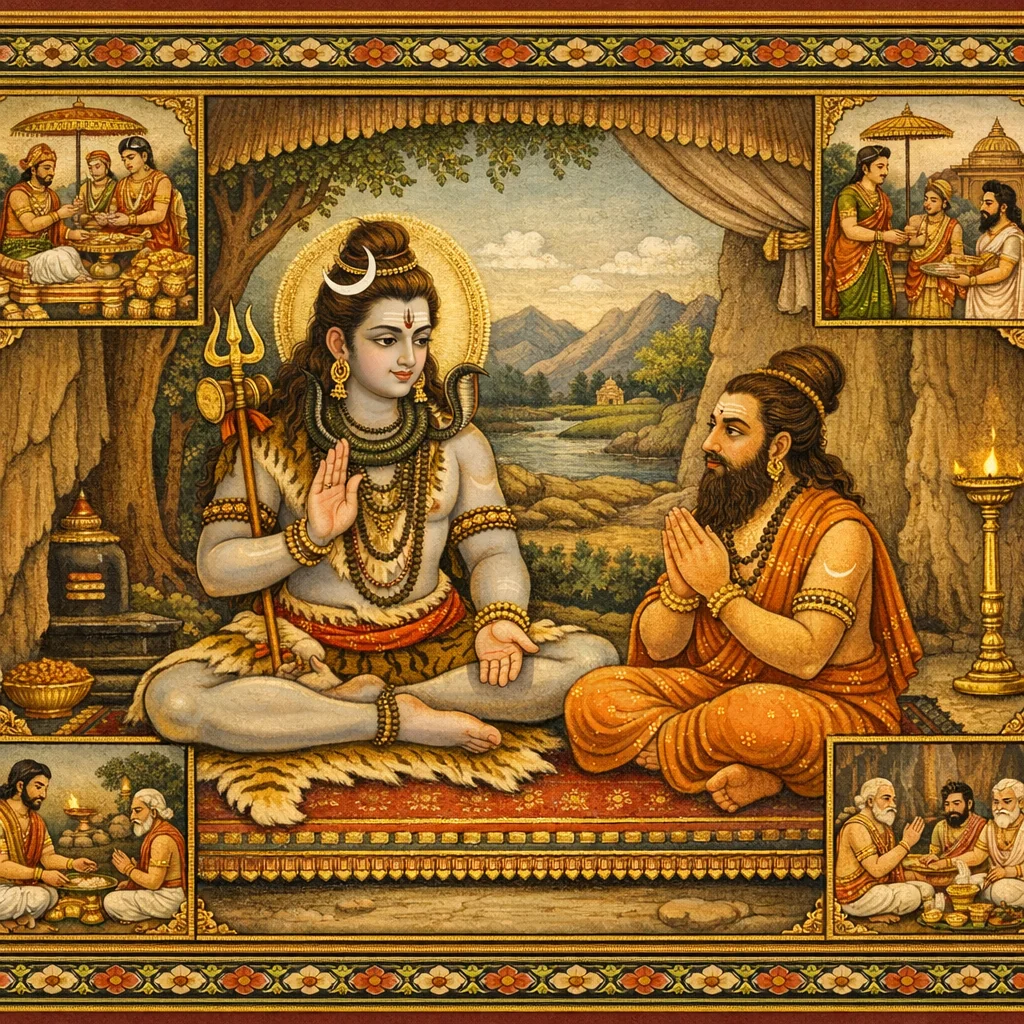
This chapter is a structured theological dialogue in which Devī asks Īśvara for a precise classification of dāna—what is to be given, to whom, and under what conditions of time, place, and recipient. Īśvara contrasts “fruitless” births and “fruitless” gifts with good birth, then sets forth the canonical sixteen great gifts (mahādāna), naming key items such as cows, gold, land, garments, grain, and a furnished house. The teaching then turns to the ethics of intention and provenance: gifts made from pride, fear, anger, or display yield delayed or diminished results, whereas gifts offered with purity of mind and from lawfully acquired wealth bear timely benefit. A major portion defines the marks of a worthy recipient (pātra-lakṣaṇa): learning, yogic discipline, calmness, Purāṇa-knowledge, compassion, truthfulness, cleanliness, and self-control. Detailed rules for cow-gifts specify desirable qualities and forbid defective or unlawfully obtained cattle, warning of harmful consequences from improper giving. The chapter also gives calendrical cautions regarding fasting, pāraṇa, and śrāddha timing, and offers an adaptable śrāddha method when resources or qualified recipients are scarce. Finally, it enjoins honoring the reciter/teacher and restricts transmission to hostile or irreverent listeners, treating right listening and patronage as part of ritual efficacy.
Shlokas
Verse 1
देव्युवाच । इदं देयमिदं देयमिति प्रोक्तं तु यच्छ्रुतौ । दानादानविशेषांस्तु श्रोतुमिच्छामि तत्त्वतः
The Goddess said: “In the tradition of Śruti it is repeatedly declared, ‘This should be given, this should be given.’ I wish to hear, in truth, the specific distinctions regarding giving—and also regarding what should not be given.”
Verse 2
कानि दानानि शस्तानि कस्मै देयानि कान्यपि । कालं देशं च पात्रं च सर्वमाचक्ष्व मे विभो
Which gifts are commendable, and to whom should each be given? Also explain to me fully the proper time, place, and recipient, O Lord.
Verse 3
ईश्वर उवाच । वृथा जन्मानि चत्वारि वृथा दानानि षोडश । सुजन्मानि च चत्वारि महादानानि षोडश
Īśvara said: “There are four kinds of futile births and sixteen kinds of futile gifts. There are also four kinds of noble births and sixteen great gifts.”
Verse 4
देव्युवाच । एतद्विस्तरतो ब्रूहि देवदेवजगत्पते
The Goddess said: “Explain this in detail, O God of gods, Lord of the worlds.”
Verse 5
ईश्वर उवाच । वृथा जन्मानि चत्वारि यानि तानि निबोध मे । कुपुत्राणां वृथा जन्म ये च धर्मबहिष्कृताः । प्रवासं ये च गच्छंति परदाररताः सदा
Īśvara said: “Learn from me the four kinds of life that are wasted. The life of one who becomes a wicked son is wasted; so too the lives of those cast out from dharma. And those who depart into wandering, ever addicted to another’s wife—their lives also are wasted.”
Verse 6
परपाकं च येऽश्नंति पर दाररताश्च ये । अप्रत्याख्यं वृथा दानं सदोषं च तथा प्रिये
Those who eat another’s cooked food, and those who are attached to another’s wife—such conduct is condemned. And, beloved, a gift not offered with due propriety is a futile gift; likewise, a gift given with faults is futile.
Verse 7
आरूढपतिते चैव अन्यायोपार्जितं धनम् । वृथा ब्रह्महने दानं पतिते तस्करे तथा
Charity becomes fruitless when given to one who has fallen from right conduct, and wealth gained by injustice is itself tainted. Likewise, a gift offered to a slayer of a brāhmaṇa—or to a fallen thief—yields no sacred merit.
Verse 8
गुरोश्चाप्रीतिजनने कृतघ्ने ग्रामयाजके । ब्रह्मबन्धौ च यद्दत्तं यद्दत्तं वृषलीपतौ
Whatever is given to one who causes the guru’s displeasure, to an ungrateful person, to a village-priest who performs rites for livelihood without true sanctity, to a ‘brāhmaṇa-in-name-only,’ or to one devoted to a low and improper spouse—such giving is rendered vain.
Verse 9
वेदविक्रयिणे चैव यस्य चोपपतिर्गृहे । स्त्रीनिर्जिते च यद्दत्तं वृथादानानि षोडश
Gifts given to one who sells the Veda, to a man in whose house an adulterer is maintained, or to one ruled by uncontrolled passion—these, along with the others described, make up the sixteen ‘fruitless charities.’
Verse 10
सुजन्म च सुपुत्राणां ये च धर्मे रता नराः । प्रवासं न च गच्छंति परदारपराङ्मुखाः
Men who delight in dharma, blessed with noble birth and virtuous sons, who do not wander into needless exile, and who turn their faces away from another’s wife—these are the marks of righteous life.
Verse 11
गावः सुवर्णं रजतं रत्नानि च सरस्वती । तिलाः कन्या गजोश्वश्च शय्या वस्त्रं तथा मही
Cows; gold; silver; gems; and Sarasvatī—the gift of learning; sesame; a maiden given as a marriage-gift; elephants and horses; a bed; clothing; and land—these are counted among the great donations.
Verse 12
धान्यं पयश्च च्छत्रं च गृहं चोपस्करान्वितम् । एतान्येव महादेवि महादानानि षोडश
Grain, milk, an umbrella, and a house furnished with necessities—these indeed, O Great Goddess, constitute the sixteen great gifts (mahādānas).
Verse 13
गर्वावृतस्तु यो दद्याद्भयात्क्रोधात्तथैव च । भुंक्ते दानफलं तद्धि गर्भस्थो नात्र संशय
But one who gives while veiled by pride—or out of fear or anger—indeed consumes the fruit of that charity while still in the womb; of this there is no doubt.
Verse 14
बालत्वेऽपि च सोऽश्नाति यद्दत्तं दंभकारणात् । मन्युना मंतुना चैव तथैवार्थस्य कारणात्
Even in childhood he tastes the fruit of what he gave for the sake of show—whether given from resentment, from a calculating mind, or even for the sake of profit.
Verse 15
देशे काले च पात्रे च शुद्धेन मनसा तथा । न्यायार्जितं च यो दद्याद्यौवने स तदश्नुते
He who gives with a pure mind, in the right place and at the right time, to a worthy recipient, and from wealth earned justly—he enjoys the fruit of that gift in youth.
Verse 16
अन्यायेनार्जितं द्रव्यमपात्रे प्रतिपादितम् । क्लिष्टं च विधिहीनं च वृद्धभावे तदश्नुते
But wealth acquired unjustly, given to an unworthy recipient, given with hardship or without due rite—its fruit is tasted only in old age, diminished and troubled.
Verse 17
तस्माद्देशे च काले च सुपात्रे विधिना नरः । शुभार्जितं प्रयुञ्जीत श्रद्धया शाठ्यवर्जितः
Therefore, in the proper place and at the proper time, according to due rule, one should bestow righteously earned wealth upon a worthy recipient—with faith and free from deceit.
Verse 18
स्वाध्यायाढ्यं योगवंतं प्रशांतं पुराणज्ञं पापभीरुं वदान्यम् । स्त्रीषु क्षान्तं धार्मिकं गोशरण्यं व्रतैः क्रान्तं तादृशं पात्रमाहुः
They call a person a “worthy recipient”: one rich in svādhyāya (Vedic study), devoted to yoga, tranquil, learned in the Purāṇas, fearful of sin, and generous; patient and restrained in conduct toward women, righteous in dharma, a refuge for cows, and disciplined through vows (vrata).
Verse 19
सत्यं दमस्तपः शौचं सन्तोषोऽनैर्ष्यमार्जवम् । ज्ञानं शमो दया दानमेतत्पात्रस्य लक्षणम्
Truthfulness, self-restraint, austerity (tapas), purity, contentment, freedom from envy, straightforwardness, knowledge, inner calm (śama), compassion, and generosity—these are the marks of a worthy recipient.
Verse 20
एवंविधे तु यत्पात्रे गामेकां तु प्रयच्छति । समानवत्सां कपिलां धेनुं सर्वगुणान्विताम्
When giving to such a worthy recipient, one should offer a single cow—a tawny kapilā milch-cow, together with her calf, endowed with every good quality.
Verse 21
रौप्यपादां स्वर्णशृङ्गीं रुद्रलोके महीयते । एकां गां दशगुर्दद्याद्गोशती च तथा दश
A cow whose hooves are adorned with silver and whose horns are adorned with gold is honored in Rudra’s world. One should give a single cow with a tenfold dakṣiṇā, and likewise one may give a hundred cows with a tenfold fee.
Verse 22
शतं सहस्रगुर्दद्यात्सर्वे समफलाः स्मृताः । सुशीला सोमसंपन्ना तरुणी च पयस्विनी । सवत्सा न्यायलब्धा च प्रदेया ब्राह्मणाय गौः
One may give with a hundredfold or a thousandfold dakṣiṇā—these are said to yield equal fruit. The cow to be given to a brāhmaṇa should be gentle, well nourished, young and milk-giving, accompanied by her calf, and obtained by lawful means.
Verse 23
वंध्या सरोगा हीनांगी दुष्टा वृद्धा मृतप्रजा । अन्यायलब्धा दूरस्था नेदृशी गां प्रदापयेत्
One should not give such a cow: one that is barren, diseased, deformed, ill-tempered, old, whose offspring has died, obtained by unrighteous means, or kept far away so that it is not truly handed over.
Verse 24
यो हीदृशीं गां ददाति देवोद्देशेन मानवः । प्रत्युताधोगतिं याति क्लिश्यते च महेश्वरि
But the man who gives such an unfit cow in the name of a deity instead goes to a downward state—and he suffers, O Maheśvarī.
Verse 25
रुष्टा क्लिष्टा दुर्बला व्याधिता च न दातव्या या च मूल्यैरदत्तैः । लेशो विप्रेभ्यो यया जायते वै तस्या दातुश्चाफलाः सर्वलोकाः
A cow that is angry, afflicted, weak, or sick should not be given; nor should one be given whose price has not been duly paid. If by that gift even a trace of grievance arises among the brāhmaṇas, then for the giver all worlds become fruitless, bereft of merit.
Verse 26
अतिथये प्रशान्ताय सीदते चाहिताग्नये । श्रोत्रियाय तथैकापि दत्ता बहुगुणा भवेत्
Even a single cow, when given to a serene guest, to one in need, to an āhitāgni (maintainer of the sacred fires), or to a śrotriya— a brāhmaṇa learned in the Veda—becomes manifold in merit.
Verse 27
गां विक्रीणाति चेद्देवि ब्राह्मणो ज्ञानदुर्बलः । नासौ प्रशस्यते पात्रं ब्राह्मणो नैव स स्मृतः
O Devī, if a brāhmaṇa—weak in true understanding—sells a cow, he is not praised as a worthy recipient (pātra); indeed, he is not regarded as a brāhmaṇa in the proper sense.
Verse 28
बहुभ्यो न प्रदेयानि गौर्गृहं शयनं स्त्रियः । विभक्ता दक्षिणा ह्येषा दातारं नोपतिष्ठति
A cow, a house, a bed, and a wife should not be given to many, to be shared among multiple recipients. For this dakṣiṇā, when divided, does not truly support or benefit the giver.
Verse 29
प्रासादा यत्र सौवर्णाः शय्या रव्रोज्ज्वलास्तथा । वराश्चाप्सरसो यत्र तत्र गच्छंति गोप्रदाः
Where there are golden palaces, and beds radiant with splendor, and where excellent Apsarases are found—there the donors of cows attain and go.
Verse 30
नास्ति भूमिसमं दानं नास्ति गंगासमा सरित् । नास्ति सत्यात्परो धर्मो नान्यो देवो महेश्वरात्
No gift equals the gift of land; no river equals the Gaṅgā. No dharma is higher than truth, and there is no God other than Maheśvara.
Verse 31
उच्चैः पाषाणयुक्ता च न समा नैव चोषरा । न नदीकूलविकटा भूमिर्देया कदाचन
Land should never be given if it is too elevated, full of stones, uneven, saline or barren, or harsh and difficult along a riverbank.
Verse 32
षष्टिवर्षसहस्राणि स्वर्गे वसति भूमिदः । आच्छेत्ता चानुमंता च तान्येव नरकं व्रजेत्
For sixty thousand years the donor of land dwells in heaven; but the one who seizes that land, and the one who approves that seizure, go to hell for that very duration.
Verse 33
कुरुते पुरुषः पापं यत्किञ्चिद्वृत्तिकर्शितः । अपि गोचर्ममात्रेण भूमिदानेन शुद्ध्यति
A man, pressed by livelihood, may commit some sin; yet even by donating land measuring only the size of a cowhide, he becomes purified.
Verse 34
छत्रं शय्यासनं शंखो गजाश्वाश्चामराः स्त्रियः । भूमिश्चैषां प्रदानस्य शिवलोकः फलं स्मृतम्
The gift of an umbrella, a bed and seat, a conch, elephants and horses, yak-tail fans, women attendants, and land—of such giving, the fruit is said to be attainment of Śiva’s world (Śivaloka).
Verse 35
आदित्येऽहनि संक्रांतौ ग्रहणे चन्द्र सूर्ययोः । पारणैश्चैव गोदाने नोपोष्यः पौत्रवान्गृही
On Sunday, at Saṅkrānti (the sun’s transit), and during lunar or solar eclipses—also at the time of pāraṇa (breaking the fast) and while giving a cow in charity—a householder who has a grandson should not undertake fasting.
Verse 36
इन्दुक्षये तु संक्रान्त्यामेकादश्यां शते कृते । उपवासं न कुर्वीत यदीच्छेत्संततिं ध्रुवम्
But at the moon’s waning, at Saṅkrānti, and on Ekādaśī—after completing a hundred such observances—one should not undertake fasting, if one desires assured and enduring progeny.
Verse 37
यथा शुक्ला तथा कृष्णा न विशेषोऽस्ति कश्चन । तथापि वर्धते धर्मः शुक्लायामेव सर्वदा
As the bright fortnight is, so is the dark fortnight—there is no difference at all; yet dharma ever increases, especially in the bright fortnight.
Verse 38
दशम्येकादशीविद्धा द्वादशी च क्षयं गता । नक्तं तत्र प्रकुर्वीत नोपवासो विधीयते
When Ekādaśī is ‘pierced’ by Daśamī and Dvādaśī is lost through kṣaya, one should observe only nakta—a single night-meal; a full fast is not enjoined.
Verse 39
उपोष्यैकादशीं यस्तु त्रयोदश्यां तु पारणम् । करोति तस्य नश्येत्तु द्वादश दद्वादशीफलम्
But whoever fasts on Ekādaśī and then performs pāraṇa (breaks the fast) on Trayodaśī—his Dvādaśī-fruit is destroyed; indeed, the merit of Dvādaśī is lost.
Verse 40
उपवासे तथा श्राद्धे न खादेद्दन्तधावनम् । दन्तानां काष्ठसंगाच्च हन्ति सप्तकुलानि वै
On a fast-day and during śrāddha, one should not chew a tooth-cleaning stick; for by the teeth’s contact with wood, one is said indeed to harm seven generations.
Verse 41
दर्शं च पौर्णमासं च पितुः सांवत्सरं दिनम् । पूर्वविद्धमकुर्वाणो नरकं प्रतिपद्यते
The new-moon rite, the full-moon rite, and the father’s annual śrāddha day—whoever does not perform them in accordance with the proper pūrvaviddha reckoning falls into hell.
Verse 42
हानिश्च संततेः प्रोक्ता दौर्भाग्यं समवाप्नुयात् । द्रव्याभावेथ श्राद्धस्य विधिं वक्ष्यामि तत्त्वतः
Loss of progeny is declared (as a consequence), and one may incur misfortune. Now, in the absence of resources for śrāddha, I shall explain the śrāddha procedure in truth.
Verse 43
एकेनापि हि विप्रेण षट्पिण्डं श्राद्धमाचरेत् । षडर्घ्यान्पारयेत्तत्र तेभ्यो दद्याद्यथाविधि
Even with only a single brāhmaṇa, one should perform a śrāddha with six piṇḍas; there one should complete the six arghya offerings and then give to him according to rule.
Verse 44
पिता भुंक्ते द्विज करे मुखे भुंक्ते पितामहः । प्रपितामहस्तालुस्थः कण्ठे मातामहः स्मृतः
The father partakes from the brāhmaṇa’s hand; the grandfather partakes from his mouth. The great-grandfather is said to abide at the palate, and the maternal grandfather is remembered as abiding in the throat.
Verse 45
प्रमातामहस्तु हृदये वृद्धो नाभौ तु संस्थितः । अलाभे ब्राह्मणस्यैव कुशः कार्यो द्विजः प्रिये । इदं सर्वपुराणेभ्यः सारमुद्धत्य चोच्यते
By this sacred teaching, the great maternal grandfather abides in the heart, and the “elder” is stationed at the navel. If a brāhmaṇa cannot be obtained, O beloved, a dvija should be fashioned from kuśa-grass; this is spoken after drawing forth the essence of all the Purāṇas.
Verse 46
न चैतन्नास्तिके देयं पिशुने वेदनिन्दके । प्रातःप्रातरिदं श्राव्यं पूजयित्वा महेश्वरम्
And this should not be given to an unbeliever, to a malicious person, or to one who reviles the Veda. It is to be recited morning after morning, after worshipping Maheśvara.
Verse 47
कुलीनं सर्वशास्त्रज्ञं यथा देवं महेश्वरम् । अस्य धर्मस्य वक्तारं छत्रं दद्यात्प्रपूजयेत्
One should honor—like the god Maheśvara Himself—a well-born teacher who knows all the śāstras; and one should reverently worship the expounder of this dharma, offering him a parasol as a gift.
Verse 48
अपूज्याद्वाचकाद्यस्तु श्लोकमेकं शृणोति च । नासौ पुण्यमवाप्नोति शास्त्रचौरः स्मृतो हि सः
But whoever hears even a single verse from a reciter who has not been duly honored gains no merit; indeed, he is remembered as a thief of scripture.
Verse 49
तस्मात्सर्वप्रयत्नेन पूजयेद्वाचकं बुधः । अन्यथा निष्फलं तस्य पुस्तकश्रवणं भवेत्
Therefore, the wise should honor the reciter with every effort; otherwise, for him the hearing of the sacred book becomes fruitless.
Verse 50
यस्यैव तिष्ठते गेहे शास्त्रमेतत्सदुर्लभम् । तस्य देवि गृहे तीर्थैः सह तिष्ठेच्छिवः स्वयम्
O Goddess, in whose home this most rare sacred śāstra is kept, in that house Śiva Himself dwells—together with the tīrthas.
Verse 51
बहुनात्र किमुक्तेन भवेन्मोक्षस्य भाजनम् । न चैतत्पिशुने देयं नास्तिके दंभसंयुते
What need is there to say more? Such a person becomes fit for liberation. But this teaching should not be given to a slanderer, nor to an atheist joined with hypocrisy.
Verse 52
इदं शान्ताय दान्ताय देयं शैवद्विजन्मने
This should be given to one who is peaceful and self-controlled—to a Śaiva twice-born man.
Verse 208
इति श्रीस्कांदे महापुराण एकाशीतिसाहस्र्यां संहितायां सप्तमे प्रभासखण्डे प्रथमे प्रभासक्षेत्रमाहात्म्ये श्राद्धकल्पे दानपात्रब्राह्मणमाहात्म्यवर्णनंनामाष्टोत्तरद्विशततमो ऽध्यायः
Thus, in the Śrī Skanda Mahāpurāṇa, in the eighty-one-thousand-verse Saṁhitā, in the seventh book called the Prabhāsa Khaṇḍa, in the first division titled Prabhāsakṣetra-māhātmya, within the Śrāddha-kalpa, ends the two-hundred-and-eighth chapter named “The Description of the Greatness of Brāhmaṇas Fit to Receive Gifts.”