Adhyaya 20
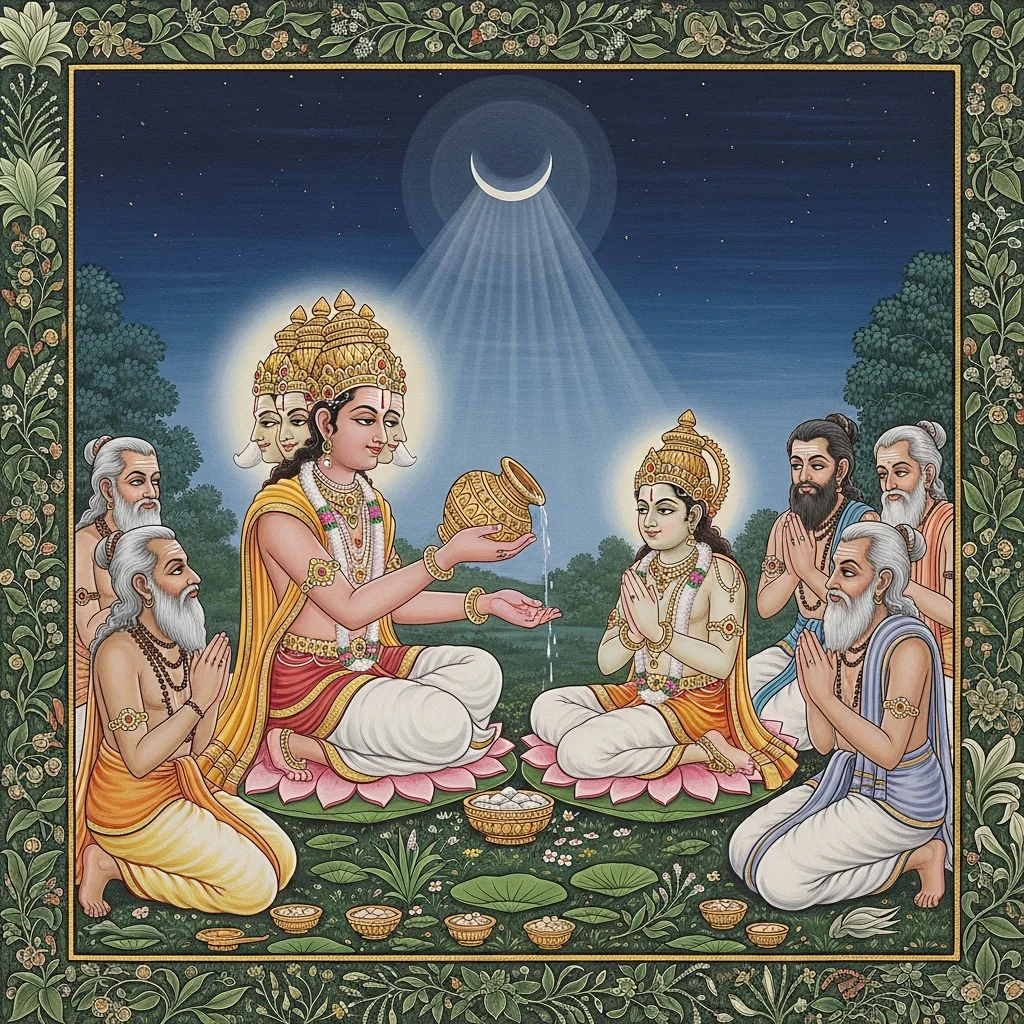
In this chapter, Īśvara speaks to Devī of the long succession of asura and rākṣasa-linked dominions across vast stretches of time, naming Hiraṇyakaśipu and Bali as emblematic rulers and placing their ascendancy within yuga-like cycles in which power rises, wanes, and dharma is restored. The discourse then turns to royal and genealogical accounts, touching the Pulastya line and the births of key figures such as Kubera and Rāvaṇa, with descriptive signs used to clarify their names and identities. A major pivot follows: the emergence of Soma (Chandra) in connection with Atri’s tapas, the cosmic handling of Soma’s “fall,” Brahmā’s intervention, and Soma’s establishment in kingship and ritual eminence, framed by a rājasūya setting and the bestowal of dakṣiṇā. Finally, the text offers an origin-catalogue of oṣadhis (plants, grains, legumes), portraying Soma as sustaining the world through moonlight (jyotsnā) and as lord of vegetation, thus linking cosmology with agrarian life and sacred rite.
Shlokas
Verse 1
ईश्वर उवाच । अथ दैत्यावताराणां क्रमो हि कथ्यते पुनः । हिरण्यकशिपू राजा वर्षाणामर्बुदं बभौ
Īśvara said: Now, once again, the sequence of the Daityas’ manifestations is being related. King Hiraṇyakaśipu ruled for an arbuda of years.
Verse 2
तथा शत सहस्राणि यानि कानि द्विसप्ततिम् । अशीतिं च सहस्राणि त्रैलोक्यस्येश्वरोऽभवत्
Likewise, for a hundred thousand years, and for seventy-two thousand years, and also for eighty thousand years, he became the lord of the three worlds.
Verse 3
सौत्येऽहन्यतिरात्रस्य कश्यपस्याश्वमेधिके
On the Sautya day, during the Atirātra rite, in Kaśyapa’s Aśvamedha sacrifice—
Verse 4
उपक्षिप्ता सनं यत्तु होतुरर्थे हिरण्मयम् । निषसाद स गर्तो ऽत्र हिरण्यकशिपुस्ततः
When a golden seat was placed for the hotṛ, the officiating priest, then Hiraṇyakaśipu sat down in a pit here.
Verse 5
शतवर्षसहस्राणां तपश्चक्रे सुदुश्चरम् । दशवर्षसहस्राणि दित्या गर्भे स्थितः पुरा
He performed exceedingly arduous austerities for a hundred thousand years. Formerly, he had remained for ten thousand years in Diti’s womb.
Verse 6
हिणयकशिपोर्दैत्यैः श्लोको गीतः पुरातनः । राजा हिरण्यकशिपुर्यां यामाशां निरीक्षते
The Daityas sang an ancient verse about Hiraṇyakaśipu: “Whichever direction King Hiraṇyakaśipu looks toward…”
Verse 7
पर्याये तस्य राजाभूद्बलिर्वर्षार्बुदं पुनः
In his succession, King Bali again became ruler for a crore of years.
Verse 8
षष्टिं चैव सहस्राणि त्रिंशच्च नियुतानि च । बले राज्याधिकारस्तु याव त्कालं बभूव ह
Bali’s right to rule endured for sixty thousand and thirty niyutas—so long indeed did his sovereignty remain.
Verse 9
इंद्रादयस्ते विख्याता असुराञ्जघ्नुरोजसा
Those famed ones—Indra and the others—slew the Asuras by their might.
Verse 10
दैत्यसंस्थमिदं सर्वमा सीद्दशयुगं किल । असपत्नं ततः सर्वमष्टादशयुगं पुनः
They say that all this lay under the Daityas for ten yugas. Thereafter, all again became without rival for eighteen yugas.
Verse 11
त्रैलोक्यमिदमव्यग्रं महेंद्रेण तु पालितम् । त्रेतायुगे तु दशमे कार्त्तवीर्यो महाबलः
This threefold world was peacefully guarded by great Mahendra (Indra). Then, in the tenth Tretā-yuga, the mighty Kārttavīrya arose.
Verse 12
पंचाशीतिसहस्राणि वर्षाणां वै नराधिपः । स सप्तरत्नवान्सम्राट् चक्रवर्ती बभूव ह
That lord of men reigned for eighty-five thousand years; he became an emperor endowed with the seven jewels—a cakravartin, universal monarch.
Verse 13
द्वीपेषु सप्तसु स वै खड्गी चर्मी शरासनी । रथी राजा सानुचरो योगाच्चौरानपश्यत
Across the seven continents, that king—bearing sword, shield, and bow, riding his chariot with attendants—by yogic power could perceive even thieves.
Verse 14
प्रणष्टद्रव्यता यस्य स्मरणान्न भवेन्नृणाम् । चतुर्युगे त्वतिक्रांते मनौ ह्येकादशे प्रभौ
By the mere remembrance of him, men would not suffer loss of property. When the four yugas had passed, in the eleventh Manu, that mighty one appeared.
Verse 15
अर्द्धावशिष्टे तस्मिंस्तु द्वापरे संप्रवर्तिते । मानवस्य नरिष्यंतो ह्यासीत्पुत्रो मदः किल
When the Dvāpara age began while half yet remained, Mānava’s son Nariṣyanta—said to be named Mada—came into being.
Verse 16
नवमस्तस्य दायादस्तृणबिंदुरिति स्मृतः । त्रेतायुगमुखे राजा तृतीये संबभूव ह
The ninth heir in that line is remembered as Tṛṇabindu. At the opening of the Tretā-yuga, he became king in the third cycle.
Verse 17
तस्य कन्या त्विलविला रूपे णाप्रतिमाऽभवत् । पुलस्त्याय स राजर्षिस्तां कन्यां प्रत्यपादयत्
He had a daughter named Ilavilā, unmatched in beauty. That royal seer gave the maiden in marriage to Pulastya.
Verse 18
ऋषिरैलविलो यस्यां विश्रवाः समपद्यत । तस्य पत्न्यश्च तिस्रस्तु पौलस्त्यकुलमंडनाः
From her was born the sage Viśravā, also called Ailavila. And he had three wives—ornaments of the Pulastya lineage.
Verse 19
बृहस्पतेः शुभा कन्या नाम्ना वै वेदवर्णिनी । पुष्पोत्कटा च वीका च उभे माल्यवतः सुते
Bṛhaspati had an auspicious daughter named Vedavarṇinī. Puṣpotkaṭā and Vīkā as well—both were daughters of Mālyavat.
Verse 20
केकसी मालिनः कन्या तस्यां देवि शृणु प्रजाः । ज्येष्ठं वैश्रवणं तस्य सुषुवे वरवर्णिनी
Kaikasī, the daughter of Mālin—hear, O Goddess, of her offspring—she of excellent complexion bore her eldest son, Vaiśravaṇa (Kubera).
Verse 21
अष्टदं हरिच्छ्मश्रुं शंकुकर्णं विलोहितम् । श्वपादं ह्रस्वबाहुं च पिंगलं शुचिभूषणम्
He had eight teeth and a tawny beard; ears like a conch, reddish in hue; dog-like feet and short arms—tawny, yet adorned with pure ornaments.
Verse 22
त्रिपादं तु महाकायं स्थूलशीर्षं महाहनुम् । एवंविधं सुतं दृष्ट्वा विरूपं रूपतस्तदा
Three-footed, huge-bodied, thick-headed, and with a mighty jaw—seeing such a son, misshapen in appearance at that time…
Verse 23
तदा दृष्ट्वाब्रवीत्तं तु कुबेरोऽयमिति स्वयम् । कुत्सायां क्वितिशब्दोयं शरीरं वेरमुच्यते
Then, on seeing him, she herself said, “This is Kubera.” In a sense of revulsion, the sound ‘kvi-ti’ is used; and the body is called ‘vera’ as something loathsome.
Verse 24
कुबेरः कुशरीरत्वान्नाम्ना तेन च सोंकितः । तस्य भार्य्याऽभवद्वृद्धिः पुत्रस्तु नलकूबरः
He was marked with the name “Kubera” because of his ill-formed body. His wife was Vṛddhi, and his son was Nalakūbara.
Verse 25
कैकस्यजनयत्पुत्रं रावणं राक्षसाधिपम् । शंकुकर्णं दशग्रीवं पिगलं रक्तमूर्द्धजम्
Kaikasī bore a son—Rāvaṇa, lord of the Rākṣasas—conch-eared, ten-necked, tawny of hue, and red-haired.
Verse 26
वसुपादं विंशद्भुजं महाकायं महाबलम् । कालांजननिभं चैव दंष्ट्रिणं रक्तलोचनम्
With many feet, twenty arms, a vast body, and immense strength—dark as collyrium, fanged, and red-eyed.
Verse 27
राक्षसेनौजसा युक्तं रूपेण च बलेन च । निसर्गाद्दारुणः क्रूरो रावणाद्रावणः स्मृतः
Endowed with the fierce vigor of the rākṣasas—possessing beauty as well as strength—he was by nature dreadful and cruel; therefore he is remembered as Rāvaṇa, “the one who makes others cry out.”
Verse 28
हिरण्यकशिपुस्त्वासीत्स राजा पूर्वजन्मनि । चतुर्युगानि राजा तु तथा दश स राक्षसः
In a former birth he was Hiraṇyakaśipu, a king. He ruled for four yugas; and for ten yugas more he existed as a rākṣasa.
Verse 29
पंच कोटीस्तु वर्षाणां संख्यताः संख्याया प्रिये । नियुतान्येकषष्टिं च संख्यावद्भिरुदाहृतम्
O beloved, the reckoning of years is stated as five koṭis; and in addition, sixty-one niyutas—so it is declared by those skilled in enumeration.
Verse 30
षष्टिं चैव सहस्राणि वर्षाणां स हि रावणः । देवतानामृषीणां च घोरं कृत्वा प्रजागरम्
For sixty thousand years, Rāvaṇa kept a dreadful wakefulness, casting terror upon the gods and the ṛṣis.
Verse 31
त्रेतायुगे चतुर्विंशे रावणस्तपसः क्षयात् । रामं दाशरथिं प्राप्य सगणः क्षयमेयिवान्
In the twenty-fourth Tretā-yuga, when the fruit of his austerities was spent, Rāvaṇa met Rāma Dāśarathi and, with his hosts, went to destruction.
Verse 32
योऽसौ देवि दशग्रीवः संबभूवारिमर्द्दनः । दमघोषस्य राजर्षेः पुत्रो विख्यातपौरुषः
O Goddess, that very Daśagrīva became an “enemy-crusher”; he was born as the son of the royal sage Damaghoṣa, renowned for his prowess.
Verse 33
श्रुतश्रवायां चैद्यस्तु शिशुपालो बभूव ह । रावणं कुंभकर्णं च कन्यां शूर्पणखां तथा
And from Śrutaśravā, the Caidya indeed became Śiśupāla; likewise (she bore) Rāvaṇa and Kumbhakarṇa, and also the maiden Śūrpaṇakhā.
Verse 34
विभीषणं चतुर्थं च कैकस्यजनयत्सुतान् । मनोहरः प्रहस्तश्च महापार्श्वः खरस्तथा
And Kaikasī gave birth to Vibhīṣaṇa as the fourth son. (She also bore) Manohara, Prahasta, Mahāpārśva, and likewise Khara.
Verse 35
पुष्पोत्कटायास्ते पुत्राः कन्या कुम्भीनसी तथा । त्रिशिरा दूषणश्चैव विद्युज्जिह्वश्च राक्षसः । कन्यैका श्यामिका नाम वीकायाः प्रसवः स्मृतः
These were the sons of Puṣpotkaṭā, and also her daughter Kumbhīnasī. There were Triśiras, Dūṣaṇa, and the rākṣasa Vidyujjihva. And one daughter, named Śyāmikā, is remembered as the offspring of Vīkā.
Verse 36
इत्येते क्रूरकर्माणः पौलस्त्या राक्षसा नव । विभीषणो विशुद्धात्मा दशमः परिकीर्तितः
Thus, these nine Paulastya rākṣasas are of cruel deeds; but Vibhīṣaṇa—pure in spirit—is proclaimed as the tenth.
Verse 37
पुलहस्य मृगाः पुत्राः सर्वे व्यालाश्च दंष्ट्रिणः । भूताः पिशाचाः सर्पाश्च शूकरा हस्तिनस्तथा
Pulaha’s offspring were beasts—indeed, all were fierce, tusked predators: bhūtas and piśācas, serpents, boars, and elephants as well.
Verse 38
अनपत्यः क्रतुस्त्वस्मिन्स्मृतो वैवस्वतेंतरे । अत्रेः पत्न्यो दशैवासन्सुन्दर्यश्च पतिव्रताः
In this Vaivasvata Manvantara, Kratu is remembered as without offspring. Atri’s wives were ten in number—beautiful and devoted to their husbands, as pativratās.
Verse 39
भद्राश्वस्य घृताच्यंता जज्ञिरे दश चाप्सराः
From Bhadrāśva and Ghṛtācī were born ten apsarases.
Verse 40
भद्रा शूद्रा च मद्रा च नलदा जलदा तथा । उर्णा पूर्णा च देवेशि या च गोपुच्छला स्मृता
Bhadrā, Śūdrā, Madrā, Naladā, and Jaladā; also Urṇā and Pūrṇā, O Lady of the gods—and she who is remembered as Gopucchalā.
Verse 41
तथा तामरसा नाम दशमी रक्तकोटिका । एतासां च महादेवि ख्यातो भर्त्ता प्रभाकरः
And the tenth, named Tāmarasā, was called Raktakoṭikā. For all of them, O great goddess, the famed husband was Prabhākara.
Verse 42
स्वर्भानुना हते सूर्ये पतितेस्मिन्दिवो महीम् । तमोऽभिभूते लोकेस्मिन्प्रभा येन प्रवर्त्तिता
When the Sun was struck down by Svarbhānu and fell from heaven to the earth, and this world was overcome by darkness, it was he who set light in motion.
Verse 43
स्वस्ति तेस्त्विति चैवोक्तः पतन्निह दिवाकरः । ब्रह्मर्षेर्वचनात्तस्य न पपात यतः प्रभुः
As the Sun was falling here, the words “May welfare be yours!” were spoken. By the utterance of that brahmarṣi, the Lord did not fall.
Verse 44
ततः प्रभाकरेत्युक्तः प्रभुरेवं महर्षिभिः । भद्रायां जनयामाम् सोमं पुत्रं यशस्विनम्
Therefore the Lord was called “Prabhākara” by the great sages. In Bhadrā he begot Soma, a glorious son.
Verse 45
त्विषिमान्धर्मपुत्रस्तु सोमो देवो वरस्तु सः । शीतरश्मिः समुत्पन्नः कृत्तिकासु निशाचरः
Radiant was Soma—truly a son of Dharma and a most excellent deity. Cool-rayed, he arose among the Kṛttikās and moved by night.
Verse 46
पिता सोमस्य वै देवि जज्ञेऽत्रिर्भगवानृषिः । तत्रात्रिः सर्वलोकेशं भृत्वा स्वे नयने स्थितः
Truly, O goddess, Soma’s father was the blessed sage Atri. There Atri bore the Lord of all worlds and established him within his own eyes.
Verse 47
कर्मणा मनसा वाचा शुभान्येव समा चरत् । काष्ठकुड्यशिलाभूत ऊर्द्ध्वबाहुर्महाद्युतिः
By deed, by mind, and by speech he practiced only auspicious conduct with perfect steadiness. Like wood, a wall, or stone—motionless—he stood with arms raised aloft, blazing with great radiance.
Verse 48
सुदुस्तरं नाम तपस्तेन तप्तं महत्पुरा । त्रीणि वर्षसहस्राणि दिव्यानि सुरसुंदरि
O fair celestial lady, he performed a mighty austerity called ‘Sudustara’, hard indeed to endure, for three thousand divine years.
Verse 49
तस्योर्द्ध्वरेतसस्तत्र स्थितस्यानिमिषस्य ह । सोमत्वं वपुरापेदे महाबुद्धेस्तु वै शुभे
As he stood there—celibate and unblinking in concentration—his body, through that auspicious great intelligence, attained the state of Soma.
Verse 50
ऊर्द्ध्वमाचक्रमे तस्य सोमसंभावितात्मनः । नेत्राभ्यां सोमः सुस्राव दशधा द्योतयन्दिशः
Then, for him whose very self had become suffused with Soma, Soma rose upward; and from his eyes Soma flowed forth in ten streams, illuminating the directions.
Verse 51
तद्गर्भं विधिना दृष्टा दिशोदश दधुस्तदा । समेत्य धारयामासुर्न च धर्तुमशक्नुवन्
Seeing that embryo-like essence, Brahmā (the Ordainer) directed the ten directions to receive it. They gathered and tried to bear it, yet they were unable to hold it.
Verse 52
स ताभ्यः सहसैवेह दिग्भ्यो गर्भश्च शाश्वतः पपात भावयंल्लोकाञ्छीतांशुः सर्वभावनः
Then that eternal, embryo-like essence suddenly fell away from those directions here—Soma, the cool-rayed one—nourishing the worlds, the sustainer of all beings.
Verse 53
यदा न धारणे शक्तास्तस्य गर्भस्य ताः स्त्रियः । ततस्ताभ्यः स शीतांशुर्निपपात वसुंधराम्
When those feminine forms (the directions), unable to bear that essence, could no longer sustain it—then the cool-rayed Soma fell from them onto the earth.
Verse 54
पतितं सोममालोक्य ब्रह्मा लोकपितामहः । रथमारोपयामास लोकानां हितका म्यया
Seeing Soma fallen, Brahmā, the grandsire of the worlds, placed him upon a chariot—out of desire for the welfare of all the worlds.
Verse 55
स तदैव मया देवि धर्मार्थं सत्यसंगरः । युक्तो वाजिसहस्रेण सितेन सुरसुंदरि
At that very moment, O Goddess—O lovely celestial one—I readied that chariot for the sake of dharma, with steadfast truth as my vow, yoking it with a thousand white horses.
Verse 56
तस्मिन्निपतिते देवि पुत्रेत्रेः परमात्म नि । तुष्टुवुर्ब्रह्मणः पुत्रा मानसाः सप्त ये श्रुताः
When the supreme-souled son of Atri had thus descended, O Goddess, the seven mind-born sons of Brahmā—renowned in sacred tradition—praised him with hymns.
Verse 57
तथैवांगिरसः सर्वे भृगोश्चैवात्मजास्तथा । ऋग्भिस्तु सामभिश्चैव तथैवांगिरसैरपि
Likewise all the Āṅgirasa sages, and the sons of Bhṛgu as well, praised him—by Ṛg-vedic hymns, by Sāma-vedic chants, and also by the Āṅgirasa formulas.
Verse 58
तस्य संस्तूयमानस्य तेजः सोमस्य भास्वतः । आप्यायमानं लोकांस्त्रीन्भासयामास सर्वशः
As that radiant Soma was being praised, his splendor—ever increasing—illumined the three worlds in every direction.
Verse 59
स तेन रथमुख्येन सागरांतां वसुंधराम् । त्रिःसप्तकृत्वोतियशाश्चकाराभिप्रदक्षिणम्
Then that exceedingly glorious one, with that foremost of chariots, circumambulated the earth bounded by the ocean—three times seven in number.
Verse 60
तस्य यच्चापि तत्तेजः पृथिवीमन्वपद्यत । ओषध्यस्ताः समुत्पन्नास्ते जसाऽज्वलयन्पुनः
And whatever portion of his splendor entered and permeated the earth—those herbs sprang forth, and by that very radiance they shone again.
Verse 61
ताभिर्धिनोत्ययं लोकं प्रजाश्चैव चतुर्विधाः । ओषध्यः फलपाकांताः कणाः सप्तदश स्मृताः
By them this world is sustained, and the beings of four kinds as well. These cultivated plants—ripening to fruit and harvest—are remembered as ‘grains’ of seventeen varieties.
Verse 62
व्रीहयश्च यवाश्चैव गोधूमा अणवस्तिलाः
Rice, barley, wheat, millet, and sesame—
Verse 63
प्रियंगुः कोविदारश्च कोरदूषाः सतीनकाः । माषा मुद्गा मसूराश्च निष्पावाः सकुलत्थकाः
Priyaṅgu, kovidāra, koradūṣa, satīna; black gram, green gram, lentil; niṣpāva and kulattha as well—
Verse 64
आढक्यश्चणकाश्चैव कणाः सप्तदश स्मृताः । इत्येता ओषधीनां च ग्राम्याणां जातयः स्मृताः
And āḍhakī and chickpea as well—thus the ‘grains’ are remembered as seventeen. These, indeed, are remembered as the cultivated kinds among plants.
Verse 65
ओषध्यो यज्ञियाश्चैव ग्राम्या रण्याश्चतुर्द्दश । व्रीहयश्च यवाश्चैव गोधूमास्त्वणवस्तिलाः
The plants fit for sacrifice are fourteen in kind, both cultivated and wild: rice, barley, wheat, millet, and sesame.
Verse 66
प्रियंगुषष्ठा इत्येते सप्तमास्तु कुलत्थकाः । श्यामाकास्त्वथ नीवारा जर्तिलाः सगवेधुकाः
Up to priyaṅgu as the sixth, thus are they named; the seventh is kulattha. Then follow śyāmāka, nīvāra, jartila, together with gavedhuka.
Verse 67
ऊरुविन्दा मर्कटकास्तथा वेणुयवाश्च ये । ग्राम्यारण्यास्तथा ह्येता ओषध्यस्तु चतुर्दश
Ūruvindā, Markaṭakā, and Veṇuyavā—these, together with the village-grown and forest-grown kinds—are declared to be the fourteen classes of medicinal plants.
Verse 68
तृणगुल्मलता वीरुद्वल्लीगुच्छादि कोटिशः । एतेषामधिपश्चन्द्रो धारयत्यखिलं जगत्
Grasses, shrubs, creepers, climbing vines, thickets, and countless such growths—over all these the Moon is the lord; and by them he sustains the entire world.
Verse 69
ज्योत्स्नाभिर्भगवान्सोमो जगतो हितकाम्यया । ततस्तस्मै ददौ राज्यं ब्रह्मा ब्रह्मविदां वरः
The blessed Lord Soma, with his moonbeams and with the wish to benefit the world, labored for the welfare of creation. Therefore Brahmā—foremost among the knowers of Brahman—granted him sovereignty.
Verse 70
बीजौषधीनां विप्राणां मंत्राणां च वरानने । सोऽभिषिक्तो महातेजा राजा राज्ये निशाकरः
O fair-faced one, he was consecrated as the radiant king—the Maker of night (the Moon)—to rule over seeds and medicinal herbs, over the Brāhmaṇas, and over the mantras as well.
Verse 71
त्रींल्लोकान्भावयामास स्वभासा भास्वतां वरः । तं सिनी च कुहूश्चैव द्युतिःपुष्टिः प्रभा वसुः
Best among the luminous ones, he gladdened and sustained the three worlds by his own radiance. Sinī and Kuhū, and also Dyuti, Puṣṭi, Prabhā, and Vasu attended upon him.
Verse 72
कीर्तिर्धृतिश्च लक्ष्मीश्च नव देव्यः सिषेविरे । सप्तविंशतिरिंदोस्तु दाक्षायण्यो महाव्रताः
Kīrti, Dhṛti, and Lakṣmī—along with other goddesses—nine divine ladies served him. And the twenty-seven daughters of Dakṣa, women of great vows, belonged to Indu (the Moon).
Verse 73
ददौ प्राचेतसो दक्षो नक्षत्राणीति या विदुः । स तत्प्राप्य मह्द्राज्यं सोमः सोमवतां वरः
Dakṣa, son of Pracetā, gave him those who are known as the Nakṣatras. Having obtained that great sovereignty, Soma—best among Soma-like luminaries—flourished in his dominion.
Verse 74
समाजह्रे राजसूयं सहस्रशतदक्षिणम् । हिरण्यगर्भश्चोद्गाता ब्रह्मा ब्रह्मत्वमेयिवान्
He then performed a Rājasūya sacrifice with gifts amounting to a hundred thousand. Hiraṇyagarbha served as the Udgātṛ priest, and Brahmā—having attained Brahmahood—presided.
Verse 75
सदस्यस्तस्य भगवान्हरिर्नारायणः प्रभुः । सनत्कुमारप्रमुखैराद्यैर्ब्रह्मर्षिभिर्वृतः
For that rite, the Lord Hari—Nārāyaṇa himself, the Sovereign—sat as an officiating member, surrounded by the primeval Brahmarṣis led by Sanatkumāra.
Verse 76
दक्षिणामददात्सोमस्त्रींल्लोकांस्तु वरानने । तेभ्यो ब्रह्मर्षिमुख्येभ्यः सदस्येभ्यश्च वै शुभे
O fair-faced lady, Soma bestowed dakṣiṇā as though gifting the very three worlds—upon those foremost Brahmarṣis and upon the members of the sacrificial assembly, O auspicious one.
Verse 77
प्राप्यावभृथमव्यग्रः सर्वदेवर्षिपूजितः । अतिराजति राजेन्द्रो दशधा भावयन्दिशः
Having reached the avabhṛtha—the concluding purificatory bath—calm and untroubled, and honored by all the gods and seers, that king among kings shone exceedingly, illumining the ten directions in manifold ways.
Verse 78
तेन तत्प्राप दुष्प्राप्यमैश्वर्य्यमकृता त्मभिः । स एवं वर्त्तते चन्द्रश्चात्रेय इति विश्रुतः
By that holy merit he obtained a sovereignty hard to attain for the undisciplined. Thus the Moon abides in that state, famed in tradition as “Cātreya.”