Adhyaya 199
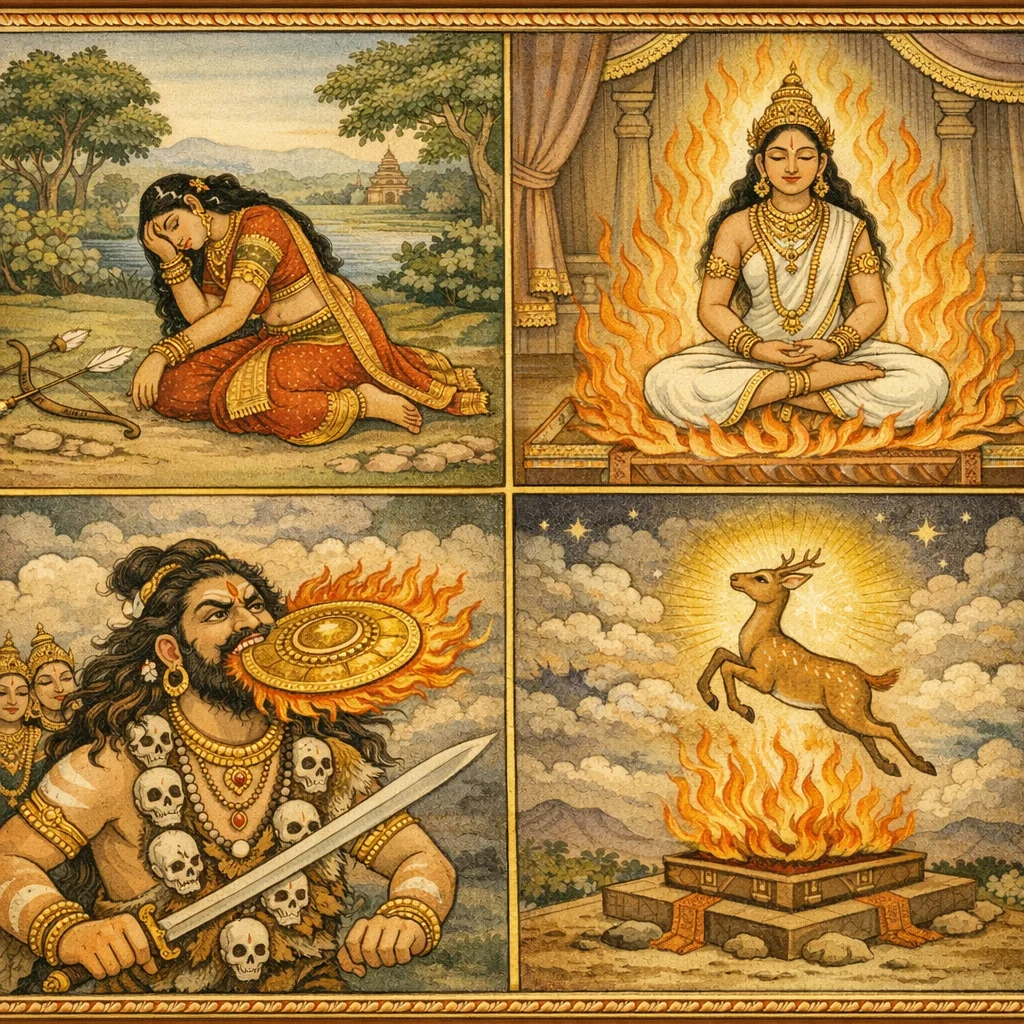
Chapter 199 unfolds as a Śiva–Devī theological dialogue within a tīrtha-guidance setting. Īśvara directs Devī to a southern shrine on the lovely bank of the Sarasvatī, revealing a self-manifest (svayaṃbhūta) deity praised as Kṛtasmaradeva, a purifier of sins. Śiva then narrates the cause and consequence of Kāma’s burning: Rati’s grief, Śiva’s consolation, and the promise of Kāma’s future restoration by divine grace. Asked why Kāma was burned and how rebirth occurs, Śiva recounts the wider mythic context of Dakṣa’s sacrifice—Dakṣa’s family arrangements and his daughters’ marriages, the grand yajña attended by devas and sages, and Śiva’s exclusion for his ascetic marks (kapāla, ash), which provokes Satī to release her body through yogic austerity. Śiva sends fierce gaṇas led by Vīrabhadra to shatter the rite; battle erupts with the devas. Viṣṇu’s Sudarśana is swallowed, and Vīrabhadra endures by Rudra’s boon. As Śiva advances with the trident, the devas withdraw; brāhmaṇas attempt protective homa with Rudra-mantras, yet the yajña is struck down. The yajña’s flight in deer-form and its lasting visibility in the sky as a star-like sign are remembered as an enduring cosmological marker.
Shlokas
Verse 1
ईश्वर उवाच । ततो गच्छेन्महादेवि तस्य दक्षिणतः स्थितम् । सरस्वत्यास्तटे रम्ये देवं तत्र कृतस्मरम्
Īśvara said: Then, O Great Goddess, one should go to the place situated to its south—on the lovely bank of the Sarasvatī—where the deity known as Kṛtasmaradeva is present.
Verse 2
स्वयंभूतं महादेवि सर्वपापप्रणाशनम् । तस्योत्पत्तिं प्रवक्ष्यामि यथा जातं महीतले
O Great Goddess, it is self-manifest and the destroyer of all sins. Now I shall declare its origin—how it came to be upon the earth.
Verse 3
पुरा कामो मया दग्धो यदा तत्र वरानने । तदा रतिः समागम्य विललाप सुदुःखिता
Formerly, O fair-faced one, when I burned Kāma there, Rati came before me and lamented, overcome with intense sorrow.
Verse 4
तां तु शोकातुरां दृष्ट्वा तत्राहं करुणान्वितः । अवोचं मा रुदिष्वेति तव भर्ता पुनः शुभे । समुत्थास्यति कालेन मत्प्रसादान्न संशयः
Seeing her stricken with grief, I was moved with compassion and said there: “Do not weep, O auspicious one. Your husband will rise again in due time by my favor—of this there is no doubt.”
Verse 5
देव्युवाच । किमर्थं स पुरा दग्धः कामदेवस्त्वया विभो । कथमाप पुनर्जन्म विस्तरात्कथयस्व मे
The Goddess said: “For what reason was Kāmadeva burned by you long ago, O Lord? And how did he obtain birth again? Tell me in detail.”
Verse 6
ईश्वर उवाच । दक्षः प्रजापतिः पूर्वं बभूव त्वत्पिता प्रिये । शतं सुतानां जज्ञेऽस्य गौरीणां दीर्घचक्षुषाम्
Īśvara said: “In former times Dakṣa, the Prajāpati, was your father, O beloved. A hundred daughters were born to him—fair and long-eyed.”
Verse 7
ददौ त्वां प्रथमं मह्यं सतीनामेति कीर्तिताम् । ददौ दश च धर्माय श्रद्धा मेधा धृतिः क्षमा
He bestowed you first upon me—renowned among the Satīs. And he bestowed ten daughters upon Dharma: Śraddhā, Medhā, Dhṛti, and Kṣamā, among them.
Verse 8
अनसूया शुचिर्लज्जा स्मृतिः शक्तिः श्रुतिस्तथा । द्वे भार्ये कामदेवाय रतिः प्रीतिस्तथैव च
Anasūyā, Śuci, Lajjā, Smṛti, Śakti, and also Śruti. And to Kāmadeva were given two wives: Rati and likewise Prīti.
Verse 9
एकां स्वाहां ददौ वह्नेः पितॄणां च ततः स्वधाम् । सप्तविंशच्छशाङ्काय अश्विन्याद्याः प्रकीर्तिताः
He gave one daughter, Svāhā, to Agni, and thereafter Svadhā to the Pitṛs. And to the Moon, it is said, he gave the twenty-seven daughters, famed beginning with Aśvinī—the Nakṣatras.
Verse 10
तवापि विदिता देवि रेवत्यन्तास्तथा जने । कश्यपाय ददौ देवि स तु कन्यास्त्रयोदश
They are known to you as well, O Goddess, and among people too—ending with Revatī. To Kaśyapa, O Goddess, he gave thirteen daughters.
Verse 11
अदितिश्च दितिश्चैव विनता कद्रुरेव च । सिंहिका सुप्रभा चैव उलूकी या वरानने
Aditi and Diti indeed, and Vinatā and Kadrū as well; also Siṃhikā, Suprabhā, and Ulūkī—O fair-faced one—these were among them.
Verse 12
अनुविद्धा सिता चैव ईर्ष्या हिंसा तथा परा । माया निष्कृतिसंयुक्ता दक्षः पूर्वं महामतिः
Also Anuviddhā and Sitā; and Īrṣyā (jealousy), Hiṃsā (violence), and Parā; Māyā too, joined with Niṣkṛti—such were the names recounted. In former times Dakṣa was great-minded.
Verse 13
गौरी च सुप्रभा चैव वार्त्ता साध्वी सुमालिका । वरुणाय ददौ पञ्च तदाऽसौ पर्वतात्मजे
Gaurī and Suprabhā indeed, Vārttā, Sādhvī, and Sumālikā—these five he then gave to Varuṇa, O daughter of the mountain.
Verse 14
भद्रा च मदिरा चैव विद्या धन्या धना शुभा । ददौ पञ्च कुबेराय पत्न्यर्थं पर्वतात्मजे
Bhadrā and Madirā indeed, Vidyā, Dhanyā, and Dhanā—these five he gave to Kubera as wives, O daughter of the mountain.
Verse 15
जया च विजया चैव मधुस्पन्दा इरावती । सुप्रिया जनका कान्ता सुभद्रा धार्मिका शुभा
Jayā and Vijayā indeed, Madhuspandā and Irāvatī; Supriyā, Janakā, Kāntā, Subhadrā, Dhārmikā, and Śubhā (were named).
Verse 16
रुद्राणां प्रददौ कन्या दशानां धर्मवित्तदा । प्रभावती सुभद्रा च विमला निर्मलाऽनृता
To the ten Rudras he bestowed daughters—bestowers of dharma and prosperity: Prabhāvatī, Subhadrā, Vimalā, Nirmalā, and Anṛtā (among them).
Verse 17
तीव्रा दक्षारुणा विद्या धारपाला च वर्चसा । आदित्यानां ददौ दक्षः कन्याद्वादशकं प्रिये
Tīvrā, Dakṣāruṇā, Vidyā, Dhārapālā, and Varcasā—such were their names. O beloved, Dakṣa bestowed a set of twelve daughters upon the Ādityas.
Verse 18
योगनिद्राभिभूतस्य संसर्पा सरमा गुहा । माला चंपा तथा ज्योत्स्ना स विश्वेभ्यश्च एव च
For one overcome by yogic sleep: Saṃsarpā, Saramā, and Guhā; also Mālā, Campā, and Jyotsnā—so too did he bestow (daughters) upon the Viśvedevas.
Verse 19
अश्विभ्यां द्वे तथा कन्ये सुवेषा भूषणा शुभा । एका कन्या तथा वायोर्दत्ता एताः प्रकीर्तिताः
Two maidens—fairly robed and auspiciously adorned—were given to the Aśvin twins; and one maiden was likewise given to Vāyu. Thus are these maidens renowned in the tradition.
Verse 20
सावित्रीं ब्रह्मणे प्रादाल्लक्ष्मीं विष्णोर्महात्मनः । कस्यचित्त्वथ कालस्य स ईजे दक्षिणावता
He gave Sāvitrī to Brahmā, and Lakṣmī to great-souled Viṣṇu. After some time had passed, he performed a sacrifice, abundant in dakṣiṇā—priestly fees and sacred gifts.
Verse 21
यज्ञेन पर्वतसुते हिमवन्ते महागिरौ । यज्ञवाटो ह्यभूत्तस्य सर्वकामसमृद्धिमान्
By that sacrifice, O daughter of the Mountain, upon the great Himavat peak, his sacrificial enclosure (yajñavāṭa) became abundant—fulfilled with every desired attainment.
Verse 22
तस्मिन्यज्ञे समायाता आदित्या वसव स्तथा । विश्वेदेवाश्च मरुतो लोकपालाश्च सर्वशः
To that sacrifice came the Ādityas and the Vasus, the Viśvedevas and the Maruts, and the Lokapālas from every quarter.
Verse 23
ब्रह्मा विष्णुः सहस्राक्षो वारुणो यम एव च । धनदश्च कुमारश्च तथा नद्यश्च सागराः
Brahmā and Viṣṇu came, and Sahasrākṣa (Indra), Varuṇa and Yama; Kubera (Dhanada) and Kumāra (Skanda) too—along with rivers and oceans.
Verse 24
वाप्यः कूपास्तथा चैव तडागाः पल्वलानि च । सुपर्णश्चाथ ये नागाः सर्वे मूर्ता व्यवस्थिताः
Ponds and wells, tanks and lakes too; and Suparṇa (Garuḍa), and the Nāgas—each of them stood present there in embodied form.
Verse 25
दानवाप्सरसश्चैव यक्षाः किन्नरगुह्यकाः । सानुगास्ते सभार्याश्च वेदवेदांगपारगाः
Dānavas and Apsarases, Yakṣas, Kinnaras and Guhyakas also came—together with their attendants and with their wives—adept in the Vedas and the Vedāṅgas.
Verse 26
महर्षयो महाभागास्तथा देवर्षयश्च ये । ते भार्यासहितास्तत्र वसंति च वरानने
Great and fortunate Maharṣis, and those Devarṣis as well—dwelling there together with their wives—resided in that place, O fair-faced one.
Verse 27
कपालमालाभरणश्चिताभस्म बिभर्ति यः । अपवित्रतया शंभुर्नाहूतस्तु तथाविधः
He who wears a garland of skulls and bears the ashes of the cremation-ground—Śambhu—was deemed “impure” by them and thus was not invited in that very form.
Verse 28
यतस्ततः समायाताः कैलासे पर्वतोत्तमे । अश्विन्याद्या भगिन्यस्तास्त्वां प्रतीदं वचोऽबुवन्
From every side they gathered on Kailāsa, the foremost of mountains. Those sisters—beginning with Aśvinī—addressed you and spoke these words.
Verse 29
किं तुष्टेव च कल्याणि तिष्ठसि त्वं सुमध्यमे । वयं च प्रस्थिताः सर्वाः पितुर्यज्ञे सभर्तृकाः
“O auspicious one, O slender-waisted lady—why do you stand here as if content? We all are setting out to our father’s sacrifice, together with our husbands.”
Verse 30
वयमाकारितास्तेन सुताः सर्वा यशस्विनि । न त्वामाहूतवान्दक्षस्त्रपते शंकराद्यतः
“O illustrious one, all of us—his daughters—have been invited by him. But Dakṣa did not invite you, for he feels shame and hostility because of Śaṅkara.”
Verse 31
तासां वचनमाकर्ण्य सती प्राह क्रुधान्विता । हा धिग्दक्ष दुराचार किं वदिष्ये महेश्वरम्
Hearing their words, Satī—filled with anger—said: “Alas! Fie upon Dakṣa of evil conduct! What shall I say to Maheśvara?”
Verse 32
कथं संदर्शये वक्त्रमित्युक्त्वाऽत्मानमात्मना । विससर्ज तपोयोगात्सस्मारान्यन्न किञ्चन
Saying, “How can I show my face (to him)?” she, by her own will, relinquished her body through the yoga of austerity—and remembered nothing else at all.
Verse 33
अथ दृष्ट्वा महादेवः सतीं प्राणैर्विना स्थिताम् । अवमानात्तथाऽत्मानं त्यक्त्वा मत्वा कपालिनम्
Then Mahādeva, seeing Satī lying there bereft of life-breath, and taking the insult to heart—regarded himself as one bearing the skull (a sign of dreadful vow) and abandoned all ordinary self-regard.
Verse 34
गणान्संप्रेषयामास यज्ञविध्वंसनाय च । ते गताश्च गणा रौद्राः शतशोऽथ सहस्रशः
He dispatched his Gaṇas to destroy the sacrifice. Those fierce Gaṇas set out—by the hundreds, indeed by the thousands.
Verse 35
विकृता विकृताकारा असंख्याता महाबलाः । रुद्रेण प्रेरितान्दृष्ट्वा वीरभद्रपुरोगमान्
They were grotesque, of distorted forms, countless, and immensely strong—sent forth by Rudra, with Vīrabhadra leading them at the front.
Verse 36
ततो देवगणाः सर्वे वसवः सह भास्करैः । विश्वेदेवाश्च साध्याश्च धनुर्हस्ता महाबलाः
Then all the hosts of gods—the Vasus with the solar deities, the Viśvedevas and the Sādhyas—mighty and strong, with bows in their hands, came forth.
Verse 37
युद्धाय च विनिष्क्रान्ता मुञ्चन्तः सायकाञ्छितान् । ते समेत्य ततोऽन्योन्यं प्रमथा विबुधैः सह
They marched out to battle, loosing their arrows at will. Then, closing in, the Pramathas and the gods clashed with one another.
Verse 38
मुमुचुः शरवर्षाणि वारिधारां यथा घनाः । तेषां हस्ती गणेनाथ शूलेन हृदि भेदितः
They unleashed showers of arrows, like clouds pouring down streams of rain. Then an elephant among them was pierced through the heart by a Gaṇa with a trident.
Verse 39
स तु तेन प्रहारेण विसंज्ञो निषसाद ह । अथ मुष्ट्या हतः कुम्भे नाग ऐरावणस्तदा
Struck by that blow, he fell down senseless. Then, at that very moment, the elephant Airāvaṇa was struck on the temple by a clenched fist.
Verse 40
सहसा स हतस्तेन वारणो भैरवान्रवान् । विनदञ्जवमास्थाय यज्ञवाटमुपाद्रवत्
Suddenly, when that elephant was struck by him, it let out terrifying roars. Trumpeting loudly, it gathered speed and rushed toward the sacrificial enclosure.
Verse 41
विश्वेदेवा निरुच्छ्वासाः कृता रौद्रैर्महाशरैः । चकर्ष स धनुष्येण वसुमान्बलवतरः
By his fierce, mighty arrows the Viśvedevas were left gasping for breath. Then that exceedingly powerful Vasu drew his bow to its fullest strain.
Verse 42
निस्तेजसस्तदादित्याः कृतास्तेन रणाजिरे । एतस्मिन्नन्तरे देवाः कृतास्तेन पराङ्मुखाः
On that battlefield he stripped the Ādityas of their splendor. In that very moment, the gods were compelled by him to turn away and retreat.
Verse 43
ततस्ते शरणं जग्मुर्विष्णुं तत्र च संस्थितम् । ततः कोपसमाविष्टो विष्णुर्देवान्सवासवान्
Then they sought refuge in Viṣṇu, who was present there. Thereupon Viṣṇu, seized with righteous wrath, addressed the gods together with Indra.
Verse 44
दृष्ट्वा विद्रावितान्सर्वान्मुमोचाशु सुदर्शनम् । तमापतन्तं वेगेन विष्णोश्चक्रं सुदर्शनम्
Seeing them all driven into flight, he swiftly released Sudarśana. Viṣṇu’s discus, Sudarśana, came rushing down with tremendous speed.
Verse 45
प्रसार्य वक्त्रं सहसा उदरस्थं चकार ह । तस्मिंश्चक्रे तदा ग्रस्ते अमोघे पर्वतात्मजे
Suddenly he stretched his mouth wide and made the discus lodge within his belly. When that unfailing weapon was thus swallowed by the mountain-born one,
Verse 46
चुकोप भगवान्विष्णुः शार्ङ्गहस्तो ऽभ्यधावत । स हत्वा दशभिस्तीक्ष्णैर्नंदिं भृङ्गिं शतेन च
Then the Blessed Lord Viṣṇu grew enraged; holding the Śārṅga bow, he charged forward. With ten sharp arrows he struck down Nandin, and with a hundred he struck down Bhṛṅgin.
Verse 47
महाकालं सहस्रेण ह्ययुतेन गणाधिपम् । बाणानामयुतैर्भित्त्वा वीरभद्रमुपाद्रवत्
With a thousand arrows he struck Mahākāla, and with ten thousand he struck the lord of the gaṇas. Having pierced with tens of thousands of shafts, he rushed upon Vīrabhadra.
Verse 48
तं हत्वा गदया विष्णुर्विह्वलं रुधिरोक्षितम् । गृहीत्वा पादयोर्भूमौ निजघानातिरोषितः
Having felled him with the mace, Viṣṇu—seeing him stunned and drenched in blood—seized him by the feet and, in extreme fury, dashed him upon the ground.
Verse 49
हन्यमानस्य तस्याथ भूमौ चक्रं सुदर्शनम् । रुधिरोद्गारसंयुक्तं प्रहारमकरोन्न तु
As he was being struck, the Sudarśana discus fell to the ground; smeared with the outflow of blood, it did not deliver its blow.
Verse 50
रुद्रलब्धवरो देवि वीरभद्रो गणेश्वरः । यन्न पञ्चत्वमापन्नो गदया पीडितोऽपि सः
O Goddess, Vīrabhadra—the lord of Rudra’s (Śiva’s) hosts—had received a boon from Rudra; therefore, though crushed by the mace, he did not meet death.
Verse 51
पतितं वीक्ष्य तं सर्वे विष्णुतेजोबलार्दिताः । विद्रुताः सर्वतो याता यत्र देवो महेश्वरः
Seeing him fallen, all of them—overpowered by Viṣṇu’s fiery might—fled in every direction, heading to where the Lord Maheśvara was.
Verse 52
तस्मै सर्वं तथा वृत्तं समाचख्युः पराभवम् । विक्रमं वीरभद्रस्य ततः क्रुद्धो महेश्वरः
They reported to him all that had occurred—the defeat and the valor of Vīrabhadra. Then Maheśvara was seized by wrath.
Verse 53
प्रगृह्य सहसा शूलं प्रस्थितः स्वगणैः सह । यज्ञवाटं तु दक्षस्य पराभवभवं ततः । विक्रमन्वीरभद्रेण यत्र विष्णुः स्वयं स्थितः
Grasping his trident at once, he set out with his own gaṇas toward Dakṣa’s sacrificial arena—the very place from which that humiliation had arisen—where Vīrabhadra was displaying his prowess and where Viṣṇu himself was present.
Verse 54
तमायान्तं समालोक्य कोपयुक्तं महेश्वरम् । संग्रामे सोऽजयं मत्वा तत्रैवान्तरधीयत
Seeing Maheśvara approaching, filled with wrath, he deemed him unconquerable in battle and vanished then and there.
Verse 55
मरुद्भिः सार्धमिन्द्रोऽपि वसुभिः सह किन्नरैः । शिवः क्रोधपरीतात्मा ततश्चादर्शनं गतः
Indra too—along with the Maruts, the Vasus, and the Kinnaras—when Śiva’s mind was enveloped in wrath, then disappeared from sight.
Verse 56
केवलं ब्राह्मणास्तत्र स्थिताः सदसि भामिनि । ते दृष्ट्वा शंकरं प्राप्तं कोपसंरक्तलोचनम्
O fair one, only the brāhmaṇas remained there in the assembly. They saw Śaṅkara arrive, his eyes reddened with anger,
Verse 57
होमं चक्रुस्ततो भीता रुद्रमंत्रैः समंततः । अन्ये त्राससमायुक्ताः पलायंते दिशो दश
Then, in fear, they performed homa oblations on every side with Rudra-mantras; others, seized by terror, fled toward the ten directions.
Verse 58
अथागत्य महादेवो दृष्ट्वा तान्ब्राह्मणोत्तमान् । अपश्यमानो विबुधांस्तत्र यज्ञं जघान सः
Then Mahādeva came; seeing those foremost brāhmaṇas, and not seeing the gods there, he struck down that sacrifice.
Verse 59
स च मृगवपुर्भूत्वा प्रणष्टः शिवभीतितः । पृष्ठतस्तु धनुष्पाणिर्जगाम भगवाञ्छिवः । अद्यापि दृश्यते व्योम्नि तारारूपो महेश्वरि
Out of fear of Śiva, he took on the form of a deer and fled. Behind him went Bhagavān Śiva, bow in hand. Even today, O Maheśvarī, he is seen in the sky in the form of a star.
Verse 199
इति श्रीस्कांदे महापुराण एकाशीतिसाहस्र्यां संहितायां सप्तमे प्रभासखण्डे प्रथमे प्रभासक्षेत्रमाहात्म्ये दक्षयज्ञविध्वंसनोनाम नवनवत्युत्तरशततमोऽध्यायः
Thus ends, in the Śrī Skanda Mahāpurāṇa—within the eighty-one-thousand-verse compilation—the one-hundred-and-ninety-ninth chapter, called “The Destruction of Dakṣa’s Sacrifice,” in the seventh book, the Prabhāsa Khaṇḍa, and in its first division, the Prabhāsa-kṣetra Māhātmya.