Adhyaya 190
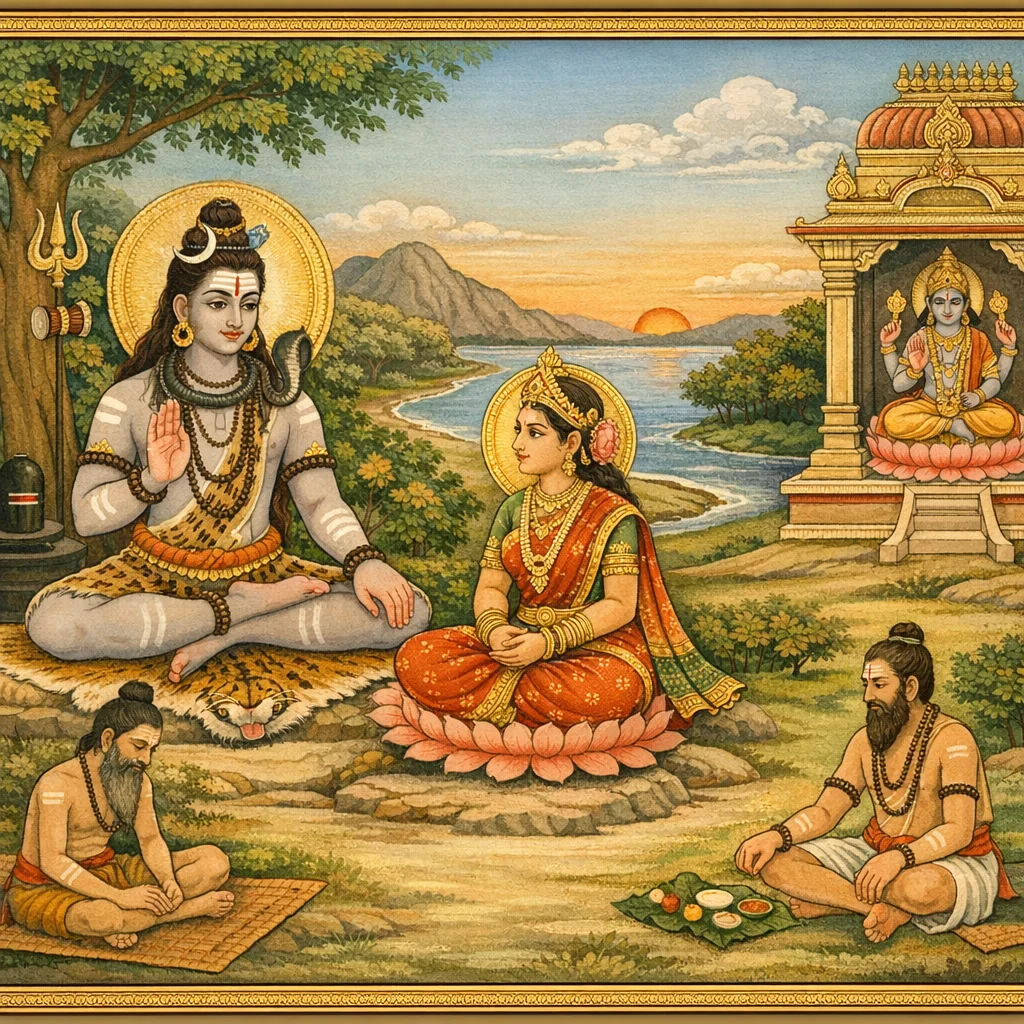
Īśvara instructs Devī about Mokṣasvāmin, a liberation-bestowing form of Hari, abiding in the Prabhāsa region in the south‑western (nairṛta) quarter, not far from the principal sacred area. The chapter sets forth a disciplined observance: on Ekādaśī, a devotee who restrains food (jitāhāra) should worship there, with special emphasis on the month of Māgha. The promised reward is declared equivalent to the fruit of the Agniṣṭoma sacrifice. The teaching then extends to austerities at the same site: complete fasting (anaśana) and vows such as Cāndrāyaṇa are said to yield benefits multiplied beyond other tīrthas (koṭi-guṇa), granting desired attainments. The chapter ends with a colophon placing it within the Skanda Purāṇa’s Prabhāsa Khaṇḍa, in the Prabhāsakṣetramāhātmya.
Shlokas
Verse 1
ईश्वर उवाच । ततो गच्छेन्महादेवि तत्र मुक्तिप्रदं हरिम् । प्रभासान्नैरृते भागे नातिदूरे व्यवस्थितम्
Īśvara said: “Then, O Mahādevī, one should go to Hari, the bestower of liberation, who is situated not far away in the south-western quarter (Nairṛta) of Prabhāsa.”
Verse 2
एकादश्यां जिताहारो यस्तं देवि प्रपूजयेत् । माघेमासे विशेषेण सोऽग्निष्टोमफलं लभेत्
On Ekādaśī, whoever—restrained in diet—worships Him, O Goddess, gains the fruit of the Agniṣṭoma sacrifice, especially in the month of Māgha.
Verse 3
यस्तत्रानशनं कुर्याद्व्रतं चान्द्रायणादिकम् । सोऽन्य तीर्थात्कोटिगुणं प्राप्नुयात्फलमीप्सितम्
Whoever there undertakes fasting and observes vows such as the Cāndrāyaṇa and the like, attains the desired fruit—millionfold compared with other pilgrimage places.
Verse 190
इति श्रीस्कांदे महापुराण एकाशीतिसाहस्र्यां संहितायां सप्तमे प्रभासखण्डे प्रथमे प्रभासक्षेत्र माहात्म्ये मोक्षस्वामिमाहात्म्यवर्णनंनाम नवत्युत्तरशततमोऽध्यायः
Thus ends, in the Śrī Skanda Mahāpurāṇa—within the collection of eighty-one thousand verses—within the seventh, the Prabhāsa Khaṇḍa, and within the first part, the Māhātmya of Prabhāsa-kṣetra, the chapter entitled “The Description of the Greatness of Mokṣasvāmi,” being the one-hundred-and-ninetieth chapter.