Adhyaya 184
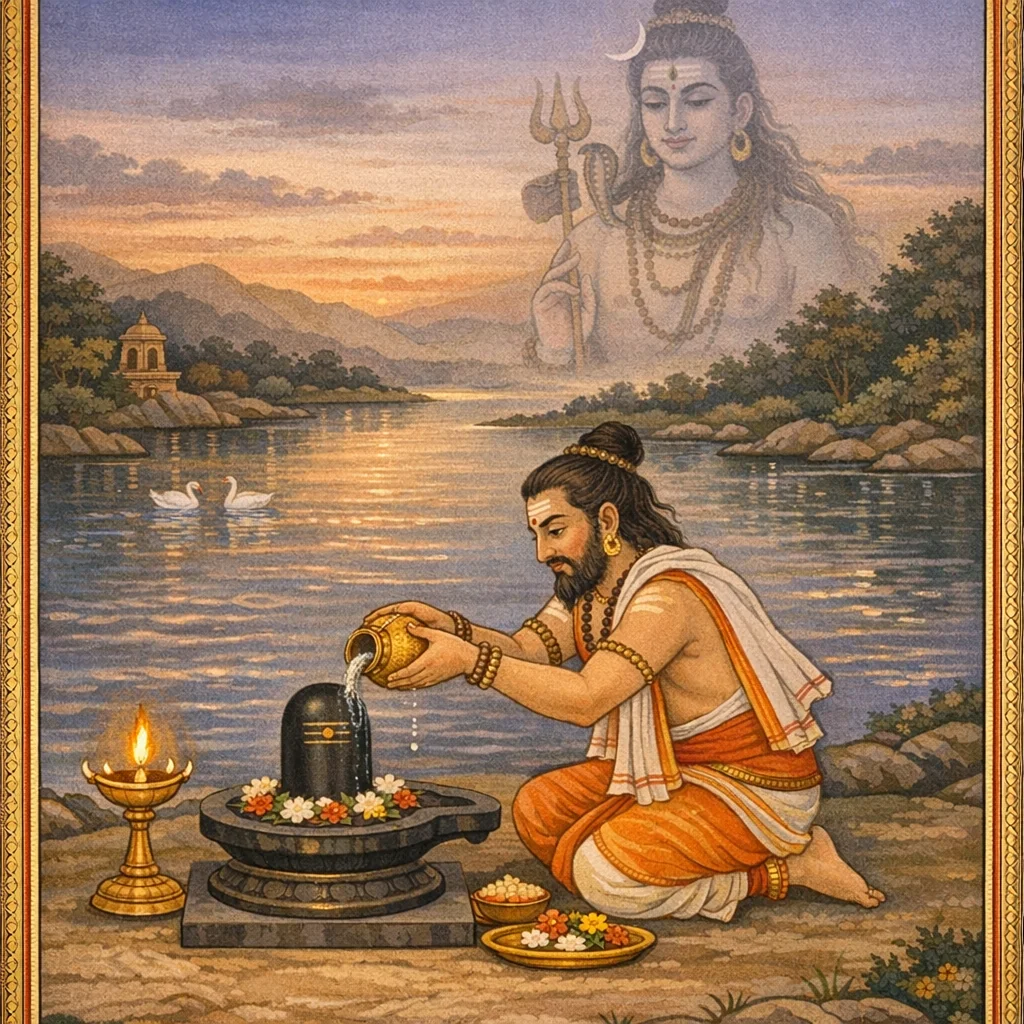
Īśvara speaks to Devī and points to an eminent shrine called Mankīśvara, situated near the Trisaṅgama, praised as a remover of sins and a purifier of pilgrims. The chapter relates the name’s founding legend: the sage Mankī, foremost among ascetics, knows Prabhāsa to be Śaṅkara’s beloved great sacred field and undertakes severe tapas, living on roots, tubers, and fruits. After a long period he establishes (pratiṣṭhāpya) Mahādeva as a liṅga. Pleased, Mahādeva grants a boon; the sage asks that Śiva remain there for vast ages as a liṅga bearing his name. Śiva agrees, becomes concealed, and thence the liṅga is known as Mankīśvara. The chapter also gives auspicious times and minimal observance: worship on the 13th or 14th lunar day in the month of Māgha with five upacāras yields desired results. Those seeking the full fruit of pilgrimage are instructed to perform go-dāna at the site.
Shlokas
Verse 1
ईश्वर उवाच । ततो गच्छेन्महादेवि मंकीश्वरमनुत्तमम् । त्रिसंगमसमीपस्थं सर्वपातकनाशनम्
Īśvara said: “Then, O Mahādevī, one should go to the unsurpassed Maṃkīśvara, situated near Trisaṅgama, the destroyer of all sins.”
Verse 2
मंकीनाम ऋषिः पूर्वमासीत्स तपतां वरः । स च ज्ञात्वा महाक्षेत्रं प्रभासं शंकरप्रियम्
Formerly there was a sage named Maṃkī, foremost among ascetics. And, knowing Prabhāsa to be a great sacred region beloved of Śaṅkara,
Verse 3
अतपद्वै तपो घोरं कन्दमूलफलाशनः । वर्षाणामयुतं साग्रं प्रतिष्ठाप्य महेश्वरम्
He undertook fierce austerities, living on roots, bulbs, and fruits; and for a little over ten thousand years he established (and worshiped) Maheśvara there.
Verse 4
ततस्तुष्टो महादेवो ददौ प्रीतो वरं तदा । स वव्रे यदि तुष्टोऽसि अस्मिन्स्थाने स्थितो भव
Then Mahādeva, pleased, joyfully granted a boon. The sage chose: “If you are satisfied, then remain established in this very place.”
Verse 5
मन्नामांकितलिंगस्तु वस कल्पायुतायुतम् । एवमस्त्वित्यथेत्युक्त्वा तत्रैवान्तरधीयत
“Let the liṅga marked with my name dwell for tens of thousands of kalpas.” Saying, “So be it,” and “Yes,” he then vanished there itself.
Verse 6
तदाप्रभृति तल्लिंगं मंकीश्वरमिति श्रुतम् । माघे मासे त्रयोदश्यां चतुर्दश्यामथापि वा
From that time onward, that liṅga became known as “Maṃkīśvara.” In the month of Māgha, on the thirteenth (tithi) or even on the fourteenth,
Verse 7
पूज्याः पंचोपचारेण प्राप्नुयादीप्सितं फलम् । गोदानं तत्र वै देयं सम्यग्यात्राफलेप्सुभिः
They should be worshiped with the five offerings; by that one attains the desired fruit. And there, indeed, a gift of a cow should be given by those who seek the complete merit of pilgrimage.
Verse 184
इति श्रीस्कान्दे महापुराण एकाशीतिसाहस्र्यां सहितायां सप्तमे प्रभासखण्डे प्रथमे प्रभासक्षेत्रमाहात्म्ये मंकीश्वरमाहात्म्यवर्णनंनाम चतुरशीत्युत्तरशततमोऽध्यायः
Thus, in the holy Skanda Mahāpurāṇa—within the Saṃhitā of eighty-one thousand verses—concludes the one-hundred-and-eighty-fourth chapter, entitled “The Description of the Greatness of Maṃkīśvara,” in the seventh book, the Prabhāsa Khaṇḍa, in the first division called the Prabhāsa-kṣetra Māhātmya.