Adhyaya 176
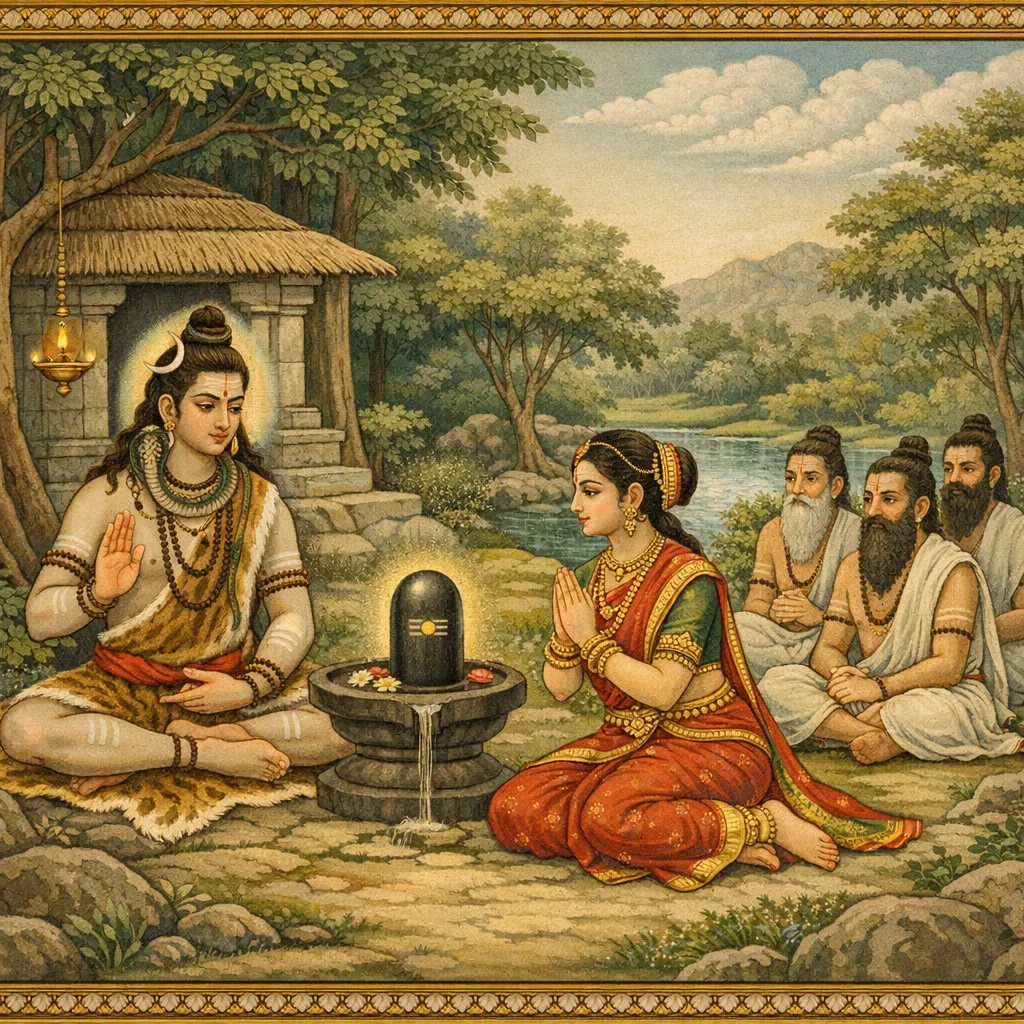
In this adhyāya, Īśvara speaks to Mahādevī and points out a liṅga called Siddheśvara, situated not far from Arkasthala in the Āgneya (southeastern) quarter. The reason for its name is then given: a vast host of ūrdhva-retas ṛṣis—sexually continent sages—numbering eighteen thousand, are said to have attained siddhi in connection with this liṅga; hence it is known as Siddheśvara. The chapter ends with a rule of ethical-ritual discipline: the devotee should bathe, worship with bhakti, observe upavāsa (fasting), restrain the senses, perform pūjā according to proper injunction, and give dakṣiṇā to brāhmaṇas. The phalaśruti proclaims the fulfillment of all aims (sarva-kāma-samṛddhi) and attainment of the supreme state (parama pada).
Shlokas
Verse 1
ईश्वर उवाच । ततो गच्छेन्महादेवि सिद्धेश्वरमिति स्मृतम् । अर्कस्थलात्तथाऽग्नेय्यां नातिदूरे व्यवस्थितम्
Īśvara said: Then, O great goddess, one should go to the shrine remembered as Siddheśvara, situated not far to the southeast of Arkasthala.
Verse 2
अष्टादश सहस्राणि ऋषीणामूर्ध्वरेतसाम् । तस्मिंल्लिंगे तु सिद्धानि सिद्धेश्वरमतः स्मृतम्
Eighteen thousand sages of uplifted spiritual vigor attained fulfillment at that liṅga; therefore it is remembered as Siddheśvara.
Verse 176
स्नात्वाऽर्चयेन्नरो भक्त्या सोपवासो जितेन्द्रियः । संपूज्य विधिवद्देवं दद्याद्विप्रेषु दक्षिणाम् । सर्वकामसमृद्धस्तु स याति परमं पदम् इति श्रीस्कांदे महापुराण एकाशीतिसाहरूया संहितायां सप्तमे प्रभासखण्डे प्रथमे प्रभासज्ञेत्रमाहात्म्ये सिद्धेश्वरमाहात्म्यवर्णनंनाम षट्सप्तत्युत्तरशततमोऽध्यायः
Having bathed, a man should worship with devotion—fasting and with senses restrained. Having duly honored the Lord according to rule, he should give dakṣiṇā to the brāhmaṇas. Blessed with the fulfillment of all rightful desires, he attains the supreme state. Thus ends Chapter 176, “The Description of the Greatness of Siddheśvara,” in the Prabhāsa Khaṇḍa of the Śrī Skanda Mahāpurāṇa, within the Prabhāsakṣetra Māhātmya.