Adhyaya 161
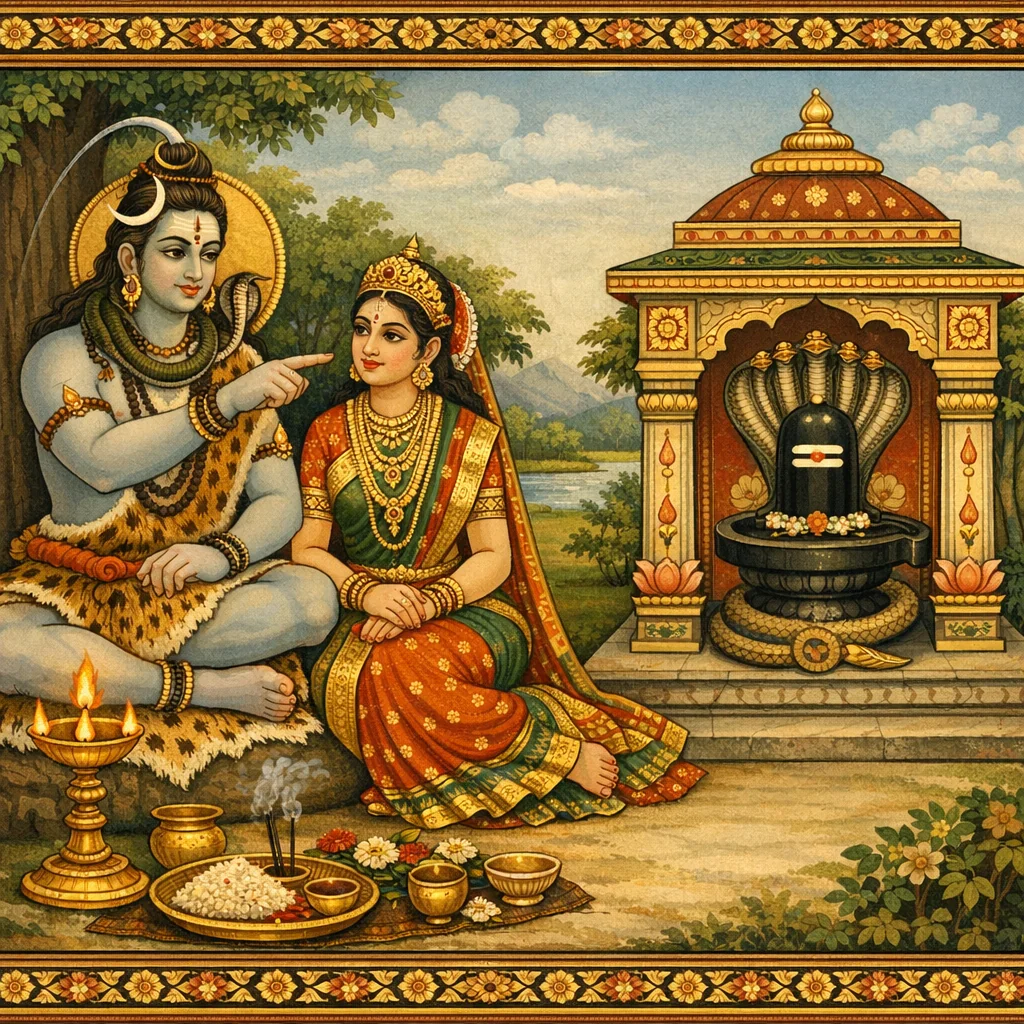
This chapter records Īśvara’s directional guidance within Prabhāsa-kṣetra, placing Ananteśvara to the south of a referenced shrine at a short distance measured in bow-lengths. The liṅga is named “Ananteśvara,” said to have been established by Ananta and associated with the Nāga-king, thereby affirming nāga guardianship within the site’s sanctity. A disciplined mode of worship is prescribed: on the bright-fortnight pañcamī of Phālguna, one who restrains diet and senses should adore the deity by the pañcopacāra (five-offering) method. The phalaśruti promises protection from serpent-bite and that poison will not advance for the stated period, encouraging steadfast observance. The chapter further teaches the performance of an “Ananta-vrata,” with offerings of honey and sweet rice-milk (madhu-pāyasa), and the feeding of a brāhmaṇa with honey-mixed pāyasa, presenting dāna and hospitality as integral extensions of shrine worship.
Shlokas
Verse 1
ईश्वर उवाच । ततो गच्छेन्महादेवि तस्य दक्षिणतः स्थितम् । ईशाने लक्ष्मणेशाच्च धनुषां षोडशे प्रिये
Īśvara said: Then, O Great Goddess, one should go to the shrine situated to its south—O beloved—sixteen bow-lengths from Lakṣmaṇeśa, in the north-eastern (Īśāna) direction.
Verse 2
अनन्तेश्वरनामानमनन्तेन प्रतिष्ठितम् । नागराजेन देवेशि ज्ञात्वा क्षेत्रं तु पावनम्
It is named Ananteśvara and was established by Ananta. O Goddess, the Nāga-king, having recognized this kṣetra, knows it to be truly purifying.
Verse 3
यस्तु तं पूजयेद्देवि पंचम्यां फाल्गुने सिते । पञ्चोपचारविधिना जिताहारो जितेन्द्रियः
O Goddess, whoever worships Him on the bright fifth lunar day of Phālguna—by the rite of five offerings—restrained in diet and having conquered the senses, truly performs the praised observance.
Verse 4
न तं दशंति फणिनो दश वर्षाणि पंच च । विषं न क्रमते देवि देहे त्वचरमेव वा
Serpents do not bite him for fifteen years; and, O Goddess, poison does not take effect in his body—nor does it spread at all.
Verse 5
तस्मात्तं पूजयेद्यत्नात्पंचम्यां च विशेषतः
Therefore one should worship Him with earnest effort—especially on the fifth lunar day.
Verse 6
तत्रानंतव्रतं कार्यं मधुपायससंयुतम् । पायसं मधुसंयुक्तं देयं विप्राय भोजनम्
There one should observe the Ananta-vrata, accompanied by sweet pāyasa (rice-pudding) mixed with honey; and honey-blended pāyasa should be offered as a meal-offering to a brāhmaṇa.
Verse 161
इति श्रीस्कांदे महापुराण एकाशीतिसाहस्र्यां संहितायां सप्तमे प्रभासखण्डे प्रथमे प्रभासक्षेत्रमाहात्म्येऽनन्तेश्वरमाहात्म्यवर्णनंनामैकषष्ट्युत्तरशततमोऽध्यायः
Thus ends the one-hundred-and-sixty-first chapter, entitled “The Description of the Greatness of Ananteśvara,” in the Prabhāsa Khaṇḍa—within the Prabhāsa Kṣetra Māhātmya (first part)—of the venerable Skanda Mahāpurāṇa, in the Saṃhitā of eighty-one thousand verses.