Adhyaya 159
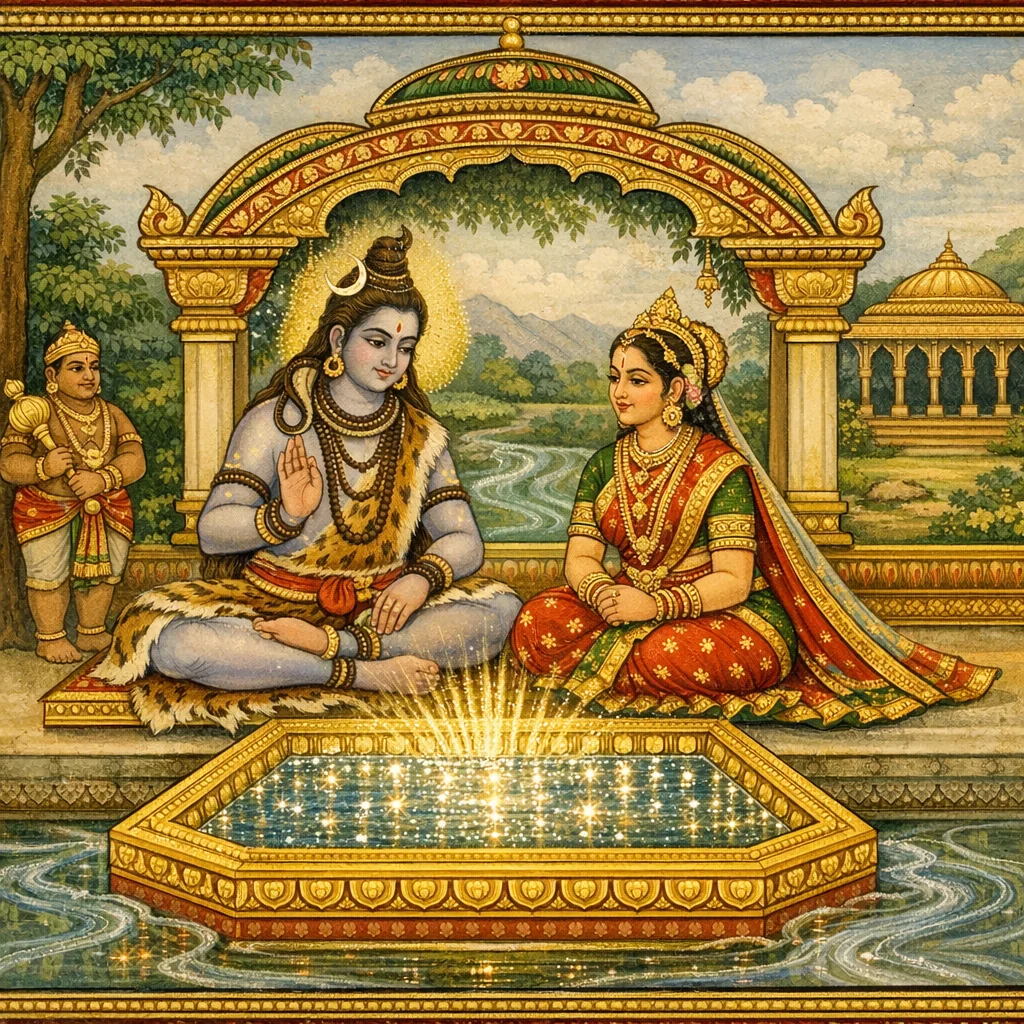
Īśvara instructs Mahādevī about a supremely holy water-site called Ratnakuṇḍa, lying south of Ratneśvara at the traditional measure of seven bows’ distance. It is praised as a cleanser of grave sins and is said to have been established by Viṣṇu. The chapter then declares that Kṛṣṇa gathered countless tīrthas, earthly and celestial, and deposited them here; a divine retinue (gaṇa) guards the place, making it hard to approach for the undisciplined in the Kali-yuga. A ritual rule is given: bathing here in the proper manner yields an exalted sacrificial fruit, multiplying the merit of an Aśvamedha. Ekādaśī is highlighted as the chief time to offer piṇḍa to the ancestors, granting them inexhaustible satisfaction, and night-vigil (jāgaraṇa), performed with firm faith, is taught as a means to obtain desired results. For dāna, the text recommends gifting yellow garments and a milch cow, dedicating them to Viṣṇu so that the pilgrimage bears its full fruition. Finally, it sets out the yuga-wise names—Hemakuṇḍa in Kṛta, Raupya in Tretā, Cakrakuṇḍa in Dvāpara, and Ratnakuṇḍa in Kali—and adds that subterranean streams of the Gaṅgā are present, so bathing here equals bathing at all tīrthas.
Shlokas
Verse 1
ईश्वर उवाच । ततो गच्छेन्महादेवि रत्नकुण्डमनुत्तमम् । रत्नेशाद्दक्षिणे भागे धनुषां सप्तके स्थितम् । महापापोपशमनं विष्णुना निर्मितं स्वयम्
Īśvara said: Then, O great goddess, one should go to the unsurpassed Ratnakuṇḍa, situated seven bow-lengths to the south of Ratneśa. It is a quencher of great sins, fashioned by Viṣṇu Himself.
Verse 2
अष्टकोटीस्तु तीर्थानि भूद्योऽन्तरिक्षगाणि तु । समानीय तु कृष्णेन तत्र क्षिप्तानि भूरिशः
Eight crores of tīrthas—of earth, heaven, and the mid-region—were gathered by Kṛṣṇa and cast into that place in great abundance.
Verse 3
गणानां कोटिरेका तु तत्कुण्डं रक्षति प्रिये । कलौ युगे तु संप्राप्ते दुष्प्राप्यमकृतात्मभिः
O beloved, a crore of attendant gaṇas guards that pond. And when the age of Kali arrives, it becomes hard to attain for those of undisciplined conduct.
Verse 4
तत्र स्नात्वा महादेवि विधिदृष्टेन कर्मणा । प्राप्नुयादश्वमेधस्य फलं शतगुणोत्तरम्
O great goddess, having bathed there in accordance with the rites prescribed by tradition, one obtains the fruit of the Aśvamedha sacrifice, enhanced a hundredfold.
Verse 5
एकादश्यां विशेषेण पिंडं तत्र प्रदापयेत् । अक्षय्यां तृप्तिमायांति पितरस्तस्य भामिनि
Especially on Ekādaśī, one should offer piṇḍa there. O lovely one, his ancestors (pitṛs) attain inexhaustible satisfaction.
Verse 6
कुर्याज्जागरणं तत्र एकादश्यां विधानतः । वाञ्छितं लभते देवि यदि श्रद्धा दृढा भवेत्
One should keep vigil (jāgaraṇa) there on Ekādaśī in the prescribed manner. O goddess, if one’s faith is firm, one attains the desired boon.
Verse 7
देयानि पीतवस्त्राणि तथा धेनुः पयस्विनी । तत्र विष्णुं समुद्दिश्य सम्यग्यात्राफलाप्तये
There one should donate yellow garments and a milk-giving cow, dedicating the gift to Viṣṇu, so as to obtain the full fruit of the pilgrimage.
Verse 8
हेमकुण्डं कृते प्रोक्तं त्रेतायां रौप्यनामकम् । द्वापरे चक्रकुंडं तु रत्नकुंडं कलौ स्मृतम्
In the Kṛta age it was called Hemakuṇḍa; in Tretā it was known as Raupya. In Dvāpara it was Cakrakuṇḍa, and in Kali it is remembered as Ratnakuṇḍa.
Verse 9
पातालवाहिनीगंगा स्रोतांसि तत्र भूरिशः । समानीतानि हरिणा तत्र तिष्ठंति भामिनि
O fair lady, in that sacred region there are many streams of the Gaṅgā that flows through the netherworld; Hari brought them together there, and they remain established in that place.
Verse 10
तत्र स्नानेन देवेशि सर्वतीर्थाभिषेचनम्
O Goddess, by bathing there one gains the same sanctifying ablution as bathing in all tīrthas.
Verse 159
इति श्रीस्कांदे महापुराण एकाशीतिसाहस्र्यां संहितायां सप्तमे प्रभासखंडे प्रथमे प्रभासक्षेत्रमाहात्म्ये रत्नेश्वरमाहात्म्यवर्णनंनामैकोनषष्ट्युत्तरशततमोऽध्यायः
Thus ends the one-hundred-and-fifty-ninth chapter, called “The Description of the Greatness of Ratneśvara,” in the Prabhāsa-khaṇḍa (Book Seven) of the holy Skanda Mahāpurāṇa, within the Prabhāsakṣetra-māhātmya.