Adhyaya 154
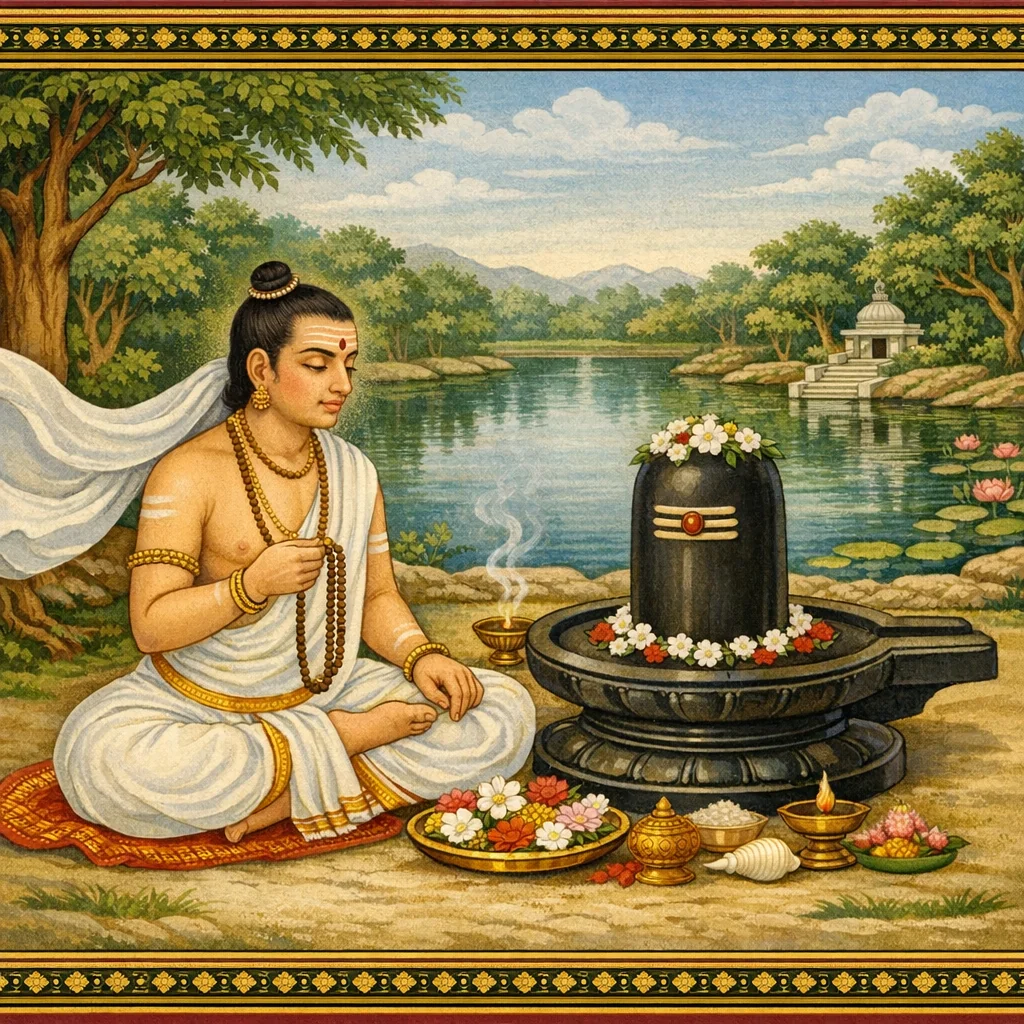
Īśvara speaks to Devī and directs the pilgrim to a pāpa-vimocana liṅga, a sin-removing emblem, located in the Hiraṇyeśvara area in the Vāyavya quarter. It is described as being “three bow-lengths” away, and as pāpaghna for all beings through both darśana (beholding) and sparśana (reverent touch). The chapter identifies it as an “ādi-liṅga,” established through the power and tradition of the Gāyatrī mantra (gāyatrī-saṃpratiṣṭhita). A practitioner—especially a brāhmaṇa who has become śuci (ritually pure)—who reaches this liṅga and performs Gāyatrī-japa is freed from the fault of duṣpratigraha (improper acceptance of gifts). Further, on the full moon of Jyeṣṭha, one who feeds a married couple and clothes them according to one’s means is released from misfortune (daurbhāgya); and worship on Paurṇamāsī with fragrance, flowers, and offerings is said to bestow “brāhmaṇya” for seven births. The account concludes as a most concentrated essence (sārāt sāratara), made available by the grace of Brahma-kuṇḍa.
Shlokas
Verse 1
ईश्वर उवाच । ततो गच्छेन्महादेवि लिंगं पापविमोचनम् । हिरण्येश्वरवायव्ये धनुषां त्रितये स्थितम्
Īśvara said: Then, O Mahādevī, one should go to the liṅga that releases from sin, situated to the northwest of Hiraṇyeśvara, at a distance of three bow-lengths.
Verse 2
पापघ्नं सर्वजंतूनां दर्शनात्स्पर्शनादपि । आद्यं लिंगं महादेवि गायत्र्या संप्रतिष्ठितम्
O Mahādevī, this liṅga destroys the sins of all beings even by mere sight, and even by touch. It is the primordial liṅga, established here by Gāyatrī.
Verse 3
तल्लिंगं समनुप्राप्य गायत्रीं जपते तु यः । ब्राह्मणस्तु शुचिर्भूत्वा मुच्यते दुष्प्रतिग्रहात्
Whoever approaches that liṅga and recites the Gāyatrī—such a brāhmaṇa, becoming purified, is freed from the fault of improper acceptance of gifts.
Verse 4
ज्येष्ठस्य पूर्णिमायां तु दंपती यस्तु भोजयेत् । परिधाप्य यथाशक्त्या दौर्भाग्यैर्मुच्यते नरः
On the full-moon day of Jyeṣṭha, the man who feeds a married couple—and, according to his capacity, also clothes them—becomes freed from misfortune.
Verse 5
गंधपुष्पोपहारैश्च पौर्णमास्यां तु योऽर्चयेत् । ब्राह्मण्यं जायते तस्य सप्त जन्मानि सुंदरि
O fair one, whoever worships (there) on the full-moon day with offerings of fragrance and flowers gains the state and merits of brāhmaṇahood for seven births.
Verse 6
इत्येवं कथितं देवि माहात्म्यं पापनाशनम् । ब्रह्मकुण्डप्रसादेन सारात्सारतरं प्रिये
Thus, O Devī, has been told this sin-destroying greatness (of the place); by the grace of Brahmakuṇḍa, O beloved, it is the very essence of essences.
Verse 154
इति श्रीस्कांदे महापुराण एकाशीतिसाहस्र्यां संहितायां सप्तमे प्रभासखण्डे प्रथमे प्रभासक्षेत्रमाहात्म्ये ब्रह्मकुण्डमाहात्म्ये गायत्रीश्वरमाहात्म्यवर्णनंनाम चतुःपञ्चाशदुत्तरशततमोऽध्यायः
Thus ends the chapter entitled “The Description of the Greatness of Gāyatrīśvara,” within the Brahmakuṇḍa Māhātmya, in the Prabhāsakṣetra Māhātmya of the seventh book, the Prabhāsa Khaṇḍa, of the holy Skanda Mahāpurāṇa (in the Ekāśītisāhasrī Saṃhitā).