Adhyaya 15
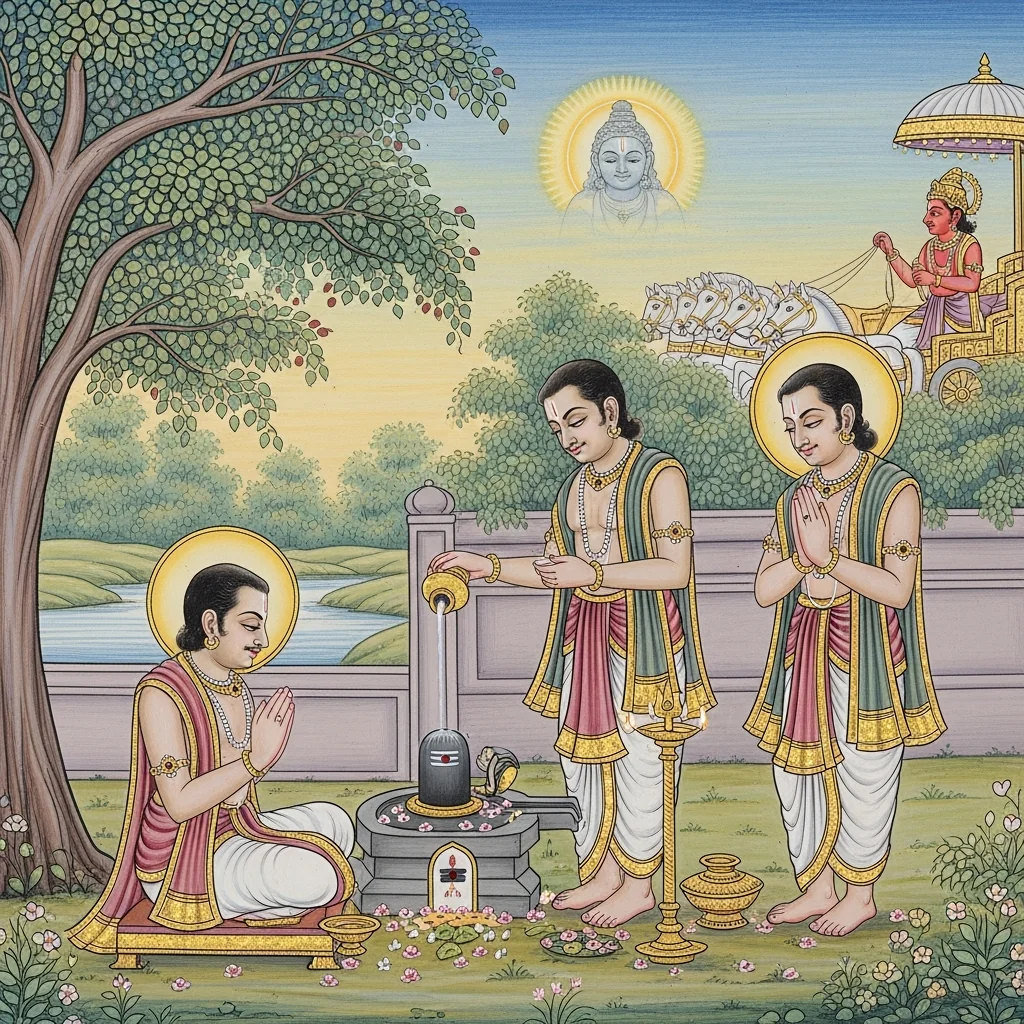
This chapter offers a concise theological and ritual account of a liṅga famed as “pāpa-hara/pāpa-nāśana,” the remover of sins. Spoken in the divine voice of Īśvara, it places the liṅga within the sacred micro-topography of Prabhāsa-kṣetra: it is said to be established (pratiṣṭhita) near the Siddha-liṅga and connected with Aruṇa, the dawn figure associated with Sūrya. Another tradition attributes its establishment to Sūrya’s charioteer, strengthening the solar link while keeping the Śaiva liṅga as the ritual center. A clear calendrical rule is then given: worship should be performed on the bright fortnight’s thirteenth day (śukla trayodaśī) in the month of Caitra, duly (vidhivat) and with devotion (bhaktyā). The promised fruit is compared to, or equated with, the “Puṇḍarīka” merit, serving as a standard measure of sacred-site reward. The closing colophon identifies this as the fifteenth chapter of the first Prabhāsa-kṣetra-māhātmya within the Prabhāsa Khaṇḍa.
Shlokas
Verse 1
ईश्वर उवाच । तस्याग्नेये तु देवेशि अरुणेन प्रतिष्ठितम् । धनुषां च त्रये तत्र सिद्धलिंगसमीपतः
Īśvara said: O Goddess of the gods, to its south-east there is a liṅga established by Aruṇa, situated there at a distance of three bow-lengths, near the Siddhaliṅga.
Verse 2
सूर्यसारथिना तत्र लिंगं देविप्रतिष्ठितम् । कलौ पापहरंनाम दर्शनात्पापनाशनम्
O Devī, there a liṅga was established by the charioteer of Sūrya. In the age of Kali it is named “Pāpahara” (Remover of sin); by its very darśana sins are destroyed.
Verse 3
चैत्रमास त्रयोदश्यां शुक्लायां वरवर्णिनि । पूजयेद्विधिवद्भक्त्या पौंडरीकफलं लभेत्
O fair-complexioned lady, on the bright thirteenth day of the month of Caitra, one should worship with devotion according to the proper rites; thereby one attains the fruit equal to the Puṇḍarīka-sacrifice.
Verse 15
इति श्रीस्कांदे महापुराण एकाशीतिसाहस्र्यां संहितायां सप्तमे प्रभासखंडे प्रथमे प्रभासक्षेत्रमाहात्म्ये पापनाशनोत्पत्तिवर्णनंनाम पंचदशोऽध्यायः
Thus ends the fifteenth chapter, called “The Description of the Origin of Pāpanāśana,” in the first Prabhāsa-kṣetra Māhātmya, within the seventh book, the Prabhāsa Khaṇḍa, of the holy Skanda Mahāpurāṇa (in the Ekāśītisāhasrī Saṃhitā).