Adhyaya 146
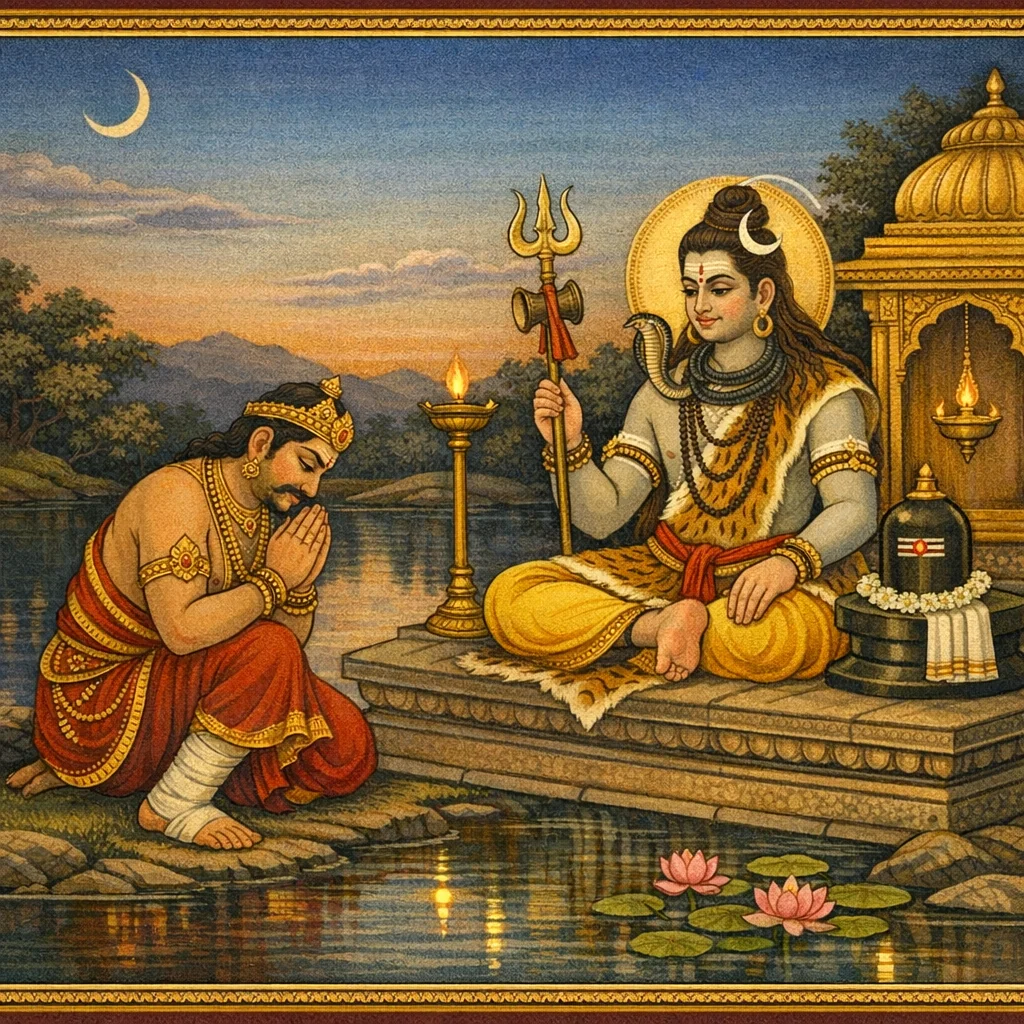
Chapter 146 tells how Dharma-rāja Yama, tormented by a curse connected with Chāyā, loses his foot and suffers grievously. He performs tapas in Prabhāsa-kṣetra and establishes a Śiva-liṅga of Śūlin, which becomes known as Yameśvara. Śiva appears in person and bids Yama ask a boon. Yama seeks the restoration of his fallen foot, and further prays that all beings who behold the liṅga with devotion may gain pāpa-vimocana—release from demerit and sin. Śiva grants these requests and departs; Yama, made whole, returns to heaven. The chapter then gives practical pilgrimage guidance: at the conjunction of Bhātr̥-dvitīyā one should bathe in the pond and take darśana of Yameśvara near the shrine. It prescribes offerings to Yama—sesame in a vessel (tila-pātra), a lamp (dīpa), cows (gāḥ), and gold (kāñcana)—promising freedom from all sins (sarva-pātaka). The teaching stresses an ethical theology: divine judgment is tempered through devotion, austerity, and disciplined rites, easing fear without denying moral causality.
Shlokas
Verse 1
।ईश्वर उवाच । ततो गच्छेन्महादेवि धर्मराजप्रतिष्ठितम् । यमेश्वरं महादेवं तस्यै वोत्तरतः स्थितम्
Īśvara said: “Then, O great Goddess, one should go to the great deity called Yameśvara, established by Dharmarāja; it stands to the north of that holy spot.”
Verse 2
यदा शप्तो धर्मराजश्छायया वरवर्णिनि । तदा तस्यापतत्पादः स च दुःखान्वितोऽभवत्
When Dharmarāja was cursed by Chāyā, O fair-complexioned one, his foot fell away, and he became afflicted with sorrow.
Verse 3
ततः प्राभासिके क्षेत्रे तपस्तेपे महातपाः । स्थापयामास लिंगं तु तत्र देवस्य शूलिनः
Thereupon, in the sacred field of Prābhāsika, that great ascetic performed austerities and there established a liṅga of the Trident-bearing Lord.
Verse 4
तस्य तुष्टो महादेवस्ततः प्रत्यक्षतां गतः । अब्रवीद्धर्म भद्रं ते वरं वरय चेप्सितम्
Pleased with him, Mahādeva became manifest and said, “O Dharma, blessings upon you—choose the boon you desire.”
Verse 5
तदाऽब्रवीद्धर्मराजः पादः प्रपतितो मम । प्रसादात्तव देवेश जायतां पुनरेव हि
Then Dharmarāja said, “My foot has fallen away. By your grace, O Lord of gods, let it indeed be restored and come to be again.”
Verse 6
एतल्लिंगं सुरश्रेष्ठ यन्मया निर्मितं तव । एतद्ये भक्तिसंयुक्ताः पश्यंति प्राणिनो भुवि
“This liṅga, O best of gods, which I have fashioned for you—those living beings on earth who behold it with devotion…”
Verse 7
तेषां तव प्रसादेन भूयात्पापविमोक्षणम्
“—for them, by your grace, may there be release from sin.”
Verse 8
एवं भविष्यतीत्युक्ता ह्यन्तर्धानं गतो हरः । यमोऽपि लब्धपादस्तु पुनरेव दिवं ययौ
Having said, “So shall it be,” Hara vanished from sight; and Yama too—his foot regained—returned once more to heaven.
Verse 9
तस्मिन्दृष्टे सुरश्रेष्ठ यमलोकसमुद्भवम् । न भयं विद्यते नृणामपि दुष्कृतकारिणाम्
“O best of gods, upon beholding that (deity/liṅga) that arose in connection with Yama’s realm, there is no fear for men—even for those who have committed misdeeds.”
Verse 10
भ्रातृद्वितीयासंयोगे स्नात्वा पुष्करिणीजले । यमेश्वरसमीपस्थो यमेशमवलोकयेत्
On the auspicious occasion of Bhrātṛ-dvitīyā, having bathed in the water of the sacred tank, one should stand near Yameśvara and behold Yama, the Lord of Dharma.
Verse 11
तिलपात्रं प्रदातव्यं दीपं गाः कांचना दिकम् । यमदेवं समुद्दिश्य मुच्यते सर्वपातकैः
One should give a vessel of sesame, a lamp, cows, and gold as gifts—dedicating them to Lord Yama; thereby one is released from all sins.