Adhyaya 145
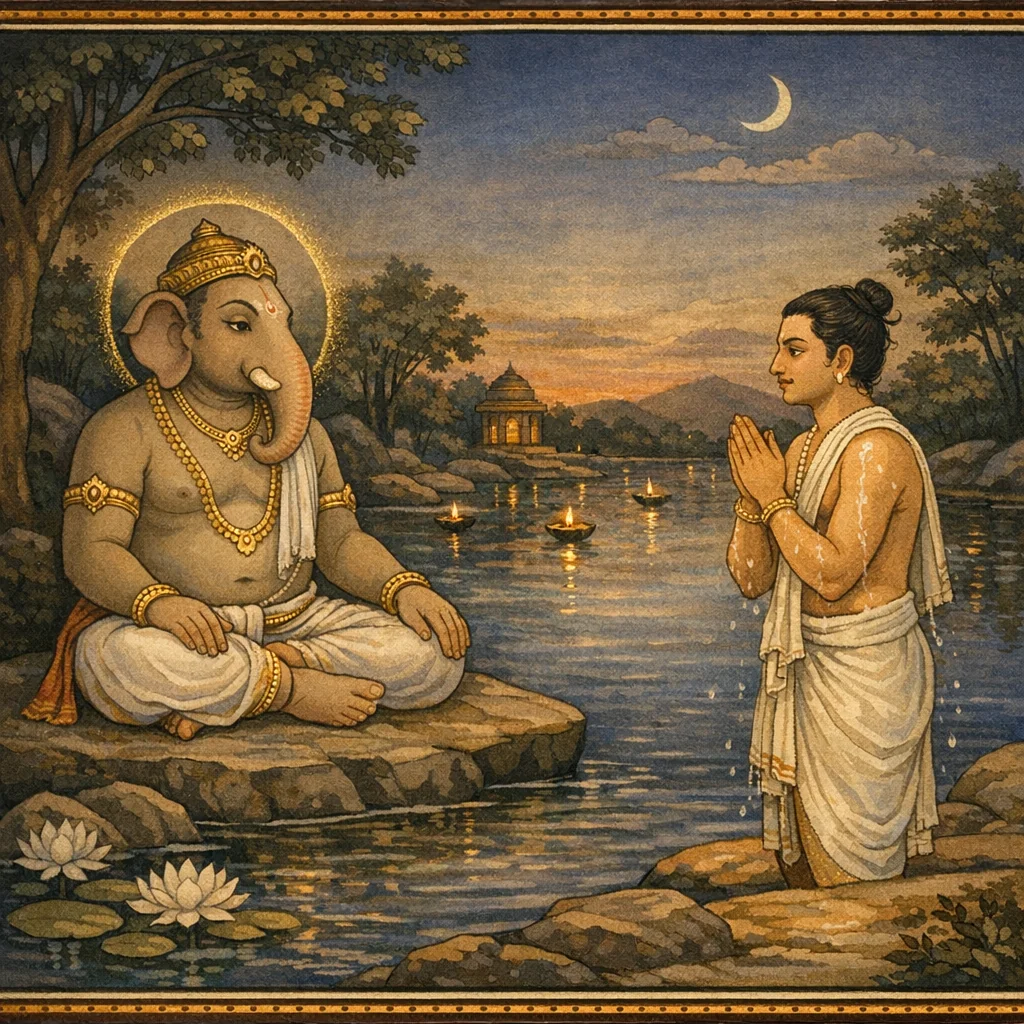
Chapter 145 gives a concise theological and ritual notice focused on Vighneśa (Gaṇeśa) in Prabhāsa-kṣetra. Īśvara points out a local icon-form called Gajakumbhodara, described with elephantine features and praised as the remover of obstacles and the destroyer of wrongdoing. It then prescribes a specific observance: a pilgrim should bathe in the associated kuṇḍa on the fourth lunar day (caturthī), with disciplined intent (prayatātmā), and worship the deity with devotion (bhakti). Right devotion and proper timing please the Lord (tuṣyati), implying the clearing of impediments and the ripening of auspicious results. The closing colophon places the passage within the Skanda Purāṇa’s compilation and identifies it as the description of the Gajakumbhodara-māhātmya.
Shlokas
Verse 1
ईश्वर उवाच । तत्रैव संस्थितं पश्येद्विघ्नेशं पापनाशनम् । गजकुंभोदरं नाम सर्वसिद्धिप्रदायकम्
Īśvara said: “Right there one should behold Vighneśa, the destroyer of sins—known as Gajakuṃbhodara—who bestows all attainments.”
Verse 2
तत्र कुंडे नरः स्नात्वा चतुर्थ्यां प्रयतात्मवान् । पूजयेद्यस्तु तं भक्त्या विघ्नेशस्तस्य तुष्यति
After bathing in that pond, a self-restrained man, on the fourth lunar day, should worship Him with devotion; Vighneśa becomes pleased with that devotee.
Verse 145
इति श्रीस्कांदे महापुराण एकाशीतिसाहस्र्यां संहितायां सप्तमे प्रभासखण्डे प्रथमे प्रभासक्षेत्रमाहात्म्ये गजकुंभोदरमाहात्म्यवर्णनंनाम पञ्चचत्वा रिंशदुत्तरशततमोऽध्यायः
Thus ends, in the holy Skanda Mahāpurāṇa—within the Saṃhitā of eighty-one thousand verses—within the seventh division, the Prabhāsa Khaṇḍa, in its first part, the Māhātmya of the sacred Prabhāsa region, the one-hundred-and-forty-fifth chapter, entitled “The Description of the Greatness of Gajakuṃbhodara.”