Adhyaya 140
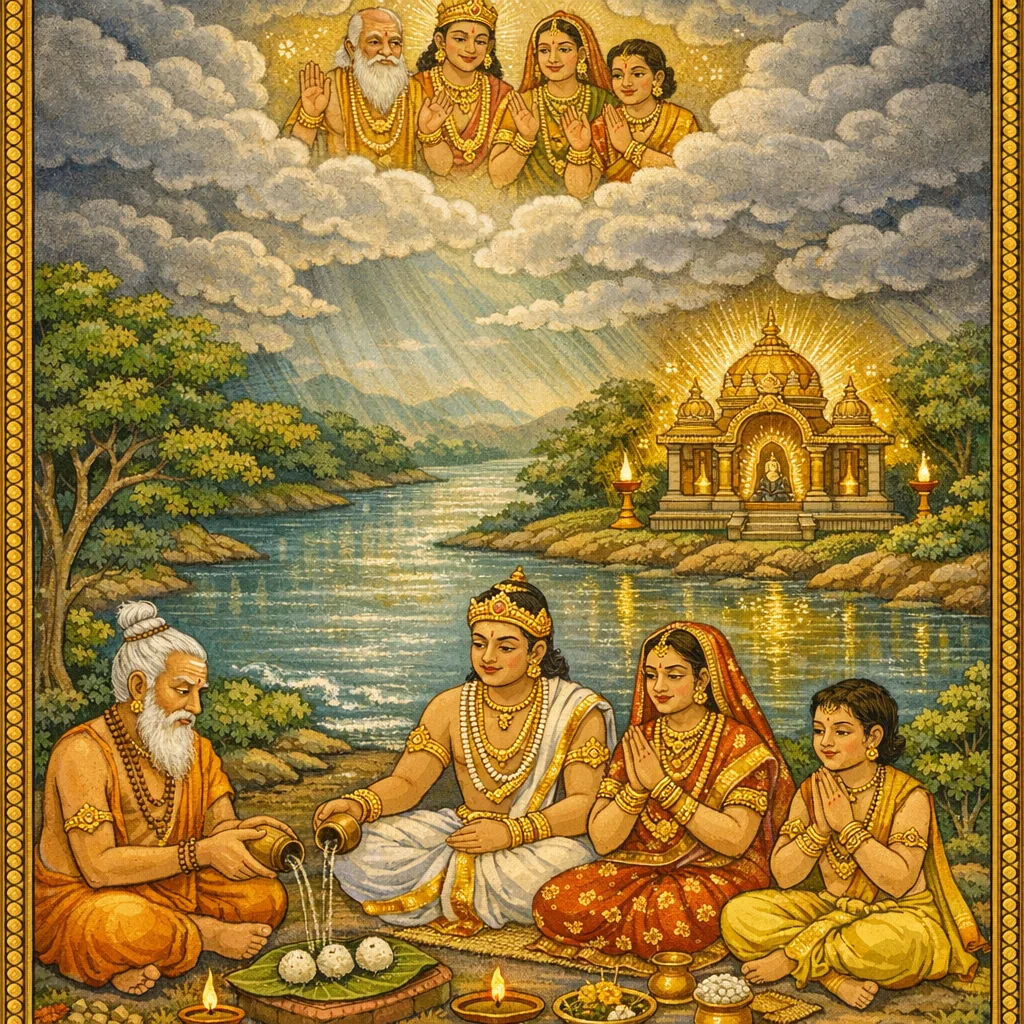
This adhyāya proclaims the māhātmya of the Citrāpathā River in Prabhāsa Kṣetra and sets forth its ritual power. Devī is instructed to go to a river near Brahmakūṇḍa, situated in relation to Citrāditya. A legend is told: a man named Citra is seized by Yamadūtas under Yama’s command. His sister, overwhelmed with grief, becomes the river Citrā and flows into the ocean while seeking her kinsman; thereafter the dvijas name the river Citrāpathā. The फल (fruit) is declared: one who bathes (snāna) in this river and beholds (darśana) Citrāditya attains a supreme station connected with the solar divinity Divākara. In Kali-yuga the river is said to be hidden and to appear only rarely, especially in the rainy season; yet whenever it is seen, mere sight itself is authoritative, not dependent on calendrical timing. The chapter also links the place to pitṛ-loka: the ancestors in heaven rejoice at the river’s appearance and await the descendants’ śrāddha, which grants lasting satisfaction. It concludes by recommending snāna and śrāddha there for the destruction of pāpa and for pitṛ-prīti, affirming Citrāpathā as a merit-generating feature of Prabhāsa’s sacred landscape.
Shlokas
Verse 1
ततो गच्छेन्महादेवि नदीं चित्रपथां ततः । ब्रह्मकुण्डसमीपस्थां चित्रादित्यस्य मध्यतः
Then, O Great Goddess, one should proceed to the river called Citrapathā, situated near Brahmakūṇḍa, in the very midst of the sacred precinct of Citrāditya.
Verse 2
यदा च चित्रः संनीतो यमदूतैः सुरप्रिये । सशरीरो महाप्राज्ञो यमादेशपरायणैः
And when Citra, O beloved of the gods, was carried away by Yama’s messengers—those devoted to Yama’s command—the great wise one was taken away bodily.
Verse 3
एवं ज्ञात्वा तु तत्रस्था भगिनी तस्य दुःखिता । चित्रा नदी ततो भूत्वा स्वसा तस्य महात्मनः
Knowing this, his sister, standing there and stricken with grief, thereafter became the river Citrā, as the sister of that great-souled one.
Verse 4
प्रविष्टा सागरे देवि अन्वेषन्ती च बांधवम् । ततश्चित्रपथानाम तस्याश्चक्रुर्द्विजातयः
Entering the sea, O Goddess, and seeking her kinsman, the twice-born then bestowed on her the name “Citrapathā.”
Verse 5
एवं तत्र समुत्पन्ना सा नदी वरवर्णिनि
Thus, O fair-complexioned lady, that river arose there.
Verse 6
तस्यां स्नात्वा नरो यस्तु चित्रादित्यं प्रपश्यति । स याति परमं स्थानं यत्र देवो दिवाकरः
But the man who bathes in that river and beholds Citrāditya attains the supreme abode—where the god Divākara (the Sun) resides.
Verse 7
अस्मिन्कलियुगे देवि अंतर्धानं गता नदी । प्रावृट्काले च दृश्येत दुर्लभं तत्र दर्शनम्
In this Kali age, O Goddess, the river has gone into concealment; it is seen only in the rainy season, and even then its sight is rare.
Verse 8
स्नानं दानं विशेषेण सर्वपातकनाशनम्
Bathing and charity—especially—are destroyers of all sins.
Verse 9
भुक्तो वाप्यथवाऽभुक्तो रात्रौ वा यदि वा दिवा । पर्वकालेऽथवाऽकाले पवित्रोऽप्यथवाऽशुचिः
Whether one has eaten or not; whether at night or by day; whether at a festival time or a non-festival time; whether pure or even impure—
Verse 10
यदैव दृश्यते तत्र नदी चित्रपथा प्रिये । प्रमाणं दर्शनं तस्या न कालस्तत्र कारणम्
Whenever the river Citrāpathā is seen there, O beloved, that very sight is the decisive criterion; time is not the condition there.
Verse 11
दृष्ट्वा नदीं महादेवि पितरः स्वर्गसंस्थिताः । गायंति तत्र सामानि नृत्यन्ति च हसंति च
Seeing the river, O Great Goddess, the Pitṛs who dwell in heaven sing Sāman hymns there; they dance and they laugh as well.
Verse 12
अस्माकं वंशजः कश्चिच्छ्राद्धमत्र करिष्यति । यावत्कल्पं तथाऽस्माकं प्रीतिमुत्पादयिष्यति
“Some descendant of our line will perform śrāddha here; and for as long as a kalpa endures, he will generate joy and satisfaction for us.”
Verse 13
एवं ज्ञात्वा नरस्तत्र स्नानं श्राद्धं च कारयेत् । सर्वपापविनाशार्थं पितॄणां प्रीतये तथा
Knowing this, a man should arrange bathing and also perform śrāddha there—both for the destruction of all sins and for the satisfaction of the Pitṛs, the ancestors.
Verse 14
इत्येतत्कथितं देवि यथा चित्रपथा नदी । प्रभासक्षेत्रमासाद्य संस्थिता पापनाशिनी
Thus, O Goddess, it has been explained how the river Citrāpathā, reaching Prabhāsa Kṣetra, came to abide there as a destroyer of sins.
Verse 140
इति श्रीस्कांदे महापुराण एका शीतिसाहस्र्यां संहितायां सप्तमे प्रभासखण्डे प्रथमे प्रभासक्षेत्रमाहात्म्ये चित्रपथानदीमाहात्म्यवर्णनंनाम चत्वारिंशदुत्तरशततमोऽध्यायः
Thus ends the 140th chapter, entitled “The Description of the Greatness of the River Citrāpathā,” in the Prabhāsa Khaṇḍa of the holy Skanda Mahāpurāṇa, within the Prabhāsakṣetra Māhātmya section.