Adhyaya 139
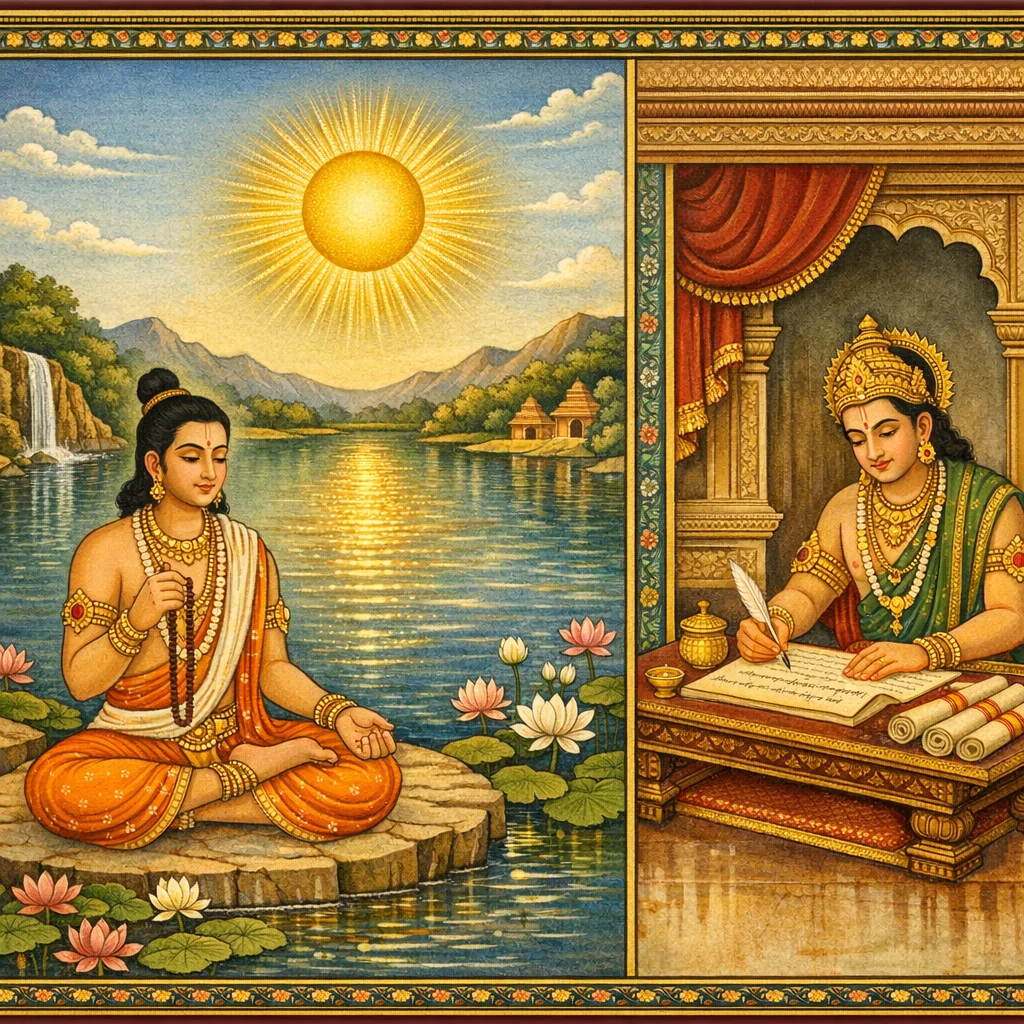
Īśvara teaches that one should go to Citrāditya near Brahmakuṇḍa, a sacred spot famed for destroying poverty. A tradition is then told: Mitra, a dharmic kāyastha devoted to the welfare of beings, has two children—Citra (son) and Citrā (daughter). After Mitra’s death and the wife’s self-immolation, the children are protected by sages and later perform austerities in the Prabhāsa region. Citra installs and worships Bhāskara (Sūrya) with offerings and a stotra handed down in tradition, enumerating sixty-eight secret/ritual names that connect Sūrya with many holy sites across India. The text proclaims the fruits of reciting or hearing these names: freedom from sins, fulfillment of aims (kingdom, wealth, children, happiness), healing, and release from bondage. Pleased, Sūrya grants Citra maturity in action and knowledge; Dharmarāja then appoints him as Citragupta, the cosmic recorder of deeds. The chapter ends with a worship rule (especially on the seventh lunar day) and prescribed gifts—horse, sword with scabbard, and gold to a brāhmaṇa—to obtain the merit of the pilgrimage.
Shlokas
Verse 1
ईश्वर उवाच । ततो गच्छेन्महादेवि चित्रादित्यमनुत्तमम् । तस्यैव दक्षिणे भागे व्रह्मकुण्डसमीपतः
Īśvara said: “Then, O great goddess, one should go to the unsurpassed shrine of Citrāditya; and on its southern side, near Brahma-kuṇḍa…”
Verse 2
महाप्रभावो देवेशि सर्वदारिद्र्यनाशनः । मित्रो नाम पुरा देवि धर्मात्माऽभूद्धरातले । कायस्थः सर्वभूतानां नित्यं भूतहिते रतः
O goddess, this tīrtha/deity is of great power and destroys every kind of poverty. Long ago, O Devī, there was on earth a righteous man named Mitra—a kāyastha—ever devoted to the welfare of all beings.
Verse 3
तस्यापत्यद्वयं जज्ञ ऋतुकालाभिगामिनः । पुत्रः परमतेजस्वी चित्रोनाम वरानने
From him, in due season, two children were born. One was a son of exceeding radiance, O fair-faced one, named Citra.
Verse 4
तथा चित्राऽभवत्कन्या रूपाढ्या शीलमंडना
Likewise, a daughter was born—Citrā—rich in beauty and adorned with virtuous conduct.
Verse 5
आभ्यां तु जातमात्राभ्यां मित्रः पञ्चत्वमेयिवान् । अथ तस्य वरा भार्या सह तेनाग्निमाविशत्
But when the two were only just born, Mitra passed into the state of the five elements (that is, he died). Then his noble wife entered the fire along with him.
Verse 6
अथ तौ बालकौ दीनावृषिभिः परिपालितौ । वृद्धिं गतौ महारण्ये बालावेव स्थितौ व्रते
Then those two children, destitute, were cared for by sages. They grew up in a great forest, remaining steadfast in their observances (vrata) as though still simple children.
Verse 7
प्रभासं क्षेत्रमासाद्य तपः परममास्थितौ । प्रतिष्ठाप्य महा देवं भास्करं वारितस्करम्
Reaching the sacred kṣetra of Prabhāsa, they undertook the highest austerity. Having installed the great Deva Bhāskara (the Sun), who wards off perils born of water and the threat of thieves—a mighty protector…
Verse 8
पूजयामास धर्मात्मा धूपमाल्यानुलेपनैः । वसिष्ठकथितैश्चैव ह्यष्टषष्टिसमन्वितैः । नामभिः सूर्यदेवेशं तुष्टाव प्राञ्जलिः प्रभुम्
That righteous one worshipped with incense, garlands, and fragrant unguents; and with the sixty-eight names taught by Vasiṣṭha, he praised the Lord—Sūrya, God of gods—standing with joined palms.
Verse 9
चित्र उवाच । प्रणम्य शिरसा देवं भास्करं गगनाधिपम् । आदिदेवं जगन्नाथं पापघ्नं रोगनाशनम्
Citra said: “Bowing my head, I adore the divine Bhāskara, lord of the sky—the primordial Deva, the Lord of the universe—who destroys sin and dispels disease.”
Verse 10
सहस्राक्षं सहस्रांशुं सहस्रकिरणद्युतिम्
“(I praise) Him of a thousand eyes, a thousand beams, radiant with a thousand rays.”
Verse 11
तमहं संस्तविष्यामि संपृक्तं गुह्यनामभिः । मुंडीरस्वामिनं प्रातर्गंगासागरसंगमे । कालप्रियं तु मध्याह्ने यमुनातीरमाश्रितम्
“Him I shall hymn—invoking Him with secret, sacred names: as Muṇḍīrasvāmin at dawn, at the confluence of the Gaṅgā and the ocean; and as Kālapriya at midday, abiding on the bank of the Yamunā.”
Verse 12
मूलस्थानं चास्तमने चन्द्रभागातटे स्थितम् । यत्र सांबः स्वयं सिद्ध उपवासपरायणः
And at sunset is the Mūlasthāna, situated on the bank of the Candrabhāgā—where Sāmba himself attained fulfilment, devoted to fasting.
Verse 13
वाराणस्यां लोहिताक्षं गोभिलाक्षे बृहन्मुखम् । प्रयागेषु प्रतिष्ठानं वृद्धादित्यं महाद्युतिम्
In Vārāṇasī (He is) Lohitākṣa; at Gobhilākṣa, Bṛhanmukha; and in the Prayāgas, Pratiṣṭhāna—(and) Vṛddhāditya, of great splendour.
Verse 14
कोट्यक्षे द्वादशादित्यं गंगादित्यं चतुर्घटे । नैमिषे चैव गोघ्ने च भद्रं भद्रपुटे स्थितम्
At Koṭyakṣa (He is) Dvādaśāditya; at Caturghaṭa, Gaṅgāditya. In Naimiṣa as well, and at Goghna, (He is) Bhadra—abiding in Bhadrapuṭa.
Verse 15
जयायां विजयादित्यं प्रभासे स्वर्णवेतसम् । कुरुक्षेत्रे च सामंतं त्रिमंत्रं च इलावृते
In Jayā (He is) Vijayāditya; in Prabhāsa, Svarṇavetasa. In Kurukṣetra (He is) Sāmanta; and in Ilāvṛta, Trimantro (the three-mantra form).
Verse 16
महेन्द्रे क्रमणादित्यमृणे सिद्धेश्वरं विदुः । कौशांब्यां पद्मबोधं च ब्रह्मबाहौ दिवाकरम्
On Mahendra (mountain) (He is) Kramaṇāditya; at Ṛṇa (He is known as) Siddheśvara. In Kauśāmbī, Padmabodha; and at Brahmabāhu, Divākara.
Verse 17
केदारे चण्डकांतिं च नित्ये च तिमिरापहम् । गंगामार्गे शिवद्वारमादित्यं भूप्रदी पने
In Kedāra (He is) Caṇḍakānti; in Nitya (He is) Timirāpaha, the dispeller of darkness. On the Gaṅgā route (He is) Śivadvāra-Āditya, the illuminator of the earth.
Verse 18
हंसं सरस्वतीतीरे विश्वामित्रं पृथूदके । उज्जयिन्यां नरद्वीपं सिद्धायाममलद्युतिम्
On the Sarasvatī’s bank (He is) Haṃsa; at Pṛthūdaka, Viśvāmitra. In Ujjayinī, Naradvīpa; and in Siddhā, Amaladyuti, of stainless radiance.
Verse 19
सूर्यं कुन्तीकुमारे च पञ्चनद्यां विभावसुम् । मथुरायां विमलादित्यं संज्ञादित्यं तु संज्ञिके
In Kuntīkumāra he is worshipped as “Sūrya”; at Pañcanadī as “Vibhāvasu”; in Mathurā as “Vimalāditya”; and at Saṃjñikā as “Saṃjñāditya.”
Verse 20
श्रीकण्ठे चैव मार्तण्डं दशार्णे दशकं स्मृतम् । गोधने गोपतिं देवं कर्णं चैव मरुस्थले
At Śrīkaṇṭha he is known as “Mārtaṇḍa”; in Daśārṇa he is remembered as “Daśaka”; at Godhana as the divine “Gopati”; and in the desert-land as “Karṇa.”
Verse 21
पुष्पं देवपुरे चैव केशवार्कं तु लोहिते । वैदिशे चैव शार्दूलं शोणे वारुणवासिनम्
In Devapura he is praised as “Puṣpa”; in Lohita as “Keśavārka”; in Vaidiśa as “Śārdūla”; and on the Śoṇa as “Vāruṇavāsin.”
Verse 22
वर्धमाने च सांबाख्यं कामरूपे शुभंकरम् । मिहिरं कान्यकुब्जे च मंदारं पुण्यवर्धने
At Vardhamāna he is called “Sāṃbākhya”; in Kāmarūpa, “Śubhaṃkara”; in Kānyakubja, “Mihira”; and in Puṇyavardhana, “Mandāra.”
Verse 23
गन्धारे क्षोभणादित्यं लंकायाममरद्युतिम् । कर्णादित्यं च चंपायां प्रबोधे शुभदर्शिनम्
In Gandhāra he is “Kṣobhaṇāditya”; in Laṅkā, “Amaradyuti”; in Campā, “Karṇāditya”; and at Prabodha, “Śubhadarśin.”
Verse 24
द्वारा वत्यां तु पार्वत्यं हिमवन्ते हिमापहम् । महातेजं तु लौहित्ये अमलांगे च धूजटिम्
At Dvārāvatī he is “Pārvatya”; in Himavant he is “Himāpaha”; in Lauhitya he is “Mahātejas”; and in Amalāṅga he is “Dhūjaṭi.”
Verse 25
रोहिके तु कुमाराख्यं पद्मायां पद्मसंभवम् । धर्मादित्यं तु लाटायां मर्द्दके स्थविरं विदुः
At Rohika he is called “Kumārākhya”; in Padmā he is “Padmasaṃbhava”; in Lāṭā he is “Dharmāditya”; and at Marddaka he is known as “Sthavira.”
Verse 26
सुखप्रदं तु कौबेर्यां कोसले गोपतिं तथा । कौंकणे तु पद्मदेवं तापनं विन्ध्यपर्वते
In Kauberī he is “Sukhaprada”; in Kosala likewise as “Gopati”; in Koṅkaṇa as “Padmadeva”; and on the Vindhya mountain as “Tāpana.”
Verse 27
त्वष्टारं चैव काश्मीरे चरित्रे रत्नसंभवम् । पुष्करे हेमगर्भस्थं विद्यात्सूर्यं गभस्तिके
In Kāśmīra he is called “Tvaṣṭṛ”; at Caritra, “Ratnasaṃbhava”; in Puṣkara, “Hemagarbhastha”; and at Gabhastikā he should be known as “Sūrya”.
Verse 28
प्रकाशायां तु मुज्झालं तीर्थग्रामे प्रभाकरम् । कांपिल्ये रिल्लकादित्यं धनके धनवासिनम्
In Prakāśā he is “Mujjhāla”; in Tīrthagrāma, “Prabhākara”; in Kāṃpilya, “Rillakāditya”; and in Dhanaka, “Dhanavāsin”.
Verse 29
अनलं नर्मदातीरे सर्वत्र गमनाधिकम् । अष्टषष्टिं तु देवस्य भास्करस्यामितद्युतेः
On the bank of the Narmadā is the sacred observance called “Anala”, famed for granting a higher freedom to move everywhere. There one should perform the sixty-eightfold praise and worship of the god Bhāskara, whose radiance is immeasurable.
Verse 30
प्रातरुत्थाय वै नित्यं शक्तिमाञ्छुचिमान्नरः । यः पठेच्छृणुयाद्वापि सर्वपापैः प्रमुच्यते
A man who rises at dawn each day—strong and purified—who recites this hymn, or even listens to it, is freed from all sins.
Verse 31
राज्यार्थी लभते राज्यं धनार्थी लभते धनम् । पुत्रार्थी लभते पुत्रान्सौख्यार्थी लभते सुखम्
One who seeks sovereignty attains sovereignty; one who seeks wealth attains wealth. One who seeks sons attains sons; one who seeks happiness attains happiness.
Verse 32
रोगार्तो मुच्यते रोगाद्बद्धो मुच्येत बन्धनात् । यान्यान्प्रार्थयते कामांस्तांस्तान्प्राप्नोति मानवः
The afflicted is freed from disease; the bound is freed from bondage. Whatever desires a person prays for—those, one by one—he attains.
Verse 33
ईश्वर उवाच । एवं च स्तुवतस्तस्य चित्रस्य विमलात्मनः । ततस्तुष्टः सहस्रांशुः कालेन महता विभुः
Īśvara said: As Citra, pure-souled and radiant, continued praising thus, in due course—after a long time—the mighty Sahasrāṃśu (the Sun) became pleased.
Verse 34
अब्रवीद्वत्स भद्रं ते वरं वरय सुव्रत
The Sun said: “Dear child, blessings upon you. O you of good vows—choose a boon.”
Verse 35
सोऽब्रवीद्यदि मे तुष्टो भगवंस्तीक्ष्णदीधितेः । प्रौढत्वं सर्वकार्येषु नय मां ज्ञानितां तथा
He said: “If you are pleased with me, O Blessed One of piercing radiance, grant me maturity in all undertakings; and lead me as well to the state of true knowledge.”
Verse 36
तत्तथेति प्रति ज्ञातं सूर्येण वरवर्णिनि । ततः सर्वज्ञतां प्राप्तश्चित्रो मित्रकुलोद्भवः
“So be it,” Sūrya assented. Then Citra, born in the Mitra lineage, attained complete knowledge (sarvajñatā).
Verse 37
तं ज्ञात्वा धर्मराजस्तु बुद्ध्या परमया युतम् । चिंतयामास मेधावी लेख कोऽयं भवेद्यदि
Recognizing him as endowed with the highest intellect, Dharmarāja, the wise, began to ponder: “If this one were my scribe (lekha), what might be accomplished?”
Verse 38
ततो मे सर्वसिद्धिः स्यान्निर्वृतिश्च परा भवेत् । एवं चिंतयतस्तस्य धर्मराजस्य भामिनि
“Then all accomplishments would be mine, and supreme contentment would arise.” Thus Dharmarāja was thinking in this way—O radiant lady—(and the tale continues).
Verse 39
अग्नितीर्थे गते चित्रे स्ना नार्थं लवणाम्भसि । स तत्र प्रविशन्नेव नीतस्तु यमकिंकरैः
When Citra went to Agnitīrtha to bathe in the sea’s salty waters, at the very moment he entered there he was seized and carried away by Yama’s attendants.
Verse 40
सशरीरो महादेवि यमादेशपरायणैः । स चित्रगुप्तनामाऽभूद्विश्वचारित्रलेखकः
O Great Goddess, taken bodily by those devoted to Yama’s command, he became known as Citragupta—the scribe who records the conduct of the whole world.
Verse 41
चित्रादित्येतिनामाऽभूत्ततो लोके वरानने
Then in the world, O fair-faced one, he came to be known by the name “Citrāditya.”
Verse 42
सप्तम्यां नियताहारो यस्तं पूजयते नरः । सप्त जन्मानि दारिद्र्यं न दुःखं तस्य जायते
Whoever, on Saptamī (the seventh lunar day), with a disciplined diet worships Him—through seven births, neither poverty nor suffering arises for that person.
Verse 43
तत्रैव चाश्वो दातव्यः सकोषं खड्गमेव च । हिरण्यं चैव विप्राय एवं यात्राफलं लभेत्
There itself one should gift a horse, and also a sword with its scabbard, and gold to a brāhmaṇa; thus one obtains the fruit of the pilgrimage.
Verse 139
इति श्रीस्कांदे महापुराण एकाशीति साहस्र्यां संहितायां सप्तमे प्रभासखण्डे प्रथमे प्रभासक्षेत्रमाहात्म्ये चित्रादित्यमाहात्म्यवर्णनंनामैकोनचत्वारिंशदुत्तरशततमोऽध्यायः
Thus ends, in the venerable Skanda Mahāpurāṇa—within the Saṃhitā of eighty-one thousand verses—within the seventh, the Prabhāsa Khaṇḍa, and within the first division, the Prabhāsakṣetra Māhātmya, the chapter titled “Narration of the Glory of Citrāditya,” being Chapter 139.