Adhyaya 138
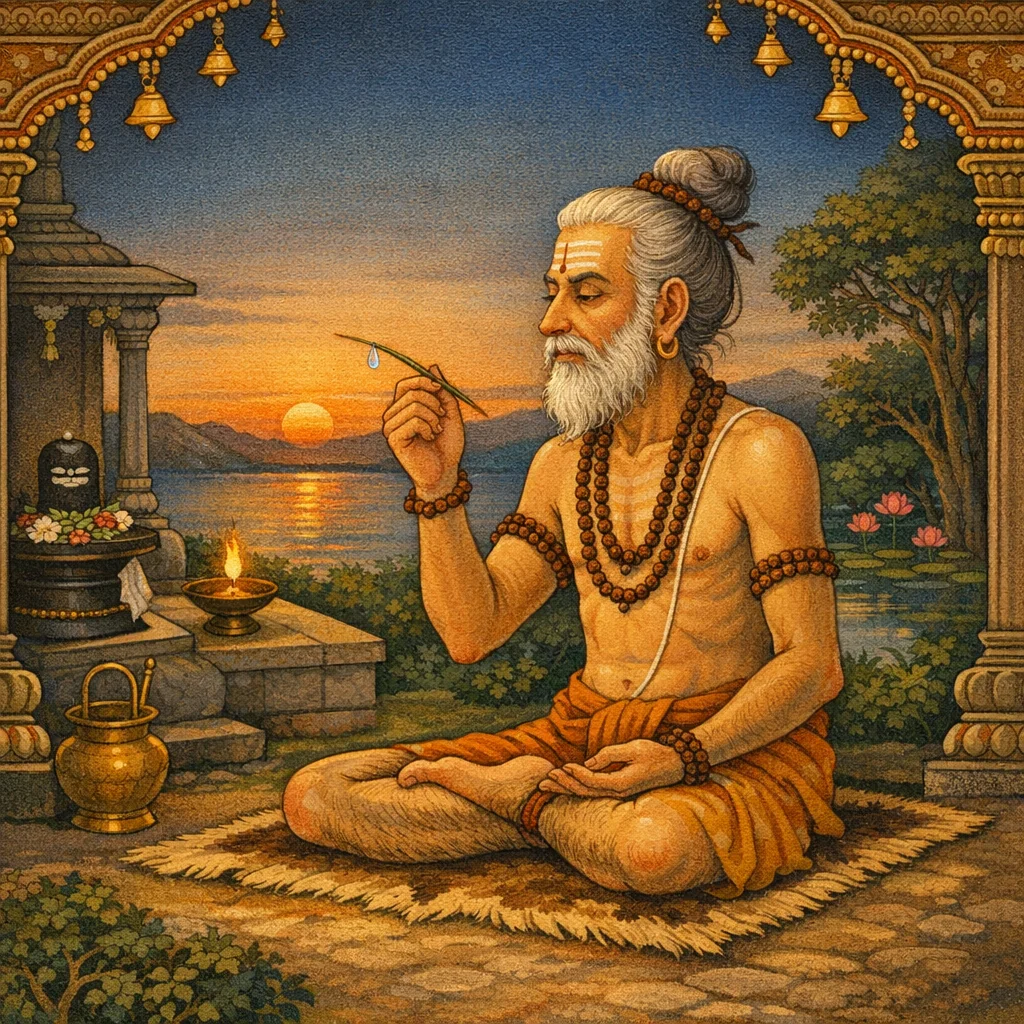
This adhyāya, spoken in a Śaiva revelatory voice (Īśvara uvāca), places the shrine of Tṛṇabindvīśvara in the western part of the Prabhāsa kṣetra, describing it as lying within a measure of five dhanus. In this way it serves as a brief māhātmya, marking the site and affirming its sacred potency. It then grounds the shrine’s holiness in the ascetic career of the sage Tṛṇabindu. For many years he performed severe tapas, following a monthly discipline of drinking only a single drop of water from the tip of kuśa grass, embodying restraint and intense devotion. Through sustained worship and propitiation of Īśvara, he attains the supreme siddhi in the auspicious Prābhāsika field, establishing both the shrine’s glory and an ethical model of ascetic bhakti.
Shlokas
Verse 1
ईश्वर उवाच । तस्यैव पश्चिमे भागे धनुपां पञ्चके स्थितम् । तृणबिन्द्वीश्वरंनाम तीव्रभक्त्या प्रतिष्ठितम्
Īśvara said: In that very region’s western quarter, at a distance of five dhanus, stands the shrine named Tṛṇabindvīśvara, established through intense devotion.
Verse 2
कृत्वा महत्तपो देवि तृणबिंदुमु नीश्वरः । मासिमासि कुशाग्रेण जलबिंदुं निपीय वै
O Goddess, having undertaken great austerity, the sage-lord Tṛṇabindu—month after month—indeed drank a single drop of water from the tip of a kuśa blade.
Verse 3
संवत्सराण्यनेकानि एवमाराध्य चेश्वरम् । संप्राप्तं परमां सिद्धिं क्षेत्रे प्राभासिके शुभे
Thus, having worshipped the Lord for many years in this very manner, one attains the supreme spiritual accomplishment in the auspicious Prabhāsa sacred field.
Verse 138
इति श्रीस्कांदे महापुराण एकाशीतिसाहस्र्यां संहितायां सप्तमे प्रभासखण्डे प्रथमे प्रभासक्षेत्रमाहात्म्ये तृणबिंद्वीश्वरमाहात्म्य वर्णनंनामाष्टात्रिंशदुत्तरशततमोऽध्यायः
Thus ends, in the revered Skanda Mahāpurāṇa—within the compilation of eighty-one thousand verses, in the seventh division called the Prabhāsa Khaṇḍa, in the first part titled the Māhātmya of Prabhāsa-kṣetra—the one-hundred-and-thirty-eighth chapter, named “The Description of the Greatness of Tṛṇabindvīśvara.”