Adhyaya 135
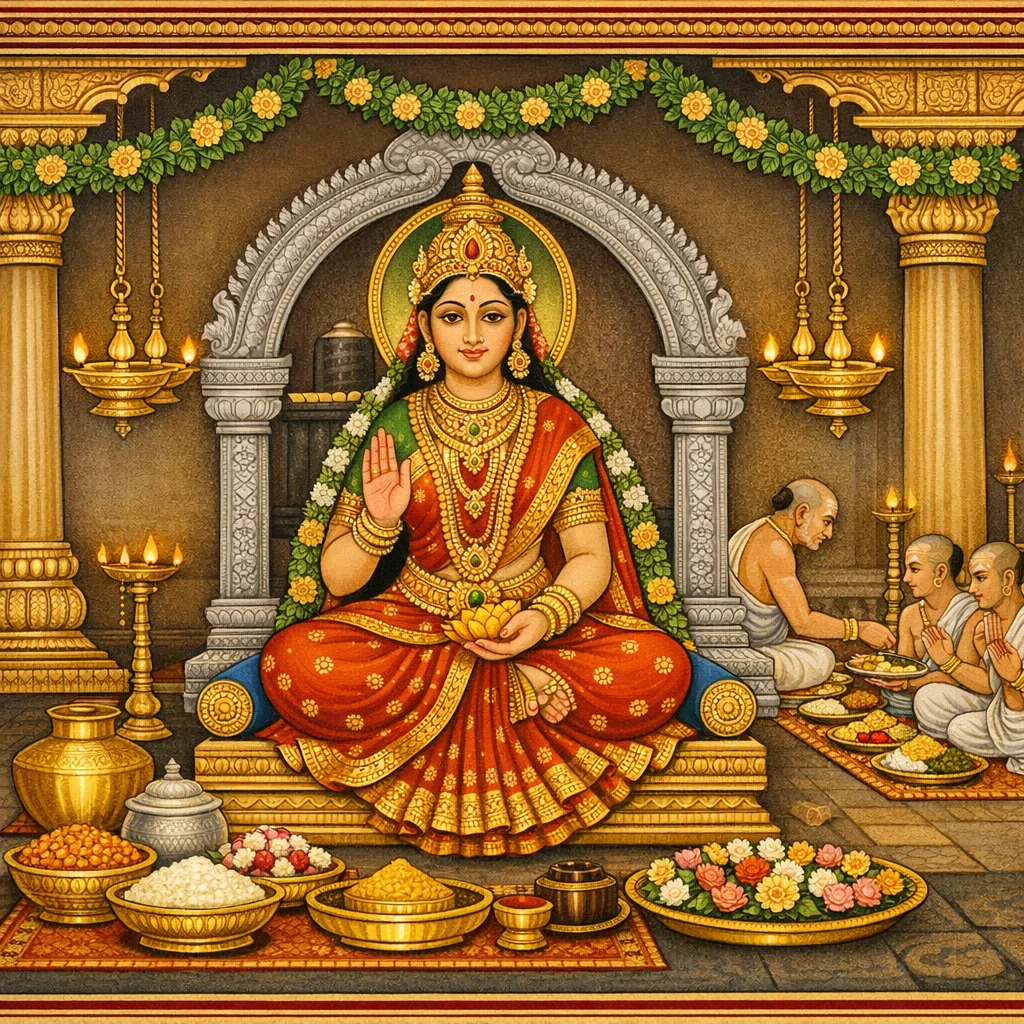
This chapter sets forth the theological and ritual portrait of a protective Goddess: known in the Dvāpara-yuga as Śītalā, and in the Kali-yuga re-identified as Kaliduḥkhāntakāriṇī, “the one who ends the sufferings of Kali.” Īśvara describes her abiding presence at Prabhāsa and teaches a practical devotional regimen to relieve childhood illnesses and eruptive disorders (visphoṭa), while calming the disturbances that accompany them. A clear sequence of observances is prescribed: behold the Devī in her shrine-space; prepare a measured pacifying offering of crushed masūra (lentils); place it before Śītalā for the welfare of children; and perform supporting rites such as śrāddha and feeding brāhmaṇas. Fragrant offerings—camphor, flowers, musk, and sandal—are detailed, along with ghṛta-pāyasa (ghee rice-pudding) as naivedya. The observance concludes with the instruction that a husband and wife should don the offered items (paridhāpana). Finally, on the bright ninth (śukla-navamī), offering a sacred bilva-garland is said to bestow “all accomplishments” (sarva-siddhi), serving as the chapter’s ritual culmination and implied fruit.
Shlokas
Verse 1
ईश्वर उवाच । तत्रैव संस्थितां पश्येद्देवीं दुःखांतकारिणीम् । शीतलेति पुरा ख्याता युगे द्वापरसंज्ञिते । कलौ पुनः समाख्यातां कलिदुःखान्तकारिणीम्
Īśvara said: “Right there one should behold the Goddess who brings suffering to an end. In the age called Dvāpara she was formerly renowned as Śītalā; but in Kali she is again proclaimed as the Ender of Kali’s sorrows.”
Verse 2
शीतलं कुरुते देहं बालानां रोगवर्जितम् । पूजिता भक्तिभावेन तेन सा शीतला स्मृता
When worshipped with devotion, she makes the bodies of children cool and free from disease; therefore she is remembered as Śītalā, the Cooling Goddess.
Verse 3
विस्फोटानां प्रशांत्यर्थं बालानां चैव कारणात् । मानेन मापितान्कृत्वा मसूरांस्तत्र कुट्टयेत्
For the pacification of eruptive diseases, and for the sake of children, one should measure out lentils (masūrā) by a standard measure and then pound them there as preparation for an offering.
Verse 4
शीतलापुरतो दत्त्वा बालाः सन्तु निरामयाः । विस्फोटचर्चिकादीनां वातादीनां शमो भवेत्
After giving it before Śītalā, may the children be free from illness; and may eruptive afflictions, skin-diseases such as carcikā, and disturbances such as vāta be pacified.
Verse 5
श्राद्धं तत्रैव कुर्वीत ब्राह्मणांस्तत्र भोजयेत्
There itself one should perform the śrāddha rite, and there itself one should feed the brāhmaṇas.
Verse 6
कर्पूरं कुसुमं चैव मृगनाभिं सुचन्दनम् । पुष्पाणि च सुगन्धानि नैवेद्यं घृतपायसम् । निवेद्य देव्यै तत्सर्वं दंपत्योः परिधापयेत्
Offer to the Goddess camphor, blossoms, musk (mṛganābhi), fine sandalwood, fragrant flowers, and naivedya—pāyasa (rice-pudding) with ghee; having offered all this, one should then have the couple don the blessed items and garlands.
Verse 7
नवम्यां शुक्लपक्षे तु मालां विल्वमयीं शुभाम् । भक्त्या निवेद्य तां देव्यै सर्वसिद्धिमवाप्नुयात्
On the ninth lunar day of the bright fortnight (śukla-pakṣa), whoever devoutly offers the Goddess an auspicious garland made of bilva leaves attains complete success (sarva-siddhi).
Verse 135
इति श्रीस्कांदे महापुराण एकाशीतिसाहस्र्यां संहितायां सप्तमे प्रभासखण्डे प्रथमे प्रभासक्षेत्रमाहात्म्ये दुःखान्तकारिणीतिलागौरीमाहात्म्यवर्णनंनाम पञ्चत्रिंदुत्तरशततमोऽध्यायः
Thus, in the holy Skanda Mahāpurāṇa, in the Ekāśītisāhasrī Saṃhitā, in the seventh—Prabhāsa Khaṇḍa—within the first division, the Prabhāsakṣetra Māhātmya, concludes the chapter entitled “The Description of the Greatness of Duḥkhāntakāriṇī Tilāgaurī,” being Chapter 135.