Adhyaya 133
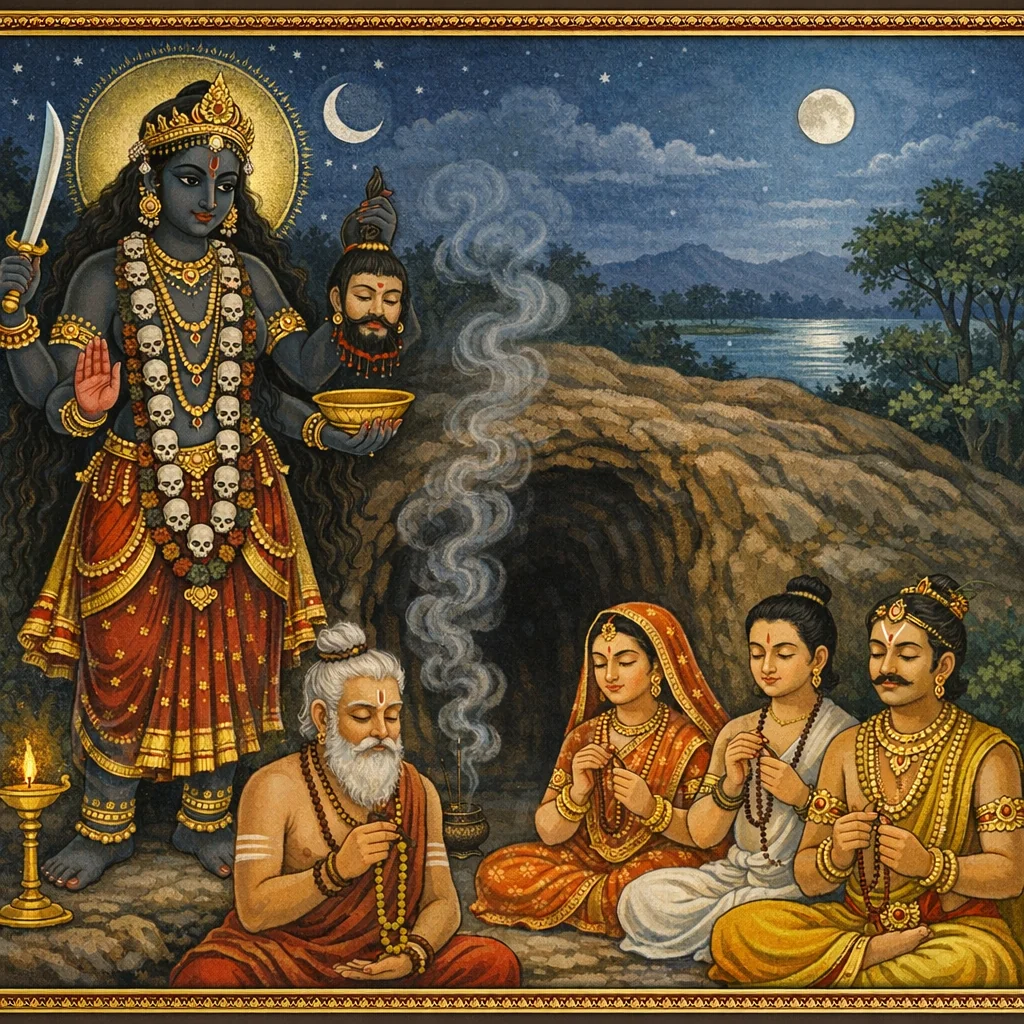
The chapter is cast as Īśvara instructing Devī about the mighty goddess-manifestation Mahākālī, said to abide at a great pīṭha marked by an opening to the underworld (pātāla-vivara). Mahākālī is praised as the one who pacifies suffering and destroys hostility. It then lays out a ritual and ethical discipline: Mahākālī is to be worshipped on the night of Kṛṣṇāṣṭamī with prescribed offerings—fragrances, flowers, incense, and bali. A women-centered observance (vrata) is indicated, to be undertaken with focused resolve, including regulated worship for a full year during the bright fortnight and the rule-bound gifting of fruits to a brāhmaṇa. Dietary restraints are specified while maintaining the Gaurī-vrata, with certain pulses and grains to be avoided at night. The phalaśruti promises household prosperity—wealth and grain that do not diminish—and relief from misfortune across many births. The chapter concludes by extolling the site as a pīṭha that grants mantra-siddhi, recommending a vigil on the ninth day of the bright half of Āśvina, with night japa performed in a calm, steady mind for the attainment of one’s desired goal.
Shlokas
Verse 1
ईश्वर उवाच । तत्रैव संस्थिता देवि महाकालीति विश्रुता । अधः स्थिते महापीठे पातालविवरान्विते
Īśvara said: “There itself, O Goddess, abides she who is famed as Mahākālī—at the great sacred seat below, endowed with an opening that leads down toward Pātāla.”
Verse 2
सर्वदुःखप्रशमनी सर्वशत्रुक्षयंकरी । पूजनीया विधानेन कृष्णाष्टम्यां महानिशि । गन्धैः पुष्पैस्तथा धूपैः क्रव्यैर्बलिभिरेव च
She who pacifies all sorrow and brings about the destruction of all enemies should be worshipped according to rule on the Aṣṭamī of the dark fortnight, in the great night, with fragrances, flowers, incense, and also with meat-offerings and bali offerings.
Verse 3
फलतृतीयां नारी च कुर्याद्वै तत्र भाविता । वर्षमेकं सिते पक्षे देवीं पूज्य विधानतः । फलानि ब्राह्मणे देयान्येव नूनं विधानतः
A woman, with focused intent, should observe there the rite of Phala-tṛtīyā. For one year, in the bright fortnight, she should worship the Goddess according to rule; and fruits should certainly be given to a brāhmaṇa in the prescribed manner.
Verse 4
एतानि वर्जयेन्नक्ते ह्यन्नानि सुरसुन्दरि । निष्पावा आढकी मुद्गा माषाश्चैव कुलित्थकाः
O fair one, in the evening-meal observance (nakta) these food-grains should be avoided: niṣpāva beans, āḍhakī, mudga (green gram), māṣa (black gram), and also kulittha (horse-gram).
Verse 5
मसूरा राजमाषाश्च गोधूमास्त्रिपुटास्तथा । चणका वर्तला वापि मकुष्ठाश्चैवमादयः
Also to be avoided are lentils (masūra), rājamāṣa beans, wheat (godhūma), tripuṭa, chickpeas (caṇaka), vartalā as well, and makuṣṭha and other such items.
Verse 6
न भक्ष्यास्तावत्ते देवि यावद्गौरीव्रतं चरेत् । तस्याः पुण्यफलं वक्ष्ये कथ्यमानं शृणुष्व मे
O Goddess, these are not to be eaten so long as one observes the Gaurī-vrata. Now hear from me as I declare the meritorious fruit of that sacred observance.
Verse 7
धनं धान्यं गृहे तस्या न कदाचित्क्षयं व्रजेत् । दुःखिता दुर्भगा दीना सप्त जन्मानि नो भवेत्
In her household, wealth and grain never fall into decline. She will not become sorrowful, ill-fated, or destitute—even for seven births.
Verse 8
महाकालीव्रतं प्रोक्तं देव्या माहात्म्यसंयुतम् । कृतं पातकनाशाय सर्वकामसमृद्धये
Thus has the vow of Mahākālī been declared, joined with the Goddess’s sacred greatness. It is undertaken to destroy sins and to bring fulfillment and abundance of all desired aims.
Verse 9
एवं देवि समाख्यातं महाकालीमहोदयम् । क्षेत्रपीठं महादेवि मन्त्रसिद्धिप्रदायकम्
Thus, O Goddess, has the great manifestation of Mahākālī been explained—this sacred seat within the holy field, O Mahādevī, bestowing success in mantra-practice.
Verse 10
आश्वयुक्छुक्लपक्षे तु नवम्यां तत्र जागृयात् । पीठे पूजाबलिं दत्त्वा मन्त्रं कामं जपन्निशि । सौम्यचित्तः समाप्नोति वांछितां सिद्धिमुत्तमाम्
On the ninth lunar day in the bright fortnight of Āśvayuja, one should keep vigil there. Having offered worship and a bali-offering at the sacred seat, and chanting the desired mantra through the night, with a tranquil mind one attains the supreme accomplishment one seeks.
Verse 133
इति श्रीस्कान्दे महापुराण एकाशीतिसाहस्र्यां संहितायां सप्तमे प्रभासखण्डे प्रथमे प्रभासक्षेत्रमाहात्म्ये महाकालीमाहात्म्यवर्णनंनाम त्रयस्त्रिंशदुत्तरशततमोऽध्यायः
Thus ends, in the holy Skanda Mahāpurāṇa—within the Ekāśītisāhasrī Saṃhitā, in the seventh book, Prabhāsa Khaṇḍa, in the first division Prabhāsa-kṣetra Māhātmya—the chapter entitled “Narration of the Greatness of Mahākālī,” being Chapter 133.