Adhyaya 131
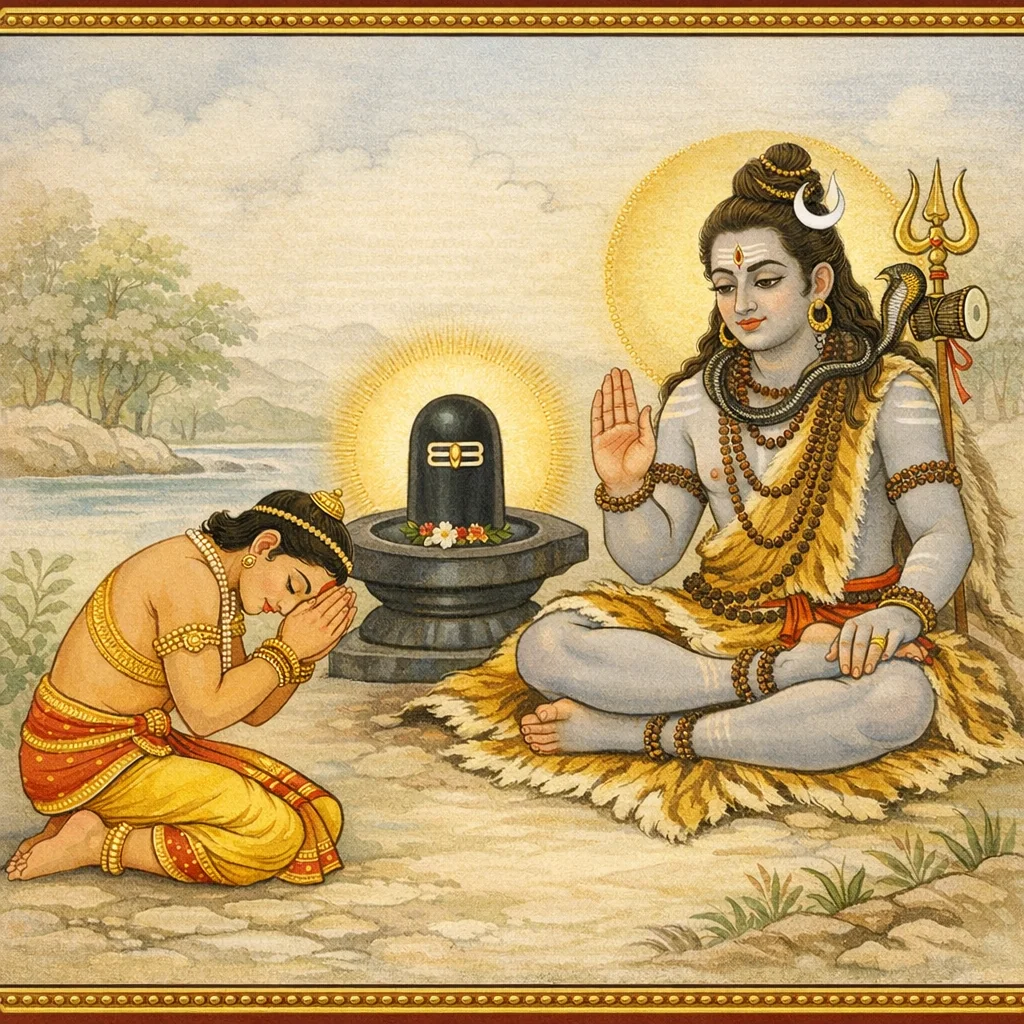
The chapter unfolds as a theological dialogue: Śrī Devī asks how the liṅga called “Nāleśvara” is also known as “Dhruveśvara,” and Īśvara recounts its māhātmya, the origin-and-glory narrative. Dhruva, son of King Uttānapāda, comes to the eminent Prabhāsa-kṣetra, performs fierce austerities, establishes Mahādeva, and worships with unwavering devotion for a thousand divine years. Īśvara then imparts Dhruva’s stotra, shaped by repeated refuge-formulas—“taṃ śaṃkaraṃ śaraṇadaṃ śaraṇaṃ vrajāmi”—praising Śiva’s cosmic sovereignty and famed deeds. A phalaśruti declares that disciplined, pure recitation of the hymn leads to attainment of Śiva-loka. Pleased, Śiva grants Dhruva divine vision and offers boons reaching to the highest cosmic stations; Dhruva refuses status-based rewards and asks only for pure bhakti and Śiva’s abiding presence in the installed liṅga. Īśvara confirms the gift, links Dhruva’s “fixed” station with a supreme abode, and prescribes worship on specific lunar dates (Śrāvaṇa amāvāsyā or Āśvayuja paurṇamāsī), promising Aśvamedha-equivalent merit and varied worldly and otherworldly fruits for worshippers and listeners.
Shlokas
Verse 1
श्रीदेव्युवाच । यदेतद्भवता प्रोक्तं नालेश्वरमिति श्रुतम् । ध्रुवेश्वरेति तल्लिंगं कथं वै संबभूव ह
The Goddess said: “What you have spoken of is heard as ‘Nāleśvara.’ How did that liṅga come to be known as ‘Dhruveśvara’?”
Verse 2
ईश्वर उवाच । शृणु देवि प्रवक्ष्यामि ध्रुवेश्वरमहोदयम् । यच्छ्रुत्वा मानवो देवि मुच्यते भवबंधनात्
Īśvara said: “Listen, O Devī; I shall explain the great glory of Dhruveśvara. Hearing it, O Devī, a human being is freed from the bondage of worldly becoming.”
Verse 3
उत्तानपादनृपतेः पुत्रोऽभूद्ध्रुवसंज्ञितः । महात्मा ज्ञानसंपन्नः सर्वज्ञः प्रियदर्शनः
From King Uttānapāda was born a son named Dhruva—great-souled, endowed with true knowledge, wise in all things, and pleasing to behold.
Verse 4
स कदाचित्समासाद्य प्रभासं क्षेत्रमुत्तमम् । तताप विपुलं देवि तपः परमदारुणम्
At one time, having reached Prabhāsa—the supreme sacred field—he performed vast austerities, O Goddess, exceedingly severe.
Verse 5
दिव्यं वर्षसहस्रं तु प्रतिष्ठाप्य महेश्वरम् । संपूजयति सद्भक्त्या स्तौति स्तोत्रैः पृथग्विधैः
For a divine thousand years, having established Maheśvara, he worshipped Him with true devotion and praised Him with various hymns.
Verse 6
तत्स्तोत्रं ते प्रवक्ष्यामि येनाहं तुष्टिमागतः
That very hymn I shall proclaim to you—by it I have attained satisfaction and delight.
Verse 7
ध्रुव उवाच । कैलासतुंगशिखरं प्रविकम्प्यमानं कैलासशृंगसदृशेन दशाननेन । यः पादपद्मपरिपीडनया दधार तं शंकरं शरणदं शरणं व्रजामि
Dhruva said: When the lofty peak of Kailāsa was made to tremble by the ten-faced one, like a mountain-crest, He who held it down by the pressure of His lotus-foot—to that Śaṅkara, giver of refuge, I go for refuge.
Verse 8
येनासुराश्चापि दनोश्च पुत्रा विद्याधरोरगगणैश्च वृताः समग्राः । संयोजिता न तु फलं फलमूलमुक्तास्तं शंकरं शरणदं शरणं व्रजामि
He who brought even the Asuras—sons of Danu—together with all the hosts of Vidyādharas and Nāgas, into disciplined accord, yet did not free them from the fruits of karma, since they had not renounced the “fruit and root” of desire—to that Śaṅkara, giver of refuge, I go for refuge.
Verse 9
यस्याखिलं जगदिदं वशवर्ति नित्यं योऽष्टाभिरेव तनुभिर्भुवनानि भुंक्ते । यत्कारणं परमकारणकारणानां तं शंकरं शरणदं शरणं व्रजामि
He under whose power this entire universe ever abides; who, in eight very forms, pervades and governs the worlds; who is the Cause—the supreme cause of all causes: to that Śaṅkara, giver of refuge, I go for refuge.
Verse 10
यः सव्यपाणिकमलाग्रनखेन देवस्तत्पंचमं च सहसैव पुरातिरुष्टः । ब्राह्मं शिरस्तरुणपद्मनिभं चकर्त तं शंकरं शरणदं शरणं व्रजामि
The God who, once angered, with the tip of the nail of His lotus-like left hand, instantly severed that “fifth”—the Brahmā-like head, like a tender lotus: to that Śaṅkara, giver of refuge, I go for refuge.
Verse 11
यस्य प्रणम्य चरणौ वरदस्य भक्त्या श्रुत्वा च वाग्भिरमलाभिरतंद्रिताभिः । दीप्तस्तमांसि नुदति स्वकरैर्विवस्वांस्तं शंकरं शरणदं शरणं व्रजामि
I go for refuge to Śaṅkara, giver of refuge—he whose boon-bestowing feet, when bowed to with devotion, and whose name, when heard through pure and tireless words of praise, drives away darkness like the radiant sun with its rays.
Verse 12
यः पठेत्स्तवमिदं रुचिरार्थं मानवो ध्रुवकृतं नियतात्मा । विप्रसंसदि सदा शुचिसिद्धः स प्रयाति शिवलोकमनादिम्
Whoever, self-controlled, recites this hymn of lovely meaning composed by Dhruva—ever pure and accomplished in the assembly of the learned—attains the beginningless world of Śiva.
Verse 13
तस्यैवं स्तुवतो देवि तुष्टोऽहं भावितात्मनः । पूर्णे वर्षसहस्रांते ध्रुवस्याह महात्मनः
O Goddess, thus praised by that purified-souled one, I became pleased. When a full thousand years had passed, I spoke to the great-souled Dhruva.
Verse 14
पुत्र तुष्टोऽस्मि भद्रं ते जातस्त्वं निर्मलोऽधुना । दिव्यं ददामि ते चक्षुः पश्य मां विगतज्वरः
“Child, I am pleased—may good be yours. You have now become pure. I grant you divine sight; behold Me, free from fevered distress.”
Verse 15
यच्च ते मनसा किञ्चित्कांक्षितं फलमुत्तमम् । तत्सर्वं ते प्रदास्यामि ब्रूहि शीघ्रं ममाग्रतः
“Whatever supreme boon you have desired in your mind—tell it quickly before Me. I shall grant you all of it.”
Verse 16
ब्राह्म्यं वा वैष्णवं शाक्रं पदमन्यत्सुदुर्लभम् । ददामि नात्र संदेहो भक्त्या संप्रीणितस्तव
“Whether the station of Brahmā, or of Viṣṇu, or of Indra—or any other most difficult-to-attain state—I grant it; there is no doubt, for I am delighted by your devotion.”
Verse 17
ध्रुव उवाच । ब्राह्म्यं वैष्णवं माहेन्द्रं पदमावृत्तिलक्षणम् । विदितं मम तत्सर्वं मनसाऽपि न कामये
Dhruva said: “The realms of Brahmā, of Viṣṇu, and of great Indra—states marked by return (to rebirth)—all these are known to me; I do not desire them even in my mind.”
Verse 18
यदि तुष्टोऽसि मे देव भक्तिं देहि सुनिर्मलाम् । अस्मिंल्लिंगे सदा वासं कुरु देव वृषध्वज
“If You are pleased with me, O Lord, grant me utterly pure devotion. And, O Bull-bannered God, make Your abode forever in this Liṅga.”
Verse 19
ईश्वर उवाच । इति यत्प्रार्थितं सर्वं तद्दत्तं सर्वमेव हि । स्थानं च तस्य तद्ध्रौव्यं तद्विष्णोः परमं पदम्
Īśvara said: “Thus, everything that was prayed for has indeed been granted in full. And that steadfast station of his—‘Dhrauvya’—is that supreme abode of Viṣṇu.”
Verse 20
श्रावणस्य त्वमावास्यां यस्तल्लिंगं प्रपूजयेत् । आश्वयुक्पौर्णमास्यां वा सोऽश्वमेधफलं लभेत्
Whoever worships that Liṅga on the new-moon day of Śrāvaṇa—or on the full-moon day of Āśvayuja—obtains the merit equivalent to an Aśvamedha sacrifice.
Verse 21
अपुत्रो लभते पुत्रं धनार्थी लभते धनम् । रूपवान्सुभगो भोगी सर्वशास्त्रविशारदः । हंसयुक्तविमानेन रुद्रलोके महीयते
The childless gains a son; the seeker of wealth gains wealth. One becomes handsome, fortunate, joyful in enjoyment, and learned in all the śāstras; and, borne in a swan-yoked celestial chariot, one is honored in Rudra’s world.
Verse 22
असुरसुरगणानां पूजितस्य ध्रुवस्य कथयति कमनीयां कीर्तिमेतां शृणोति । सकलसुखनिधानरुद्रलोकं सुशांतः सुरगणदनुनाथैरर्चितं यात्यनंतम्
Whoever narrates or listens to this lovely renown of Dhruva—honored by hosts of gods and asuras—becomes deeply peaceful and attains the boundless Rudra-world, a treasury of all joys, revered by the lords of the gods and of the Danu race.
Verse 131
इति श्रीस्कांदे महापुराण एका शीतिसाहस्र्यां संहितायां सप्तमे प्रभासखण्डे प्रथमे प्रभासक्षेत्रमाहात्म्ये ध्रुवेश्वरमाहात्म्यवर्णनंनामैकत्रिंशदुत्तरशततमो ऽध्यायः
Thus, in the revered Skanda Mahāpurāṇa—within the compilation of eighty-one thousand verses—this is the one-hundred-and-thirty-first chapter, in the seventh book called the Prabhāsa Khaṇḍa, within the first division titled the Māhātmya of Prabhāsa-kṣetra, known as “The Description of the Greatness of Dhruveśvara.”