Adhyaya 128
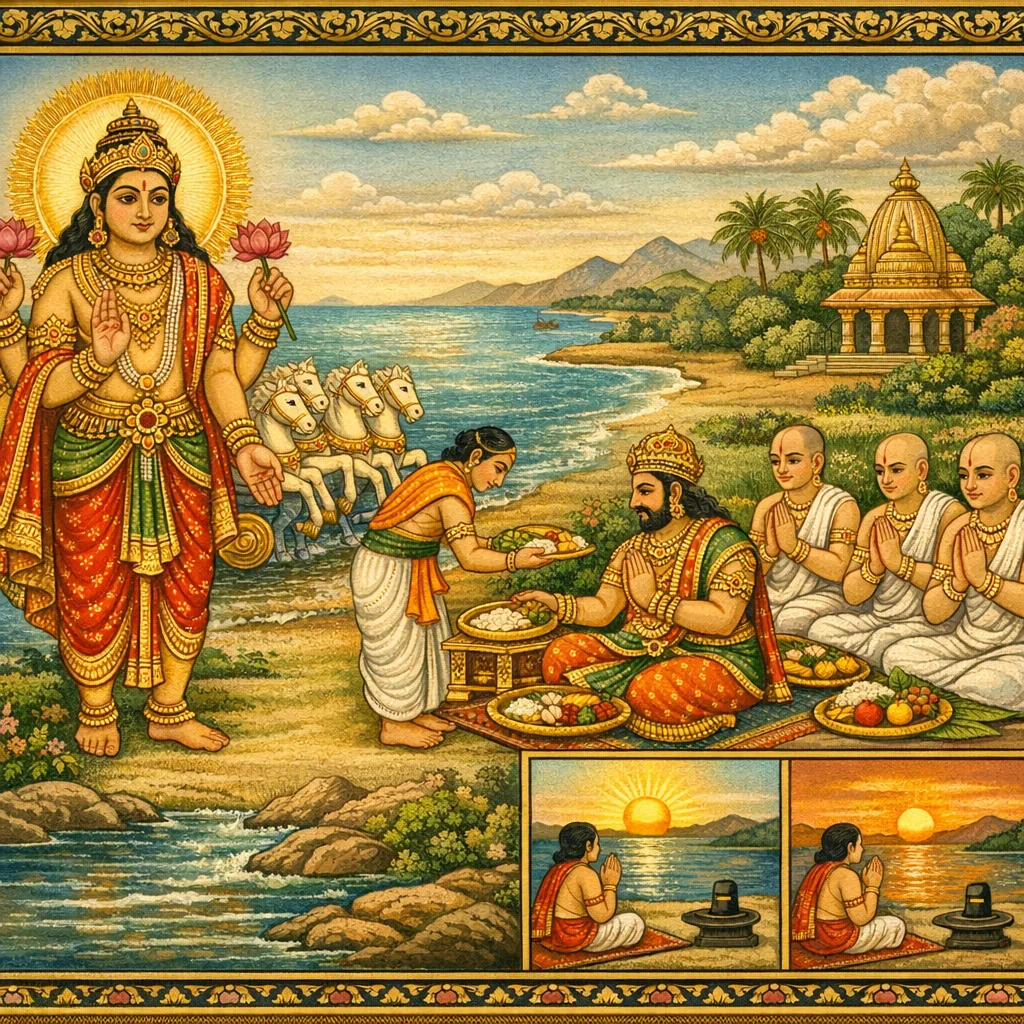
Īśvara instructs Devī about a renowned solar shrine called Sāgarāditya in Prabhāsa-kṣetra, locating it by directional markers among nearby sacred spots (west of Bhairaveśa; near Kāmeśa toward the southern/agneya quarter). The shrine’s sanctity is affirmed through royal precedent: King Sagara, famed in Purāṇic tradition, is said to have worshiped Sūrya there, and the vast sea and its naming are invoked to deepen the site’s mythic-historical significance. The chapter then gives practical observance for Māgha in the bright fortnight: maintain restraint and purity, fast on the sixth lunar day, sleep near the deity, rise on the seventh for devotional worship, and feed Brahmins with honest, untainted giving. Sūrya is praised as the foundation of the three worlds and the supreme divine principle, with meditation taught through seasonal color-forms of the Sun. Finally, a concise stava of twenty-one secret and pure epithets is taught as an alternative to a full thousand-name recitation; chanting it at dawn and sunset grants release from sins, prosperity, and attainment of the solar realm. Hearing this māhātmya is said to relieve suffering and destroy even great sins.
Shlokas
Verse 1
ईश्वर उवाच । ततो गच्छेन्महादेवि सागरादित्यमुत्तमम् । भैरवेशात्पश्चिमतो रुद्रान्मृत्युञ्जयात्तथा
Īśvara said: “Then, O great goddess, one should go to the excellent Sāgarāditya. It lies to the west of Bhairaveśa, and likewise to the west of Rudra Mṛtyuñjaya.”
Verse 2
कामेशाद्दक्षिणाग्नेये नातिदूरे व्यवस्थितम् । सर्व रोगप्रशमनं दारिद्र्यौघविघातकम् । प्रतिष्ठितं महादेवि सगरेण महात्मना
To the south-east of Kāmeśa, not far away, stands that holy place which pacifies all diseases and strikes down torrents of poverty. O Mahādevī, it was established by the great-souled King Sagara.
Verse 3
षष्टिपुत्रसहस्राणि यः प्रापारातिसूदनः । सूर्यं तत्र समाराध्य सगरः पृथिवीपतिः
O slayer of enemies, King Sagara, lord of the earth, worshipped the Sun there and obtained sixty thousand sons.
Verse 4
य एष सागरो देवि योजनायतविस्तरः । आयतोऽशीतिसाहस्रं योजनानां प्रकीर्तितः
O Devī, this very ocean, vast in yojana-measured expanse, is proclaimed to extend for eighty thousand yojanas.
Verse 5
अस्मिन्मन्वन्तरे क्षिप्तः सागरैश्च चतुर्दिशम् । तस्येदं कीर्तितं देवि नाम सागरसंज्ञितम्
O Goddess, in this Manvantara he was cast forth and spread by the oceans in the four directions; therefore this place is celebrated by the name “Sāgara” (Ocean).
Verse 6
यस्याद्यापीह गायन्ति पुराणे प्रथितं यशः । तेनायं स्थापितो देवो भास्करो वारितस्करः
Even today people sing here of his fame, renowned in the Purāṇas; by him the deity Bhāskara (the Sun) was installed, the one who restrains thieves and removes theft.
Verse 7
तं दृष्ट्वा न जडो नान्धो न दरिद्रो न दुःखितः । न चैवेष्टवियोगी स्यान्न रोगी नैव पापकृत्
Having beheld Him, one is not dull-witted, not blind, not poor, not afflicted; nor does one suffer separation from the beloved—one is not diseased, and does not become a doer of sin.
Verse 8
माघे मासि महादेवि सिते पक्षे जितेन्द्रियः । षष्ठ्यामुपोषितो भूत्वा रात्रौ तस्याग्रतः स्वपेत्
O great Goddess, in the month of Māgha, in the bright fortnight, having mastered the senses, let one fast on the sixth lunar day and at night sleep before Him (Bhāskara, the Sun).
Verse 9
विबुद्धस्त्वथ सप्तम्यां भक्त्या भानुं समर्चयेत् । ब्राह्मणान्भोजयेद्भक्त्या वित्तशाठ्यं विवर्जयेत्
Then, rising at dawn on the seventh lunar day, one should worship Bhānu (the Sun) with devotion; and with devotion feed Brāhmaṇas, abandoning deceit and stinginess regarding wealth.
Verse 10
सुतप्तेनेह तपसा यज्ञैर्वा बहुदक्षिणैः । तां गतिं न नरा यान्ति यां गताः सूर्यमाश्रिताः
Neither by severe austerities performed here, nor by sacrifices endowed with abundant fees, do people attain that state which is attained by those who take refuge in the Sun.
Verse 11
भक्त्या तु पुरुषैः पूजा कृता दूर्वांकुरैरपि । भानुर्ददाति हि फलं सर्वयज्ञैः सुदुर्लभम्
Even if people worship with devotion using only sprouts of dūrvā grass, Bhānu indeed grants a fruit exceedingly difficult to obtain even through all sacrifices.
Verse 12
तस्मात्सर्वप्रयत्नेन सूर्यमेवाभिपूजयेत् । जनकादयो यथा सिद्धिं गता भानुं प्रपूज्य च
Therefore, with every effort one should worship Sūrya alone; just as Janaka and others attained perfection by duly worshipping Bhānu.
Verse 13
सर्वात्मा सर्वलोकेशो देवदेवः प्रजापतिः । सूर्य एव त्रिलोकस्य मूलं परमदैवतम्
Sūrya alone is the Self of all, the Lord of all worlds, the God of gods, the Prajāpati; He is the root of the three worlds and the supreme divinity.
Verse 14
वसन्ते कपिलः सूर्यो ग्रीष्मे काञ्चनसप्रभः । श्वेतवर्णश्च वर्षासु पांडुः शरदि भास्करः
In spring the Sun is tawny-hued; in summer He shines with a golden radiance; in the rains He appears white in color; and in autumn Bhāskara is pale-bright.
Verse 15
हेमन्ते ताम्रवर्णस्तु शिशिरे लोहितो रविः । एवं वर्णविशेषेण ध्यायेत्सूर्यं यथाक्रमम्
In the Hemanta season the Sun is to be meditated upon as copper-hued, and in Śiśira as red. Thus, with these specific color-forms, one should contemplate Sūrya in the proper seasonal order.
Verse 16
पूजयित्वा विधानेन यतात्मा संयतेन्द्रियः । पठेन्नामसहस्रं तु सर्वपातकनाशनम्
Having worshipped according to rule—self-controlled and with senses restrained—one should recite the thousand names, which destroy all sins.
Verse 17
देव्युवाच । नाम्नां सहस्रं मे ब्रूहि प्रसादाञ्छंकर प्रभो । तुल्यं नामसहस्रस्य किमप्यन्यत्प्रकीर्तय
The Goddess said: “Out of grace, O Lord Śaṅkara, tell me the thousand names. And proclaim also something else that is equal in merit to a thousand-name litany.”
Verse 18
ईश्वर उवाच । अलं नामसहस्रेण पठस्वैवं शुभं स्तवम् । यानि गुह्यानि नामानि पवित्राणि शुभानि च । तानि ते कीर्तयिष्यामि प्रयत्नादवधारय
Īśvara said: “Enough of the thousand names—recite this auspicious hymn instead. The secret names, pure and beneficent, I shall proclaim to you; grasp them with careful attention.”
Verse 19
विकर्तनो विवस्वांश्च मार्तण्डो भास्करो रविः । लोकप्रकाशकः श्रीमांल्लोकचक्षुर्ग्रहेश्वरः
Vikartana, Vivasvān, Mārtaṇḍa, Bhāskara, Ravi—he is the illuminator of the worlds, the glorious one, the eye of the world, and the lord of the planets.
Verse 20
लोकसाक्षी त्रिलोकेशः कर्त्ता हर्त्ता तमिस्रहा । तपनस्तापनश्चैव शुचिः सप्ताश्ववाहनः
He is the witness of the world, the lord of the three worlds, the maker and the withdrawer, the destroyer of darkness; Tapanā and Tāpana, the pure one, whose chariot is drawn by seven horses.
Verse 21
गभस्तिहस्तो ब्रह्मा च सर्वदेवनमस्कृतः । एकविंशतिरित्येष स्तव इष्टो महात्मनः
Gabhastihasta, Brahmā, and the one saluted by all the gods—this hymn thus consists of twenty-one (names) and is beloved of the great-souled.
Verse 22
शरीरारोग्यदश्चैव धनवृद्धियशस्करः । स्तवराज इति ख्यातस्त्रिषु लोकेषु विश्रुतः
It bestows bodily health, increases wealth, and brings fame. It is renowned as the ‘King of Hymns’, celebrated throughout the three worlds.
Verse 23
यश्चानेन महादेवि द्वे संध्येऽस्तमनोदये । स्तौत्यर्कं प्रयतो भूत्वा सर्वपापैः प्रमुच्यते । सर्वकामसमृद्धात्मा सूर्यलोकं स गच्छति
O great Goddess, whoever, becoming disciplined and devout, praises the Sun with this hymn at the two twilight-junctures—sunset and sunrise—is freed from all sins. Fulfilled in every desire, he goes to the world of Sūrya.
Verse 24
इत्येवं कथितं देवि माहात्म्यं सागरार्कजम् । श्रुतं दुःखौघशमनं महापातकनाशनम्
Thus, O Goddess, the greatness of Sāgarārka has been declared. When heard, it pacifies torrents of sorrow and destroys great sins.
Verse 128
इति श्रीस्कांदे महापुराण एकाशीतिसाहस्र्यां संहितायां सप्तमे प्रभासखण्डे प्रथमे प्रभासक्षेत्रमाहात्म्ये सागरादित्यमाहात्म्यवर्णनंनामाष्टाविंशत्युत्तरशततमोऽध्यायः
Thus ends, in the revered Skanda Mahāpurāṇa—within the eighty-one-thousand-verse compendium—Book Seven, the Prabhāsa Khaṇḍa, and within it the first division, the Prabhāsa-kṣetra Māhātmya, the one-hundred-and-twenty-eighth chapter entitled “The Description of the Greatness of Sāgarāditya.”