Adhyaya 125
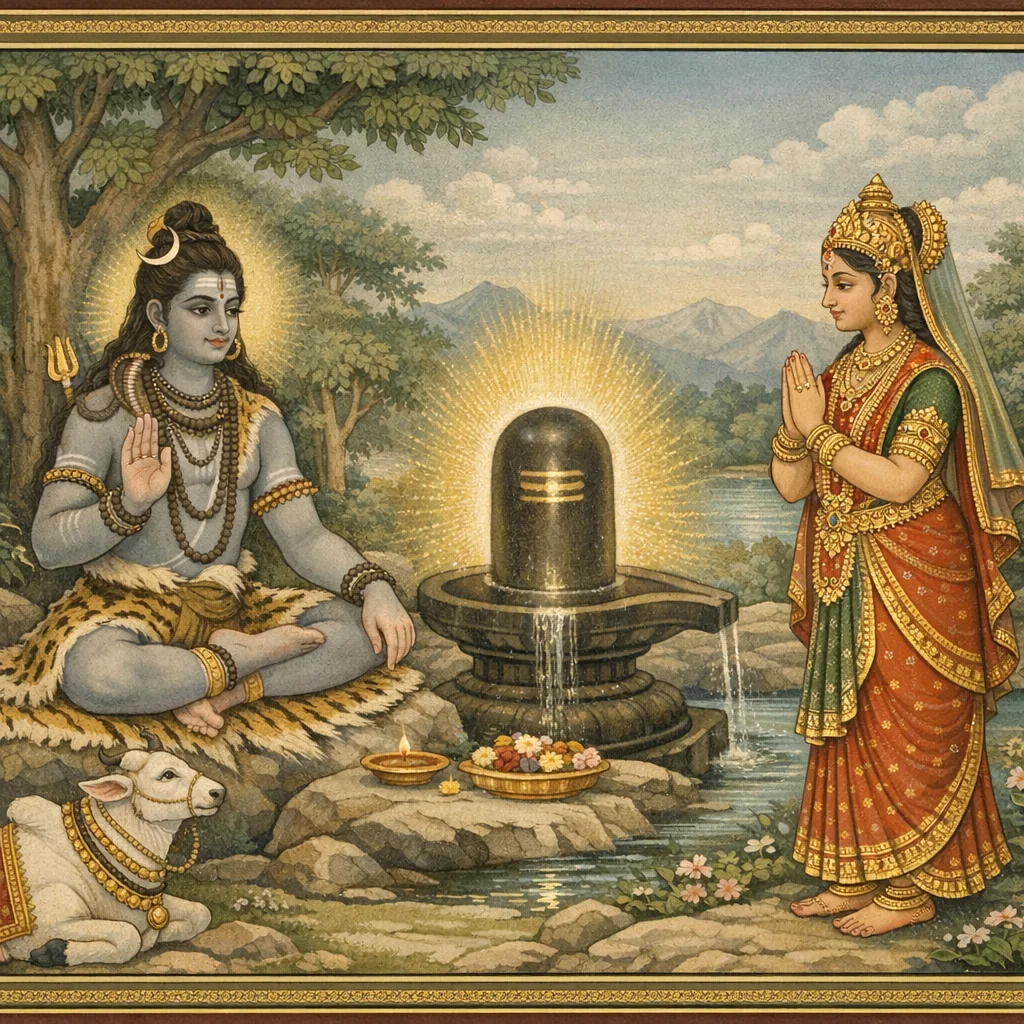
The chapter is cast as Īśvara’s guidance on sacred geography and worship, pointing to a revered liṅga called the “Mahāliṅga,” beloved of the gods, located in a specified direction and measured interval. This liṅga is praised as kāma-prada (granting desired aims) and sarva-pātaka-nāśana (destroying grave impurities), and is known as Paulomīśvara, said to have been established by Paulomī. A mythic account follows: in the conflict with Tāraka the gods are routed, and Indra is overcome by sorrow and fear. Indrāṇī, seeking Indra’s victory, propitiates Śambhu; Mahādeva replies with a prophecy that a mighty six-faced son (Ṣaṇmukha) will arise and slay Tāraka. The text then gives a devotional assurance—whoever worships this liṅga becomes Śiva’s gaṇa and attains closeness to him. It ends with Indra settling there and being freed from grief and dread, affirming the shrine as a ritual refuge and a field of merit.
Shlokas
Verse 1
ईश्वर उवाच । ततो गच्छेन्महालिंगं महादेवि सुरप्रियम् । रावणेश्वरवायव्ये धनुषां त्रिंशकेऽन्तरे
Īśvara said: “Then, O Mahādevī, one should go to the great Liṅga—dear to the gods—situated to the north-west of Rāvaṇeśvara, within a distance of thirty dhanus.”
Verse 2
स्थितं कामप्रदं लिंगं सर्वपातकनाशनम् । पौलोमीश्वरनामाढचं पौलोम्या संप्रतिष्ठितम्
There stands a desire-fulfilling Liṅga, the destroyer of all sins, renowned by the name Paulomīśvara, duly established by Paulomī (Indrāṇī).
Verse 3
तारकेण यदा ध्वस्तास्त्रिदशाः संगरे स्थिताः । त्रैलोक्यं विहृतं सर्वं स्वयमिन्द्रत्वमागतः
When, in battle, Tāraka crushed the Thirty-Three Gods and the whole of the three worlds was laid waste, he himself seized the sovereignty of Indra, assuming Indra’s lordship.
Verse 4
तदा शक्रः सुदुःखार्तो भयोद्विग्नो ननाश वै । तदा तद्भार्यया देवि इन्द्राण्या शोककर्षया
Then Śakra (Indra), tormented by intense sorrow and shaken with fear, fled away. At that time, O Goddess, his wife Indrāṇī—drawn down by grief—(acted further).
Verse 5
इन्द्रस्य जयमिच्छन्त्या शंभुराराधितस्तया । ततस्तुष्टो महादेवस्तामुवाच शुभेक्षणाम्
Wishing for Indra’s victory, she worshipped Śambhu (Śiva). Pleased, Mahādeva spoke to that fair-eyed lady.
Verse 6
भगवानुवाच । उत्पत्स्यति सुतोऽस्माकं षण्मुखस्तु महाबलः । तारकं दैत्यराजानं स चैनं घातयिष्यति
The Blessed Lord said: “A son of ours will be born—Ṣaṇmukha, of great might. He will slay Tāraka, the king of the demons (asuras).”
Verse 7
गच्छ त्वं विज्वरा भूत्वा शृणु भूयो वचश्च मे
“Go now, freed from the fever of distress; and hear once more my words.”
Verse 8
अत्र स्थितमिदं लिंगं योऽस्माकं पूजयिष्यति । स नूनं मे गणो भूत्वा मत्सकाशमुपेष्यति
“Whoever worships this Liṅga, established here as ours, will surely become one of my gaṇas and come into my presence.”
Verse 9
एवमुक्ता गता साध्वी देवराड्यत्र संस्थितः । सर्वद्दुःखविनिर्मुक्ता सर्वदैत्यभयोज्झिता
Thus addressed, the virtuous lady departed; and the Lord of the gods became established there—freed from all sorrow and released from all fear of the Daityas (demons).
Verse 125
इति श्रीस्कांदे महापुराण एकाशीतिसाहस्र्यां संहितायां सप्तमे प्रभासखण्डे प्रथमे प्रभासक्षेत्रमाहात्म्ये पौलोमोश्वरमाहात्म्यवर्णनंनाम पञ्चविंशत्युत्तरशततमोऽध्यायः
Thus ends the one-hundred-and-twenty-fifth chapter, called “The Description of the Greatness of Paulomośvara,” in the Prabhāsa Khaṇḍa, in the first division titled “Prabhāsa-kṣetra-māhātmya,” of the Śrī Skanda Mahāpurāṇa, within the Ekāśītisāhasrī Saṃhitā.