Adhyaya 121
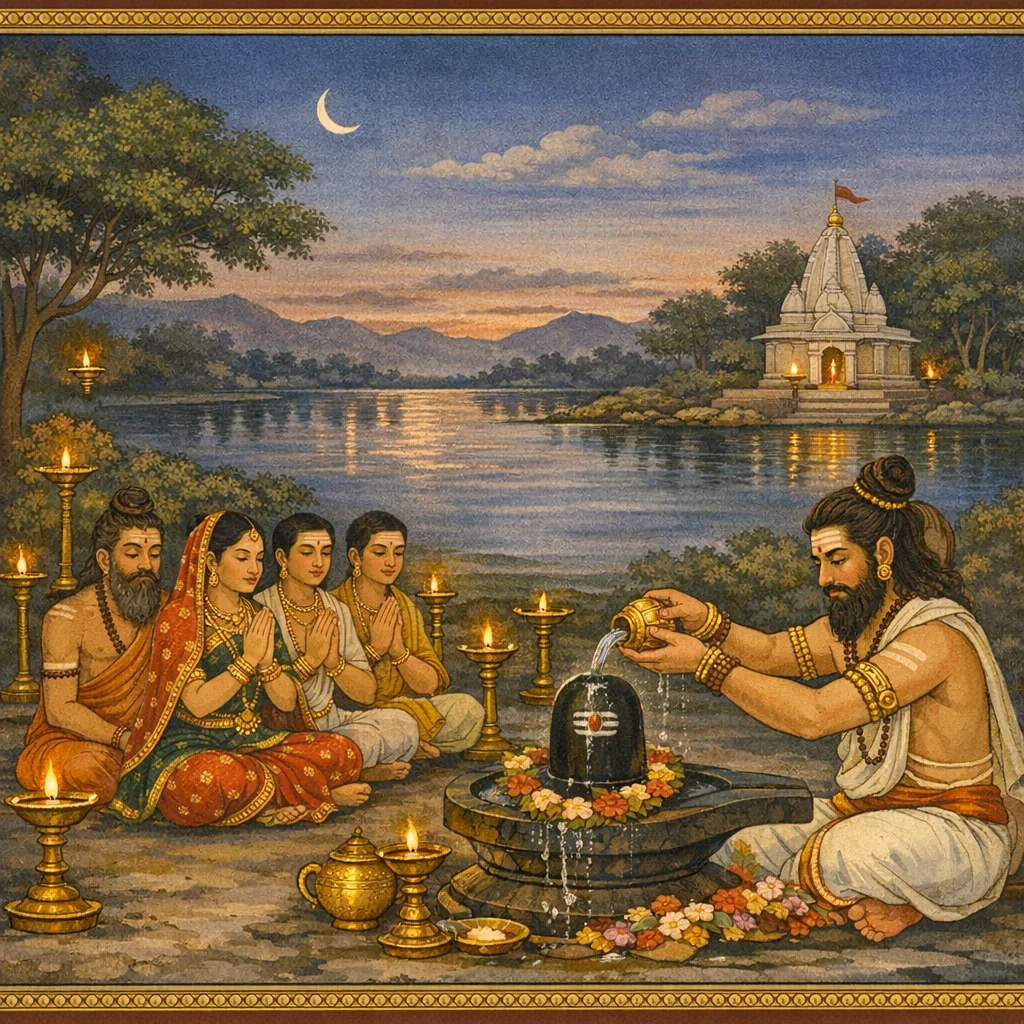
This chapter gives a Śaiva sacred-place legend on the origin and merit of the Jāmadagnyēśvara liṅga in Prabhāsakṣetra. Īśvara outlines a pilgrimage sequence leading to Rāmeśvara, said to have been established by Rāma Jāmadagnya (Paraśurāma), and points out a potent, sin-destroying liṅga near Gopīśvara, marked with a stated distance. The narrative recalls Paraśurāma’s grave moral crisis—killing his mother at his father’s command—followed by remorse and the appeasement of Jamadagni, culminating in the boon that restores Reṇukā to life. Even after receiving this grace, Paraśurāma performs extraordinary tapas at Prabhāsa, installs Mahādeva (Śaṅkara), and gains divine satisfaction and the rewards he seeks, with Mahēśvara abiding there. It then summarizes his later campaign against the kṣatriyas, his ritual observances (with references to Kurukṣetra and pañcanada), the settling of ancestral obligations, and finally the gifting of the earth to brāhmaṇas. The phalaśruti declares that worship of this liṅga frees even a sinner from all faults and leads to Umāpati’s realm; keeping vigil on the dark-fortnight caturdaśī yields fruit likened to an aśvamedha and heavenly rejoicing.
Shlokas
Verse 1
ईश्वर उवाच । ततो गच्छेन्महादेवि रामेश्वरमनुत्तमम् । जामदग्न्येन रामेण स्वयं तत्र प्रतिष्ठितम्
Īśvara said: “Then, O great goddess, one should go to the unsurpassed Rāmeśvara, established there by Jāmadagnya Rāma himself.”
Verse 2
गोपीश्वराच्च वायव्ये धनुषां त्रिंशकेऽन्तरे । स्थितं महाप्रभावं हि लिंगं पातकनाशनम्
To the northwest of Gopīśvara, at a distance of thirty dhanuṣ-lengths, stands a liṅga of great power—one that destroys sin.
Verse 3
यदा रामेण देवेशि जमदग्निसुतेन वै । कृतो मातृवधो घोरः पितुराज्ञानुवर्तिना
When, O goddess of the gods, Rāma—the son of Jamadagni—committed the dreadful killing of his mother, acting in obedience to his father’s command,
Verse 4
तदा मनसि संतापं कृत्वा निर्वेदमागतः । ततः प्रसन्नतां यातो जमदग्निर्महातपाः
Then, feeling anguish in his mind and falling into remorse, Jamadagni—the great ascetic—afterwards became calm and gracious.
Verse 5
ददौ वरं ततस्तुष्टो रेणुकायाश्च जीवितम् । एवं यद्यपि सा तत्र जीविता वरवर्णिनी
Pleased, he then granted a boon—life to Reṇukā. And thus, although that excellent lady was restored to life there,
Verse 6
तथापि सघृणो देवि जामदग्न्यो महाप्रभः । प्रभासं क्षेत्रमासाद्य तपश्चक्रे ततोऽद्भुतम्
Even so, O goddess, compassionate Jāmadagnya—radiant with great power—came to the sacred field of Prabhāsa and then performed wondrous austerities.
Verse 7
प्रतिष्ठाप्य महादेवं शंकरं लोकशंकरम् । दिव्यं वर्षशतं साग्रं ततस्तुष्टो महेश्वरः
Having installed Mahādeva—Śaṅkara, the benefactor of the worlds—he performed austerities for a full hundred divine years; then Maheśvara became pleased.
Verse 8
ददौ तस्येप्सितं सर्वं स्वयं तत्रैव संस्थितः । ततः कृतार्थतां प्राप्तो जामदग्न्यो महाऋषिः
He granted him everything he desired, remaining there himself. Thereupon Jāmadagnya, the great sage, attained fulfillment of purpose.
Verse 9
त्रिःसप्तकृत्वः पृथिवीं जित्वा हत्वा च क्षत्रियान् । कृत्वा पंचनदं तत्र कुरुक्षेत्रे महामनाः
Having conquered the earth twenty-one times and slain the kṣatriyas, that great-souled one established the Pañcanada there at Kurukṣetra.
Verse 10
रक्तैः संपूर्णतां नीत्वा क्षत्रियाणां वरानने । आनृण्यं समनु प्राप्तः पितॄणां यो महाबलः
O fair-faced one, filling it to the brim with the blood of the kṣatriyas, that mighty hero attained freedom from debt to his ancestors (pitṛs).
Verse 11
एवं क्षत्त्रान्तकं कृत्वा दत्त्वा विप्रेषु मेदिनीम् । कृतार्थतामनुप्राप्तस्त्रैलोक्ये ख्यातपौरुषः
Thus, having become the destroyer of the kṣatriyas and having bestowed the earth upon the brāhmaṇas, he attained fulfilment; his heroic fame became renowned throughout the three worlds.
Verse 12
तेन तत्स्थापितं लिंगं क्षेत्रे प्राभासिके शुभे । यस्तं पूजयते भक्त्या पापयुक्तोऽपि मानवः । स मुक्तः पातकैः सर्वैर्याति लोकमुमापतेः
In that auspicious Prābhāsa sacred field, he established that liṅga. Whoever worships it with devotion—even one burdened with sin—is freed from all transgressions and attains the realm of Umāpati (Śiva).
Verse 13
ज्येष्ठकृष्णचतुर्दश्यां जागृयात्तत्र यो नरः । सोऽश्वमेधफलं प्राप्य मोदते दिवि देववत्
On the fourteenth lunar day of the dark fortnight of Jyeṣṭha, whoever keeps vigil there gains the fruit of the Aśvamedha sacrifice and rejoices in heaven like a god.
Verse 121
इति श्रीस्कान्दे महापुराण एकाशीतिसाहस्र्यां संहितायां सप्तमे प्रभासखण्डे प्रथमे प्रभासक्षेत्रमाहात्म्ये जामदग्न्येश्वरमाहात्म्यवर्णनंनामैकविंशत्युत्तरशततमोऽध्यायः
Thus ends the one-hundred-and-twenty-first chapter, called “The Description of the Greatness of Jāmadagnyeśvara,” in the Prabhāsa Khaṇḍa—within the Prabhāsakṣetra Māhātmya—of the venerable Skanda Mahāpurāṇa, in the collection of eighty-one thousand verses.