Adhyaya 12
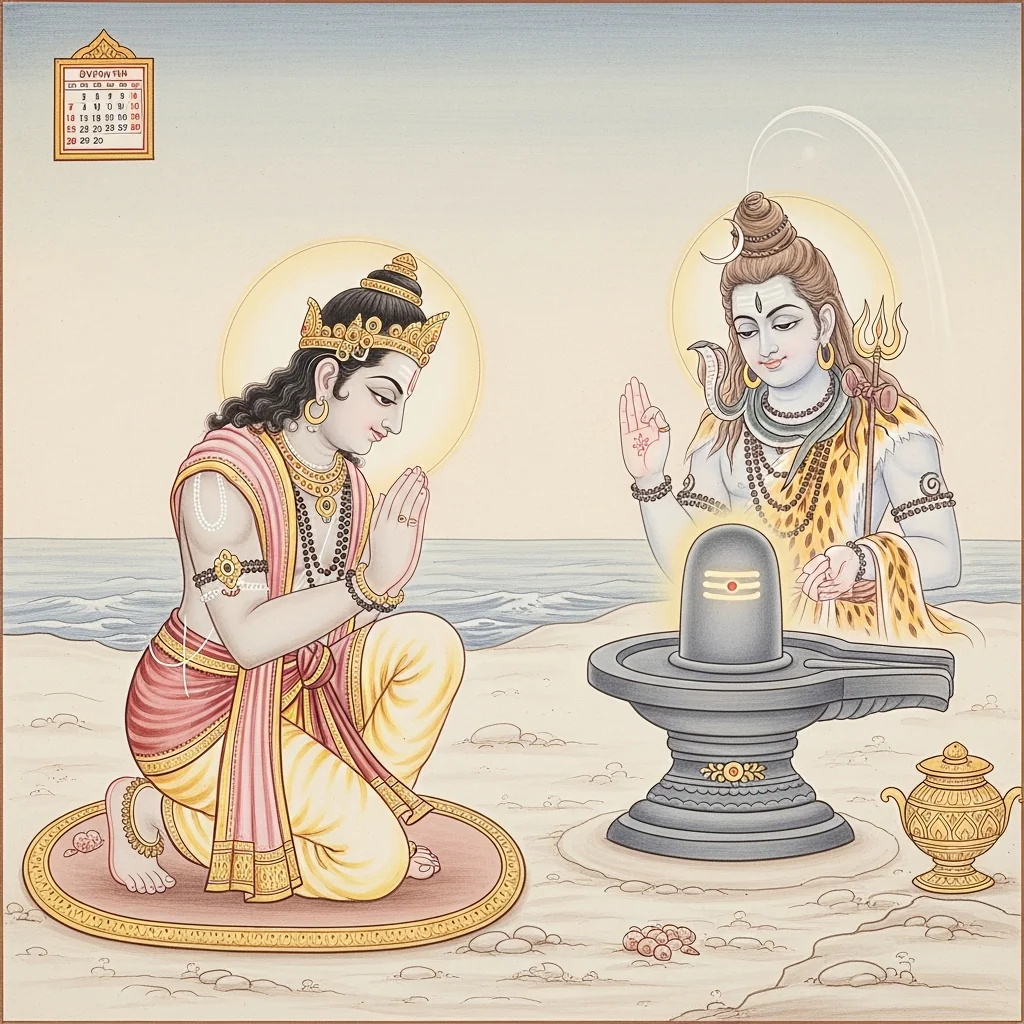
Spoken by Īśvara, this chapter blends etymological exposition with the authorization of a tīrtha. It first explains terms tied to kingship and queenship (rājā/rājñī) and the idea of “shadow” (chāyā), using dhātu-based derivations to show that names and identities carry theological meaning. The narrative then places the present Manu within a lineage and introduces a figure bearing Vaiṣṇava iconographic marks (śaṅkha-cakra-gadā-dhara), while Yama is simultaneously portrayed as afflicted, described as “hīna-pāda,” creating a problem needing ritual remedy. Yama goes to Prabhāsa-kṣetra and undertakes prolonged tapas, worshiping a liṅga over an immense span of time. Pleased, Īśvara grants many boons and establishes an enduring cult-title: the place is remembered as “Yameśvara.” A phalaśruti-like assurance concludes the chapter: on Yama-dvitīyā, beholding Yameśvara is said to avert the vision/experience of Yama-loka, highlighting the chapter’s soteriological and calendrical importance in Prabhāsa pilgrimage practice.
Shlokas
Verse 1
ईश्वर उवाच । या संज्ञा सा स्मृता राज्ञी छाया या सा तु निक्षुभा । राजृ दीप्तौ स्मृतो धातू राजा राजति यः सदा
Īśvara said: “She who is Saṃjñā is remembered as ‘Rājñī’; and she who is Chāyā is ‘Nikṣubhā’. The verbal root rāj is known in the sense of ‘to shine’; therefore he who ever shines forth is called ‘Rājā’ (king).”
Verse 2
अधिकं सर्वभूतेभ्यस्तस्माद्राजा स उच्यते । राजपत्नी तु सा यस्मात्तस्माद्राज्ञी प्रकीर्तिता
Because he is superior to all beings, he is therefore called ‘Rājā’ (king). And because she is the king’s wife, she is therefore celebrated as ‘Rājñī’ (queen).
Verse 3
क्षुभ संचलने धातुर्निश्चला तेन निक्षुभा । भवंति ह्यथवा यस्मात्स्वांगीयाः क्षुद्विवर्जिताः
The verbal root kṣubh denotes agitation and movement; since she is unmoving, she is therefore called Nikṣubhā. Or again, because those born from her own body become free from hunger.
Verse 4
छाया तां विशते दिव्या स्मृता सा तेन निक्षुभा । सांप्रतं वर्तते योऽयं मनुर्लोके महामते
The divine Chāyā entered into her (Saṃjñā); hence she is remembered by that name, Nikṣubhā. And the Manu who is presently active in the world, O great-minded one—
Verse 5
तस्यान्ववाये जातस्तु शंखचकगदाधरः । यमस्तु मात्रा संशप्तो हीनपादो धरातले
In his lineage was born one who bore the conch, the discus, and the mace. But Yama, cursed by his mother, came to dwell on earth with impaired feet.
Verse 6
प्रभासक्षेत्रमासाद्य चचार विपुलं तपः । वर्षाणामयुतं साग्रं लिंगं पूजितवान्प्रिये
Having reached the sacred field of Prabhāsa, he undertook immense austerity; and for a little more than ten thousand years, O beloved, he worshipped the Liṅga.
Verse 7
तुष्टश्चाहं ततस्तस्य वराणां च शतं ददौ । अद्यापि तत्र देवेशि यमेश्वरमिति श्रुतम् । यमद्वितीयायां दृष्ट्वा यमलोकं न पश्यति
Pleased, I then granted him a hundred boons. Even today, O Goddess of the gods, that place is famed by the name “Yameśvara”. And having beheld that Lord on Yamadvitīyā, one does not behold Yama’s realm.
Verse 12
इति श्रीस्कांदे महापुराण एकाशीतिसाहस्र्यां संहितायां सप्तमे प्रभासखंडे प्रथमे प्रभासक्षेत्रमाहात्म्ये यमेश्वरोत्पत्तिवर्णनंनाम द्वादशोऽध्यायः
Thus ends the twelfth chapter, entitled “The Account of the Origin of Yameśvara,” in the first Prabhāsakṣetra Māhātmya of the seventh book, the Prabhāsa Khaṇḍa, within the Śrī Skanda Mahāpurāṇa of eighty-one thousand verses.