Adhyaya 118
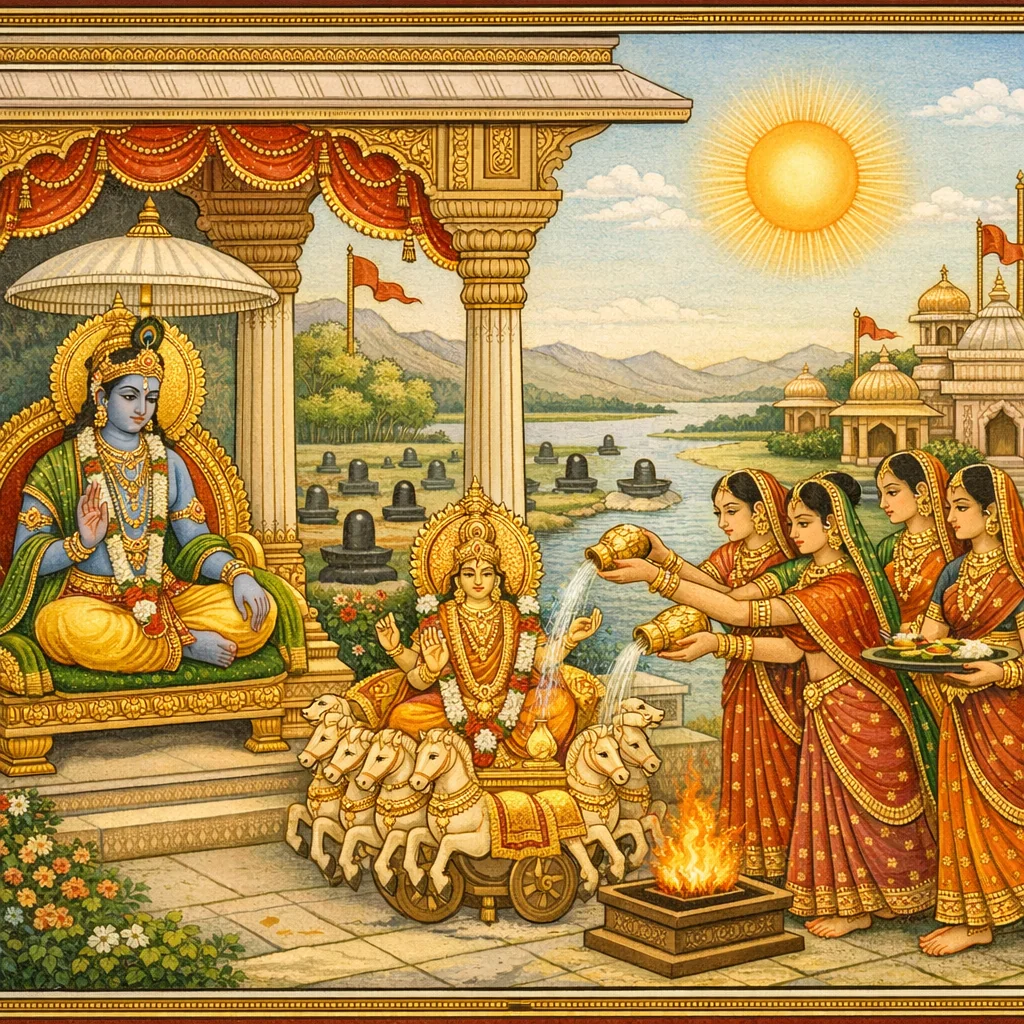
Īśvara instructs Devī to go to a greatly praised solar sacred site called Gopyāditya within the Prabhāsa region, its location indicated by directions and distances. The place is extolled as a powerful pāpa-nāśana locus that destroys sin and bestows auspiciousness. He then recounts the shrine’s origin: Kṛṣṇa arrives at Prabhāsa with the Yādavas, with the gopīs and Kṛṣṇa’s sons also present. During a long stay, the community establishes many Śiva-liṅgas, each with its own name, creating a shrine-dense holy field adorned with banners, palatial structures, and emblematic markers. The chapter names sixteen “primary” gopīs and interprets them as śaktis/kala-s aligned with lunar phases; Kṛṣṇa is presented as Janārdana/Paramātman, while the gopīs are framed as his powers. With ṛṣis such as Nārada and local residents, the gopīs consecrate a solar icon through proper pratiṣṭhā; gifts and donations follow, and the deity becomes renowned as Gopyāditya, granting welfare and removing sin. Finally, it gives prescriptions: devotion to Gopyāditya is said to equal the fruits of austerities and richly endowed sacrifices; Māgha-saptamī morning worship is recommended, bringing benefit to one’s ancestors. It also lists conduct and purity restrictions—especially prohibitions concerning contact with oil and wearing blue/red garments—along with expiations, as ethical-ritual safeguards for practitioners.
Shlokas
Verse 1
ईश्वर उवाच । ततो गच्छेन्महादेवि गोप्यादित्यमनुत्तमम् । भूतेशाद्वायवे भागे धनुषां त्रिंशकेन्तरे
Īśvara said: Then, O Great Goddess, one should go to the unsurpassed shrine of Gopyāditya—situated in the Vāyavya (northwestern) quarter from Bhūteśa, at a distance of thirty dhanuṣ (bow-lengths).
Verse 2
बलातिबलदैत्यघ्न्या दक्षिणाग्नेयसंस्थितम् । धनुषां दशके देवि संस्थितं पापनाशनम्
O Goddess, it is situated in the southern–southeastern direction, at a distance of ten dhanuṣ; it destroys sins and is famed for slaying the Balātibala demons.
Verse 3
तस्योत्पत्तिं प्रवक्ष्यामि महापापहरां शुभाम् । यां श्रुत्वा मानवो भक्त्या दुःखशोकैः प्रमुच्यते
I shall relate its auspicious origin, which removes great sins. Hearing it with devotion, a person is freed from suffering and grief.
Verse 4
पुरा कृष्णो महातेजा यदा प्रभासमागतः । सहितो यादवैः सर्वैः षट्पञ्चाशतिकोटिभिः
Formerly, when the greatly radiant Kṛṣṇa came to Prabhāsa, he was accompanied by all the Yādavas—fifty-six crores in number.
Verse 5
षोडशैव सहस्राणि गोप्यस्तत्र समागताः । लक्षमेकं तथा षष्टिरेते कृष्णसुताः प्रिये
There, sixteen thousand gopīs also assembled. And, O beloved, Kṛṣṇa’s sons were one hundred thousand and sixty in number.
Verse 6
तत्र प्राभासिके क्षेत्रे संस्थिताः पापनाशने । यादवस्थलमासाद्य यावद्रैवतको गिरि
There, in the Prābhāsa sacred region—the destroyer of sins—they stayed on, having reached the Yādavas’ settlement, extending as far as Mount Raivataka.
Verse 7
तत्र द्वादशवर्षाणि संस्थितास्ते महाबलाः । क्षेत्रं पवित्रमादाय शिवलिंगानि ते पृथक् । स्थापयाञ्चक्रिरे सर्वे ह्यंकितानि स्वनामभिः
There, those mighty ones remained for twelve years. Taking up that hallowed tract, each of them established separate Śiva-liṅgas, all inscribed with their own names.
Verse 8
एवं समग्रं तत्क्षेत्रं यावद्द्वादशयोजनम् । ध्वजलिंगांकितं चक्रुः सर्वे यादवपुंगवाः
Thus, the entire region—spanning twelve yojanas—was made by all those foremost Yādavas to be marked with banners and Śiva-liṅgas.
Verse 9
हस्तहस्तान्तरे देवि प्रासादाः क्षेत्र मध्यतः । सुवर्णकलशोपेताः पताकाकुलितांबराः । विराजंते तु तत्रस्थाः कीर्तिस्तंभा हरेरिव
O Devī, in the very midst of the sacred region, palatial shrines stood at every hand’s interval—crowned with golden finials and their skies thick with fluttering flags—shining like the fame-pillars of Hari.
Verse 10
ततो गोप्यो महादेवि आद्या याः षोडश स्मृताः । तासां नामानि ते वक्ष्ये तानि ह्मेकमनाः शृणु
Then, O Mahādevī, the sixteen primordial Gopīs who are remembered—I shall tell you their names; listen with a one-pointed mind.
Verse 11
लंबिनी चन्द्रिका कान्ता क्रूरा शान्ता महोदया । भीषणी नन्दिनीऽशोका सुपर्णा विमलाऽक्षया
They are: Laṃbinī, Candrikā, Kāntā, Krūrā, Śāntā, Mahodayā; Bhīṣaṇī, Nandinī, Aśokā, Suparṇā, Vimalā, and Akṣayā.
Verse 12
शुभदा शोभना पुण्या हंसस्यैताः कलाः स्मृताः । हंस एव मतः कृष्णः परमात्मा जनार्दनः
Śubhadā, Śobhanā, and Puṇyā—these are remembered as the divine portions of the Haṃsa. And that Haṃsa is understood to be Kṛṣṇa himself—Janārdana, the Supreme Self.
Verse 13
तस्यैताः शक्तयो देवि षोडशैव प्रकीर्तिताः । चन्द्ररूपी ततः कृष्णः कलारूपास्तु ताः स्मृताः
O Devī, these sixteen are proclaimed as his powers (śaktis). Therefore Kṛṣṇa is of the form of the Moon, and they are remembered as forms of its phases (kalās).
Verse 14
संपूर्णमण्डला तासां मालिनी षोडशी कला । प्रतिपत्तिथिमारभ्य विचरत्यासु चन्द्रमाः
Among them, the sixteenth phase—Mālinī—makes the Moon’s orb complete. Beginning from the Pratipat lunar day, the Moon moves through these phases.
Verse 15
षोडशैव कला यास्ता गोपीरूपा वरानने । एकैकशस्ताः संभिन्नाः सहस्रेण पृथक्पृथक्
O fair-faced one, those very sixteen phases are in the form of Gopīs. Each single one is further differentiated into a thousand, each distinct from the other.
Verse 16
एवं ते कथितं देवि रहस्यं ज्ञानसंभवम् । एवं यो वेद पुरुषः स ज्ञेयो वैष्णवो बुधैः
Thus, O Goddess, I have told you this secret born of true knowledge. The man who understands it in this way is recognized by the wise as a genuine Vaiṣṇava.
Verse 17
अथ ताभिः कृताञ्ज्ञात्वा प्रासादान्यादवैः पृथक् । ततो गोप्योऽपि ताः सर्वाः सहस्राणि तु षोडश । कृष्णमाज्ञाप्य भावेन स्थापयांचक्रिरे रविम्
Then, having received their due honors, the Yādavas arranged separate shrines. Thereafter all those gopīs—sixteen thousand in number—having obtained Kṛṣṇa’s assent, established the Sun (Ravi) there with heartfelt devotion.
Verse 18
ऋषिभिर्नारदाद्यैस्तास्तथा क्षेत्रनिवासिभिः । तं प्रतिष्ठापयामासुः प्रतिष्ठाविधिना रविम्
Along with sages such as Nārada and with the residents of the sacred region, they installed that Sun-god according to the proper rites of consecration.
Verse 19
प्रतिष्ठिते ततः सूर्ये ददुर्दानानि भूरिशः । ततः क्षेत्रनिवासिभ्यो गोभूहेमांबराणि च
After the Sun had been duly consecrated, they bestowed gifts in great abundance. Then, upon the dwellers of that holy region, they granted cows, land, gold, and garments as well.
Verse 20
ततस्त ऋषयः सर्वे संतुष्टा हृष्टमानसाः । चक्रुर्नाम रवेस्तत्र गोप्यादित्येति विश्रुतम् । सर्वपाप हरं देवं महासौभाग्यदायकम्
Then all the sages, satisfied and glad at heart, bestowed upon the Sun there the renowned name “Gopyāditya.” That deity removes every sin and grants great auspicious fortune.
Verse 21
एवं कृते कृतार्थास्ताः संप्राप्यातिमहद्यशः । जग्मुर्यथागतं सर्वा द्वारकां कृष्णसंयुताः
When all this was accomplished, those women, their purpose fulfilled and having gained great renown, returned as they had come—going to Dvārakā in the company of Kṛṣṇa.
Verse 22
पुनः कालान्तरे देवि शापाद्दुर्वाससः प्रिये । यादवस्थलतां प्राप्ताः प्रभासे पापनाशने
Again, after some time, O Goddess, O beloved, due to the curse of Durvāsas, they came to the Yādavas’ settlement at Prabhāsa, the sin-destroying sacred place.
Verse 23
एवं ते कथितो देवि गोप्यादित्यसमुद्भवः । माहात्म्यं तस्य ते वच्मि पूजावन्दनजं क्रमात्
Thus, O Goddess, I have explained to you the origin of Gopyāditya. Now I shall tell you, in due order, his greatness—arising from worship and reverential salutations.
Verse 24
अस्मिन्मित्रवने देवि यो गोपीभिः प्रतिष्ठितः । तस्य दर्शनमात्रेण दुःखशोकैः प्रमुच्यते
In this Mitravana, O Goddess, the deity installed by the gopīs—by merely beholding him, one is released from suffering and sorrow.
Verse 25
सुतप्तेनेह तपसा यज्ञैर्वा बहुदक्षिणैः । तां गतिं ते नरा यान्ति ये गोपीरविमाश्रिताः
The state attained here by intense austerity, or by sacrifices rich in dakṣiṇā—men who take refuge in Gopī-Ravi (Gopyāditya) reach that same exalted goal.
Verse 26
येन सर्वात्मना भावो गोप्यादित्ये निवेशितः । महेश्वरि कृतार्थत्वात्स श्लाघ्यो धन्य एव सः
O Maheśvarī, blessed indeed and worthy of praise is the one who, with his whole being, has placed his devoted heart in Gopyāditya (Āditya); for by such single-minded bhakti he becomes truly fulfilled.
Verse 27
अपि नः स कुले धन्यो जायते कुलपावनः । भाग्यवान्भक्तिभावेन येन भानुरुपासितः
Blessed indeed is the one born in our lineage—he becomes a purifier of the family—when, with the feeling of bhakti, he worships Bhānu (the Sun); such a person is truly fortunate.
Verse 28
सप्तम्यां पूजयेद्यस्तु माघे मास्युषसि प्रिये । सप्तावरान्सप्त पूर्वान्पितॄन्सोप्युद्धरेन्नरः
O beloved, whoever performs worship at dawn on the Saptamī day in the month of Māgha, by that merit uplifts even his ancestors—seven generations behind and seven generations ahead—delivering them.
Verse 29
छिनत्ति रोगान्दुश्चेष्टान्दुर्जयाञ्जयति ह्यरीन्
It cuts off diseases and harmful impulses, and it conquers even hard-to-defeat enemies.
Verse 30
न सप्तम्यां स्पृशेत्तैलं नीलवस्त्रं न धारयेत् । न चाप्यामलकैः स्नानं न कुर्यात्कलहं क्वचित्
On Saptamī one should not touch oil, nor wear blue garments; one should also not bathe with āmalaka (emblic myrobalan), and should not engage in quarrel anywhere.
Verse 31
नीलरक्तेन वस्त्रेण यत्कर्म कुरुते द्विजः । स्नानं दानं जपो होमः स्वाध्यायः पितृतर्पणम् । वृथा तस्य महायज्ञा नीलसूत्रस्य धारणात्
Whatever rite a twice-born performs while wearing blue or red clothing—bathing, charity, japa, homa, Vedic study, or offerings to the ancestors—becomes fruitless for him, and even great sacrifices are in vain, due to the wearing of the blue thread (nīla-sūtra).
Verse 32
नीलीरक्तं यदा वस्त्रं विप्रस्त्वंगेषु धारयेत् । अहोरात्रोषितो भूत्वा पञ्चगव्येन शुद्ध्यति
If a brāhmaṇa happens to wear blue-red clothing upon his body, then, after abstaining for a day and a night, he becomes purified by pañcagavya.
Verse 33
रोमकूपे यदा गच्छेद्रसं नीलस्य कस्यचित् । पतितस्तु भवेद्विप्रस्त्रिभिः कृच्छ्रैर्व्यपोहति
If the essence of some blue dye or substance enters a hair-follicle, the brāhmaṇa is considered fallen; he removes that fault by performing three kṛcchra penances.
Verse 34
नीलमध्यं यदा गच्छेत्प्रमादाद्ब्राह्मणः क्वचित् । अहोरात्रोषितो भूत्वा पञ्चगव्येन शुद्ध्यति
If, through inadvertence, a brāhmaṇa goes anywhere into the midst of the “nīla,” then, having observed abstinence for a day and a night, he is purified by pañcagavya.
Verse 35
नीलदारु यदा भिद्येद्ब्राह्मणानां शरीरके । शोणितं दृश्यते तत्र द्विजश्चान्द्रायणं चरेत्
If nīla-wood pierces the body of a brāhmaṇa and blood is seen there, then the twice-born should undertake the Cāndrāyaṇa penance.
Verse 36
कुर्यादज्ञानतो यस्तु नीलं वै दन्तधावनम् । कृत्वा कृच्छ्रद्वयं तस्य शुद्धिरुक्ता मनीषिभिः
But if a person, out of ignorance, uses the blue substance for cleaning the teeth, the wise declare that his purification is accomplished by performing the Kṛcchra penance twice.
Verse 37
इत्येतत्कथितं देवि गोप्यादित्यमहोदय । पापघ्नं सर्वजन्तूनां श्रुतं सर्वार्थसाधकम्
Thus, O Goddess, the glorious rise of Gopyāditya has been narrated—destroyer of sins for all beings; and when heard, it becomes a fulfiller of every worthy aim.
Verse 38
गवां शतसहस्रैस्तु दत्तैर्यत्कुरुजांगले । पुण्यं भवति देवेशि तद्गोप्यादित्यदर्शने
O Lady of the Lord, the merit that arises in Kurujāṅgala from gifting a hundred thousand cows—that very merit is obtained by the mere sight of Gopyāditya.
Verse 118
इति श्रीस्कान्दे महापुराण एकाशीतिसाहस्र्यां संहितायां सप्तमे प्रभासखण्डे प्रथमे प्रभासक्षेत्रमाहात्म्ये गोप्यादित्यमाहात्म्यवर्णनंनामाष्टादशोत्तरशततमोऽध्यायः
Thus ends Chapter 118, entitled “The Description of the Greatness of Gopyāditya,” in the Prabhāsa Khaṇḍa, within the Prabhāsa Kṣetra Māhātmya of the Śrī Skanda Mahāpurāṇa, in the Ekāśītisāhasrī Saṃhitā.