Adhyaya 117
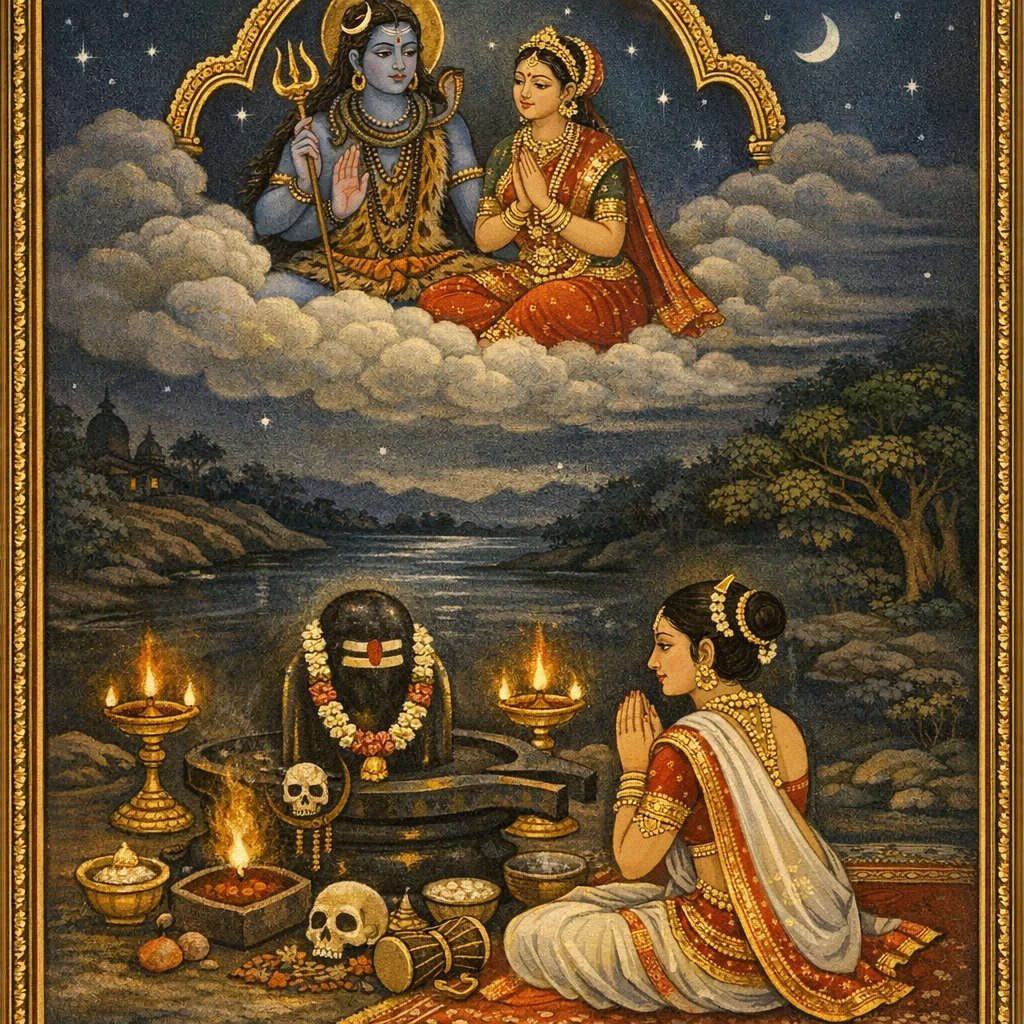
Chapter 117 is a Śaiva glorification of a sacred site, spoken by Īśvara to Mahādevī. It first gives a ritual locator: the devotee is directed to Bhūtanātheśvara–Hara near Kuṇḍeśvarī’s Īśa-bhāga, marked by a “twenty-bow” distance interval. The liṅga is declared timeless (anādi-nidhana) as the Kalpa-liṅga, and its yuga-based names are explained: in Tretā it is remembered as Vīrabhadreśvarī, while in Kali it is known as Bhūteśvara/Bhūtanātheśvara. A brief origin account adds that at a Dvāpara turning-point innumerable bhūtas attained supreme success through the liṅga’s power, establishing the shrine’s name on earth. A focused observance is prescribed for the night of Kṛṣṇa-caturdaśī: after worshipping Śaṅkara, one should face south and worship Aghora with self-control, fearlessness, and meditative concentration, gaining whatever siddhi is available in the terrestrial realm. The chapter also recommends gifts of tilā (sesame) and gold, and piṇḍa offerings to the pitṛs for release from preta-status. The closing phalaśruti says that faithful reading or hearing of this glory destroys accumulated sin and supports purification.
Shlokas
Verse 1
ईश्वर उवाच । ततो गच्छेन्महादेवि भूतनाथेश्वरं हरम् । कुण्डेश्वर्या ईशभागे धनुषां विंशकेऽन्तरे
Īśvara said: “Then, O Mahādevī, one should go to Hara known as Bhūtanātheśvara. It lies in the Īśa quarter from Kuṇḍeśvarī, at a distance of twenty dhanus.”
Verse 2
कल्पलिंगं महादेवि ह्यनादिनिधनं स्थितम् । पूर्वं त्रेतायुगे देवि वीरभद्रेश्वरीति च
O Mahādevī, there stands the Kalpa-liṅga, established as beginningless and endless. Formerly, in the Tretā Yuga, O Goddess, it was also known as Vīrabhadreśvarī.
Verse 3
प्रख्यातं भुवि देवेशि कलौ भूतेश्वरं स्मृतम् । पुरा द्वापरसंधौ च तत्र भूतानि कोटिशः
O Lady of the Gods, that place is renowned upon the earth; in the Kali Yuga it is remembered as Bhūteśvara. And in ancient times, at the junction of the Dvāpara age, crores of bhūtas gathered there.
Verse 4
संसिद्धिं परमां जग्मुस्तल्लिंगस्य प्रभावतः । तेन भूतेश्वरं नाम प्रख्यातं धरणीतले
By the power of that liṅga they attained the supreme accomplishment. Therefore the name Bhūteśvara became celebrated upon the earth.
Verse 5
तत्र कृष्णचतुर्द्दश्यां रात्रौ संपूज्य शंकरम् । दक्षिणां दिशमाश्रित्य अघोरं पूजयेत्तु यः
There, on the night of Kṛṣṇa-caturdaśī—the fourteenth of the dark fortnight—having duly worshipped Śaṅkara, whoever, facing the southern direction, worships Aghora (a form of Śiva) obtains the promised fruit.
Verse 6
दृढं जितेन्द्रियो भूत्वा निर्भयो ध्यानसंयु तः । तस्यैव जायते सिद्धिर्या काचिद्भूतले स्थिता
Becoming steadfast, self-controlled, fearless, and endowed with meditation, such a person indeed attains whatever siddhi—spiritual accomplishment—is attainable upon the earth.
Verse 7
तिलहेमप्रदानं च पिण्डदानं च तत्र वै । पितॄनुद्दिश्य दद्याद्वै तेषां प्रेतत्वमुक्तये
There indeed, one should give gifts of sesame and gold, and also offer the piṇḍa-oblation, dedicating them to the Pitṛs, so that they may be freed from the state of preta-hood—the restless condition after death.
Verse 8
इति निगदितमेतद्भूतनाथेश्वरस्य प्रचुरकलिमलानां नाशनं पुण्यहेतुः । पठति च पुरुषो वा यः शृणोतीह भक्त्या सुरवरमहिमानं मुच्यते पातकौघैः
Thus has this account of Bhūtanātheśvara been declared—an auspicious cause of merit that destroys the abundant impurities of the Kali age. Whoever, with devotion, reads it or even hears here the greatness of that best of the gods is released from heaps of sins.
Verse 117
इति श्रीस्कांदे महापुराण एकाशीतिसाहस्र्यां संहितायां सप्तमे प्रभासखंडे प्रथमे प्रभासक्षेत्रमाहात्म्ये कुंडेश्वरी माहात्म्ये भूतनाथेश्वरमाहात्म्यवर्णनंनाम सप्तदशोत्तरशततमोऽध्यायः
Thus ends the one-hundred-and-seventeenth chapter, entitled “Narration of the Glory of Bhūtanātheśvara,” in the Kuṇḍeśvarī Māhātmya, within the Prabhāsa-kṣetra Māhātmya, in the seventh book, the Prabhāsa Khaṇḍa, of the Śrī Skanda Mahāpurāṇa, in the Ekāśīti-sāhasrī Saṃhitā.