Adhyaya 115
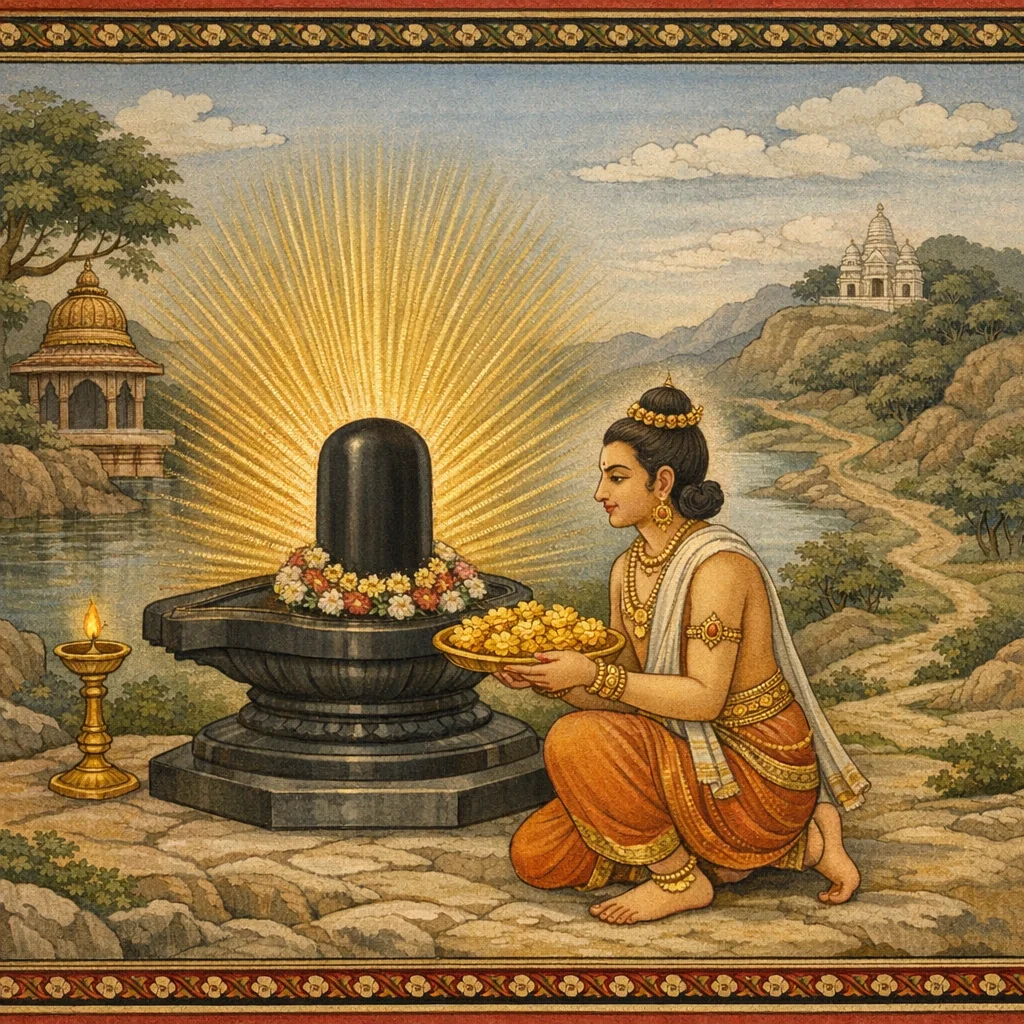
Īśvara instructs Mahādevī on the proper pilgrimage sequence within Prabhāsa-kṣetra: first one should go to the eminent Puṣkareśvara, and then to Jānakīśvara situated to its south. He declares the Puṣkareśvara-liṅga to be exceedingly powerful, its sanctity confirmed by exemplary worship—Brahmaputra (a son of Brahmā) and the sage Sanatkumāra adored it in the prescribed manner, offering golden puṣkara-flowers—thereby explaining the shrine’s name and renown. The chapter then teaches a practical principle of ritual efficacy: devotional worship with offerings such as gandha (fragrance) and puṣpa (flowers), performed sequentially and correctly, is counted as completing the Puṣkarī-yātrā. A fruit is proclaimed: the place is famed as sarva-pātaka-nāśana, the destroyer of all sins, presenting pilgrimage as ethical purification and a disciplined itinerary of bhakti.
Shlokas
Verse 1
ईश्वर उवाच । ततो गच्छेन्महादेवि पुष्करेश्वरमुत्तमम् । तस्यैव दक्षिणे भागे जानकीश्वरमुत्तमम्
Īśvara said: “Then, O Mahādevī, one should go to the excellent Puṣkareśvara. And on its southern side is the supremely auspicious Jānakīśvara.”
Verse 2
लिंगं महाप्रभावं तु ब्रह्मपुत्रेण पूजितम् । सनत्कुमारमुनिना श्रद्धया हेम पुष्करैः
That liṅga, of great divine power, was worshipped by Brahmā’s son—the sage Sanatkumāra—devoutly, with golden lotuses.
Verse 3
पूजितं तद्विधानेन तेन तत्पुष्करेश्वरम् । ख्यातं तत्र वरारोहे सर्वपातकनाशनम्
Worshipped by him according to the proper rite, that (liṅga) became renowned there as “Puṣkareśvara,” O fair-hipped one—destroyer of all sins.
Verse 4
यस्तं पूजयते भक्त्या गंषपुष्पादिभिः क्रमात् । यात्रा कृता भवेत्तेन पौष्करी नात्र संशयः
Whoever worships Him with devotion—step by step, with fragrant flowers and other offerings—by that person the Puṣkarī pilgrimage is truly accomplished; of this there is no doubt.
Verse 115
इति श्रीस्कांदे महापुराण एकाशीतिसाहस्र्यां संहितायां सप्तमे प्रभासखण्डे प्रथमे प्रभासक्षेत्रमाहात्म्ये वामनस्वामिमाहात्म्ये पुष्करेश्वरमाहात्म्यवर्णनंनाम पञ्चदशोत्तरशततमोऽध्यायः
Thus ends, in the holy Skanda Mahāpurāṇa—within the eighty-one-thousand-verse Saṃhitā—within the seventh book, the Prabhāsa Khaṇḍa; in the first division, the Māhātmya of Prabhāsa Kṣetra; within the Vāmanasvāmi Māhātmya—Chapter 115, entitled “The Description of the Greatness of Puṣkareśvara.”